
A very handsome silver-plate champagne bucket decorated with gadrooned friezes and lion-head handles.
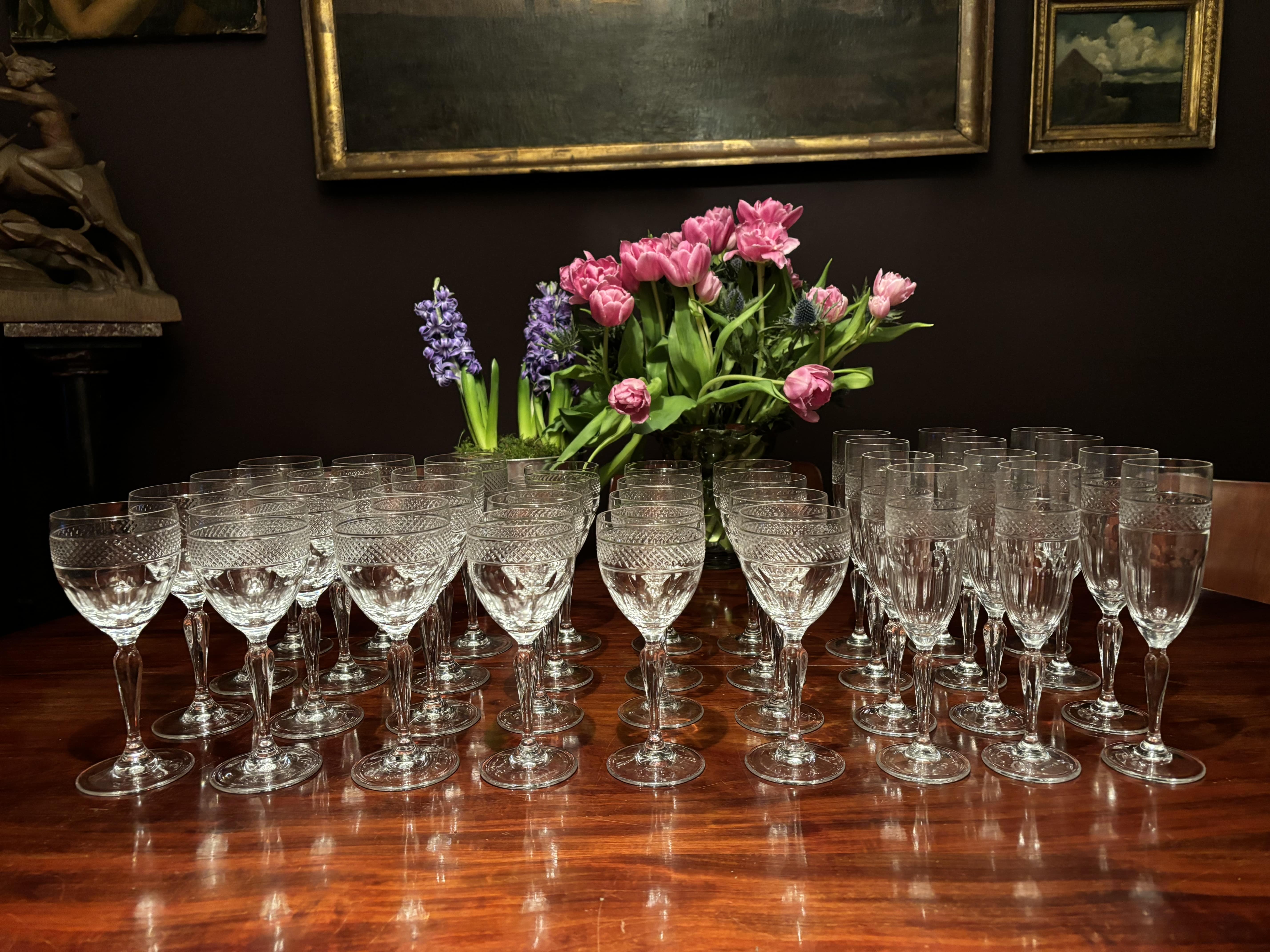
A very fine 36-piece crystal glass service signed (engraving at the base of the glass "Artisanat de Lorraine") comprising 12 water glasses, 12 wine glasses and 12 champagne flutes in perfect condition.
These glasses display a refined design with a bowl engraved with a lattice/diamond motif in the upper section and 12 panels in the lower section. Fine quadrilobed stem.
Glasses engraved 'Artisanat de Lorraine' are considered quality pieces, generally produced by small workshops specialising in crystal work active in the Lorraine region. They date from the mid-20th century, a period when regional craftsmanship was strongly promoted.
Perfect condition.
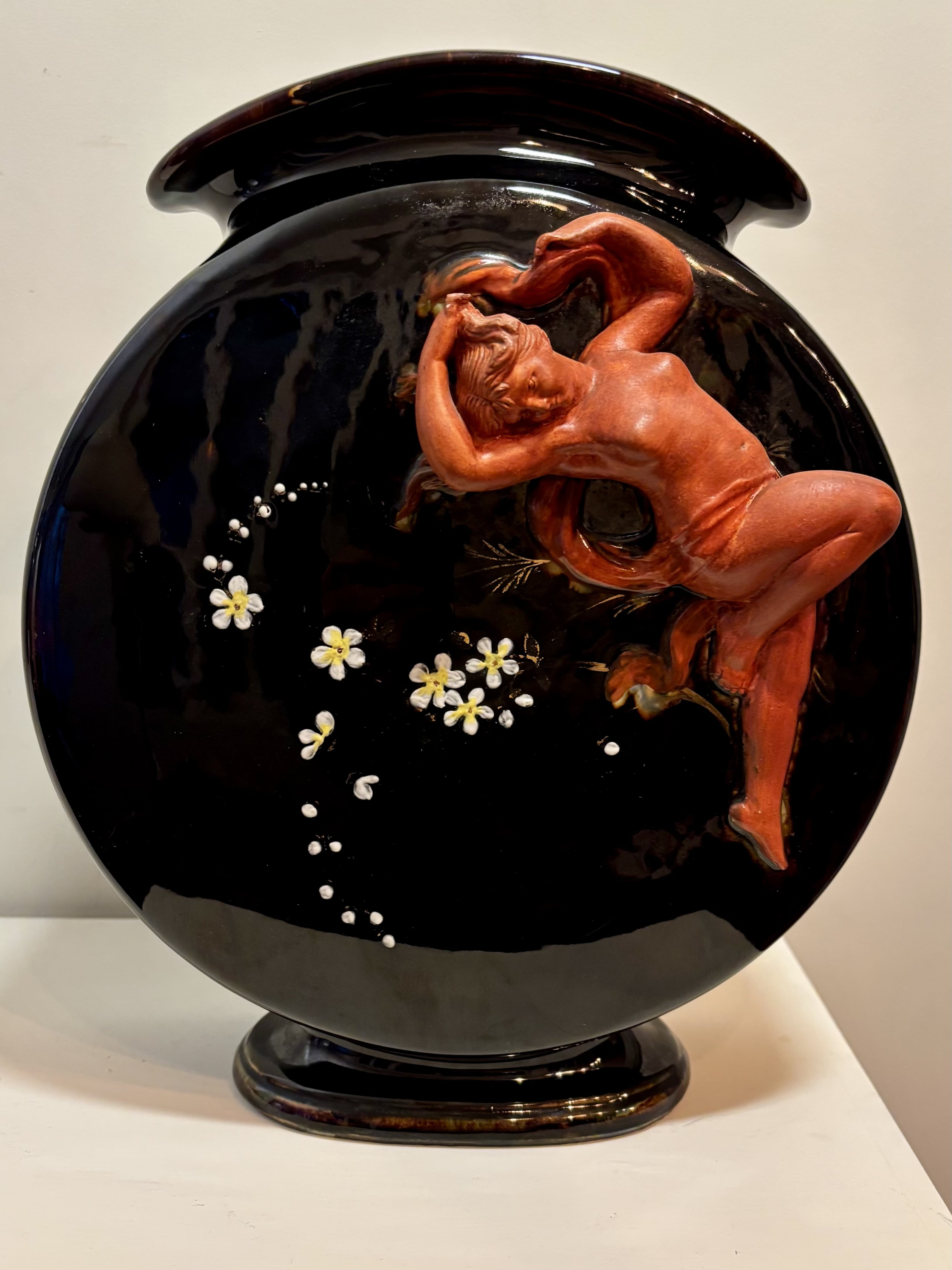
A very fine glazed brown faience vase, of flattened circular form, decorated with a relief depicting a nude female figure in red-orange tones, accompanied by hand-painted enamelled floral motifs.
Typical of Art Nouveau, this elegant decorative piece illustrates the craftsmanship of late 19th-century workshops.
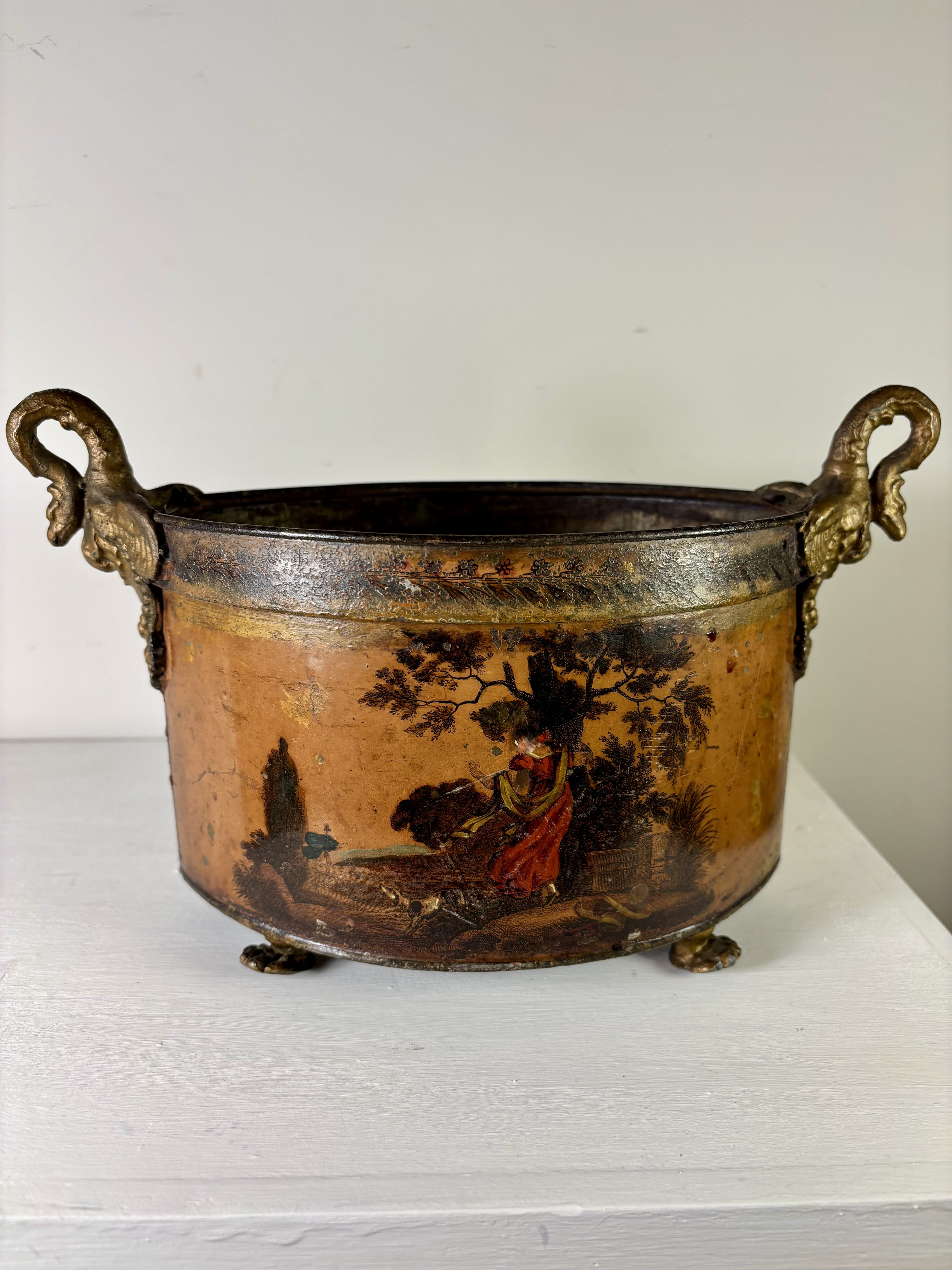
A fine painted tole jardinière dating from the 19th century, adorned with a hand-painted romantic scene depicting a female figure in a bucolic landscape, characteristic of early 19th-century taste. The whole enriched with refined details such as zoomorphic handles and paw-form feet, typical of Neoclassical and Romantic influences.
The jardinière is lined with a fixed zinc liner.
The piece shows wear and patina consistent with age.
Good general condition.
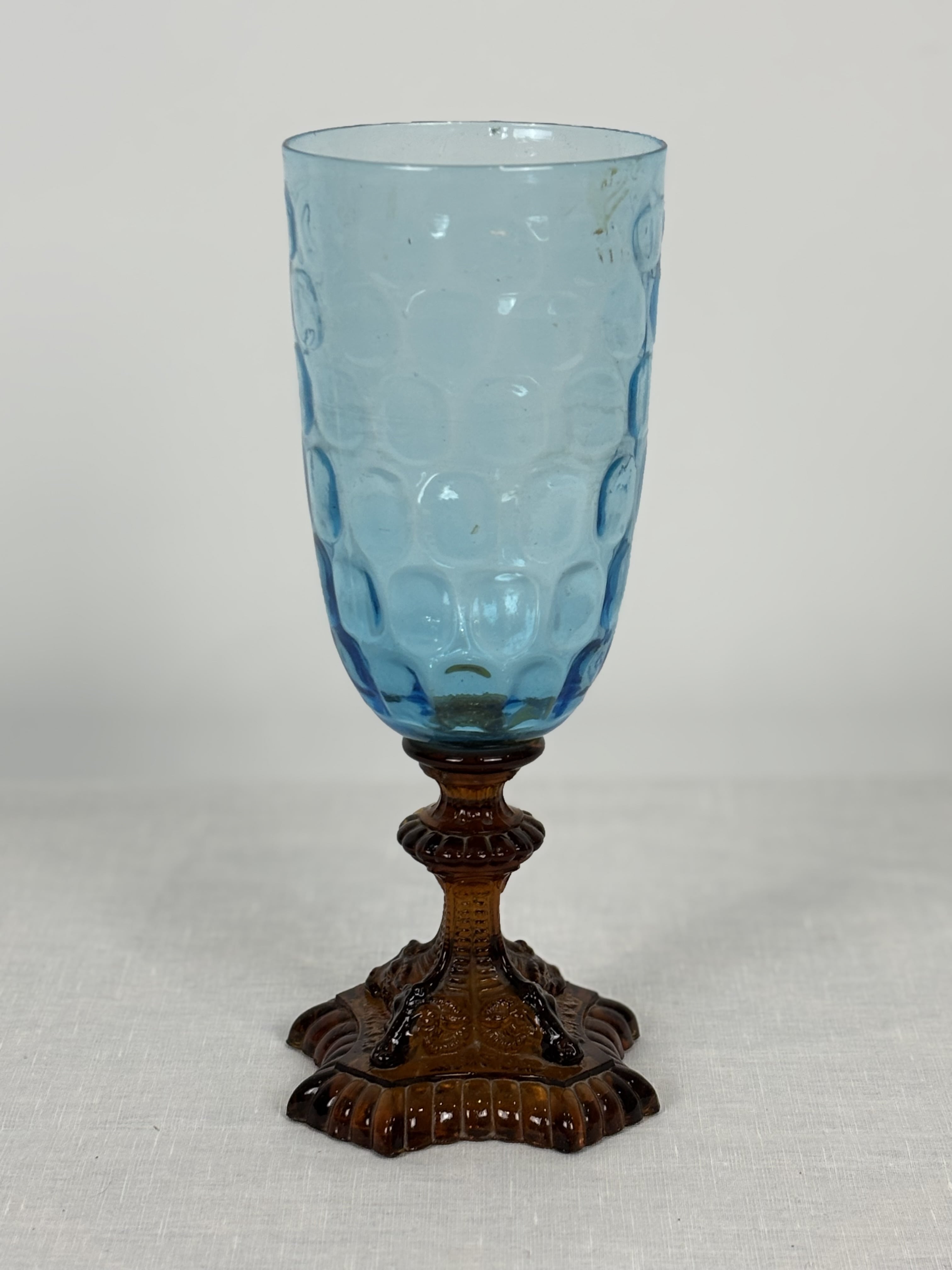
An elegant and large antique pressed-glass vase from the Portieux crystalworks (1705-2012), George Sand model, with a turquoise blue bowl and amber base with ram's-head supports. The George Sand model signed Portieux was pressed around 1900. Founded in 1705, the crystalworks worked over the centuries for the most prestigious tables, for Tsar Nicholas II of Russia, the writer George Sand, and the Ritz.
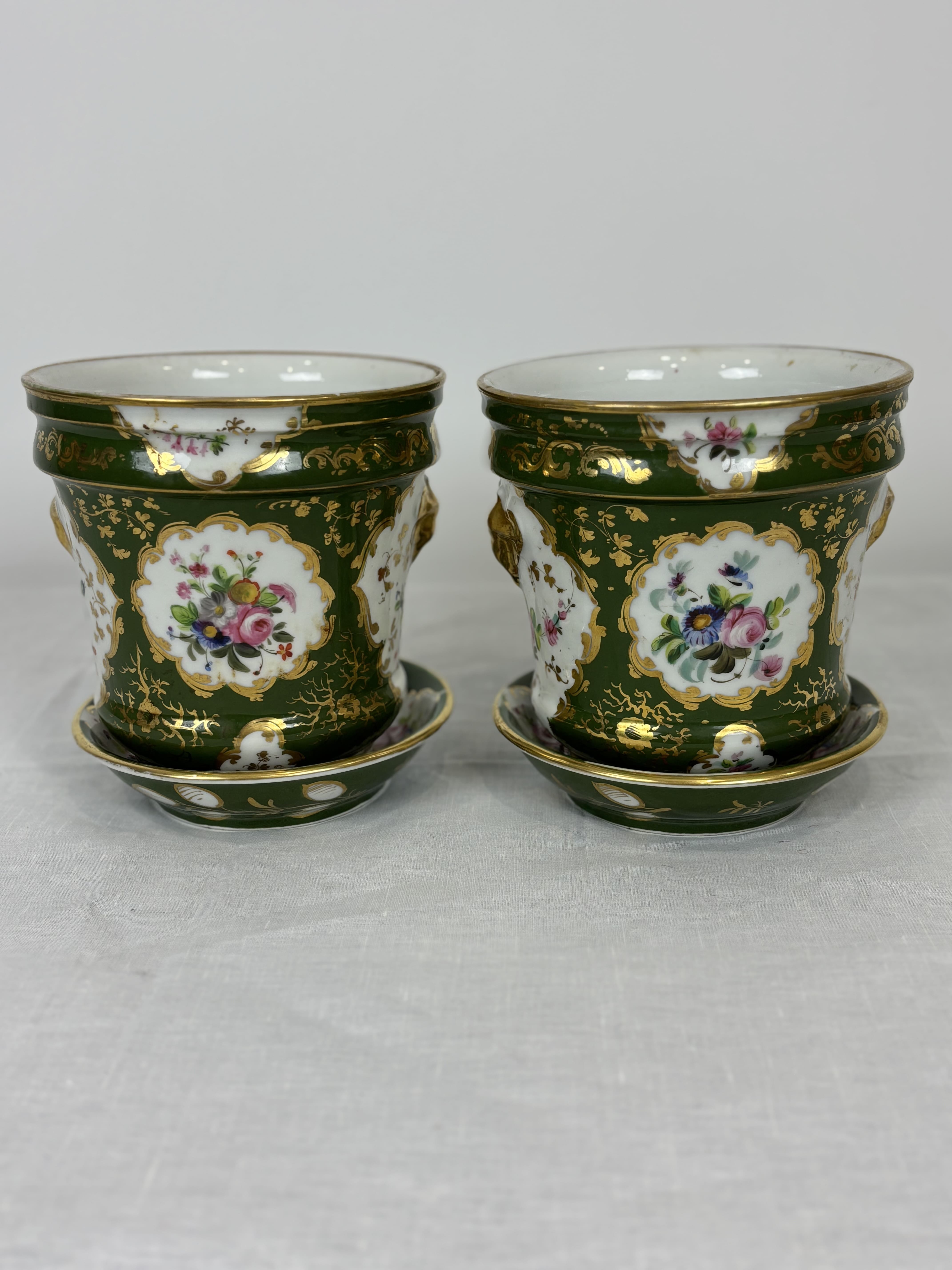
A fine pair of 19th-century cachepots in Paris porcelain on a deep green ground, richly adorned with gilt and polychrome floral motifs.
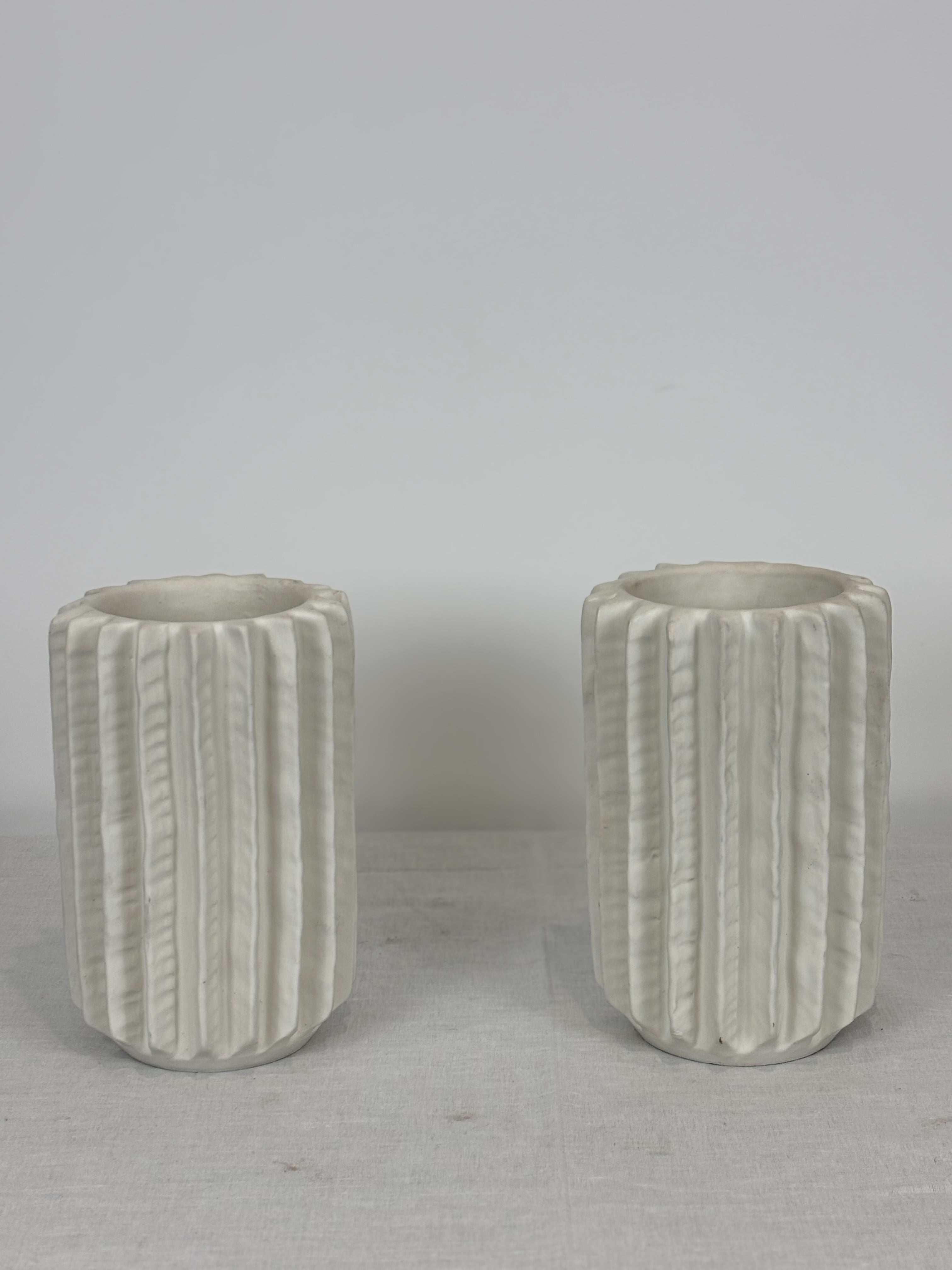
Executed in white ceramic with a matte finish, these two cylindrical vases are animated by a relief decoration evoking irregular, almost organic vertical undulations recalling leaf venation. The work of the material, deliberately irregular and raw, lends the whole a strong decorative character, between craftsmanship and modernity. Italian work of the 1980s.
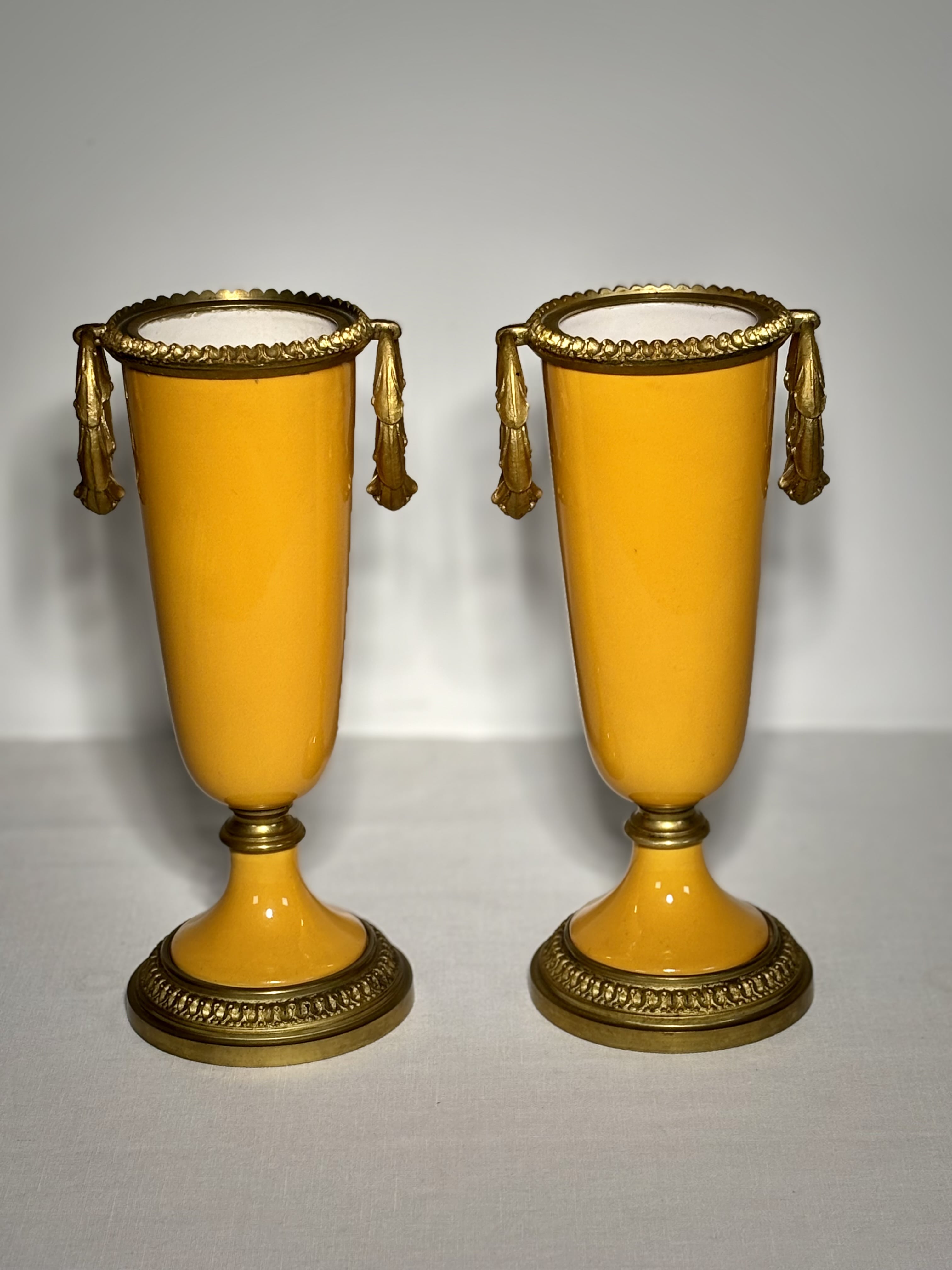
A pair of vases on stemmed foot in deep, intense yellow porcelain, adorned with finely chased gilt bronze mounts. Frieze decoration, handles in laurel garlands, typical of the Empire vocabulary revisited in the 19th century. French work. Late 19th to early 20th century.
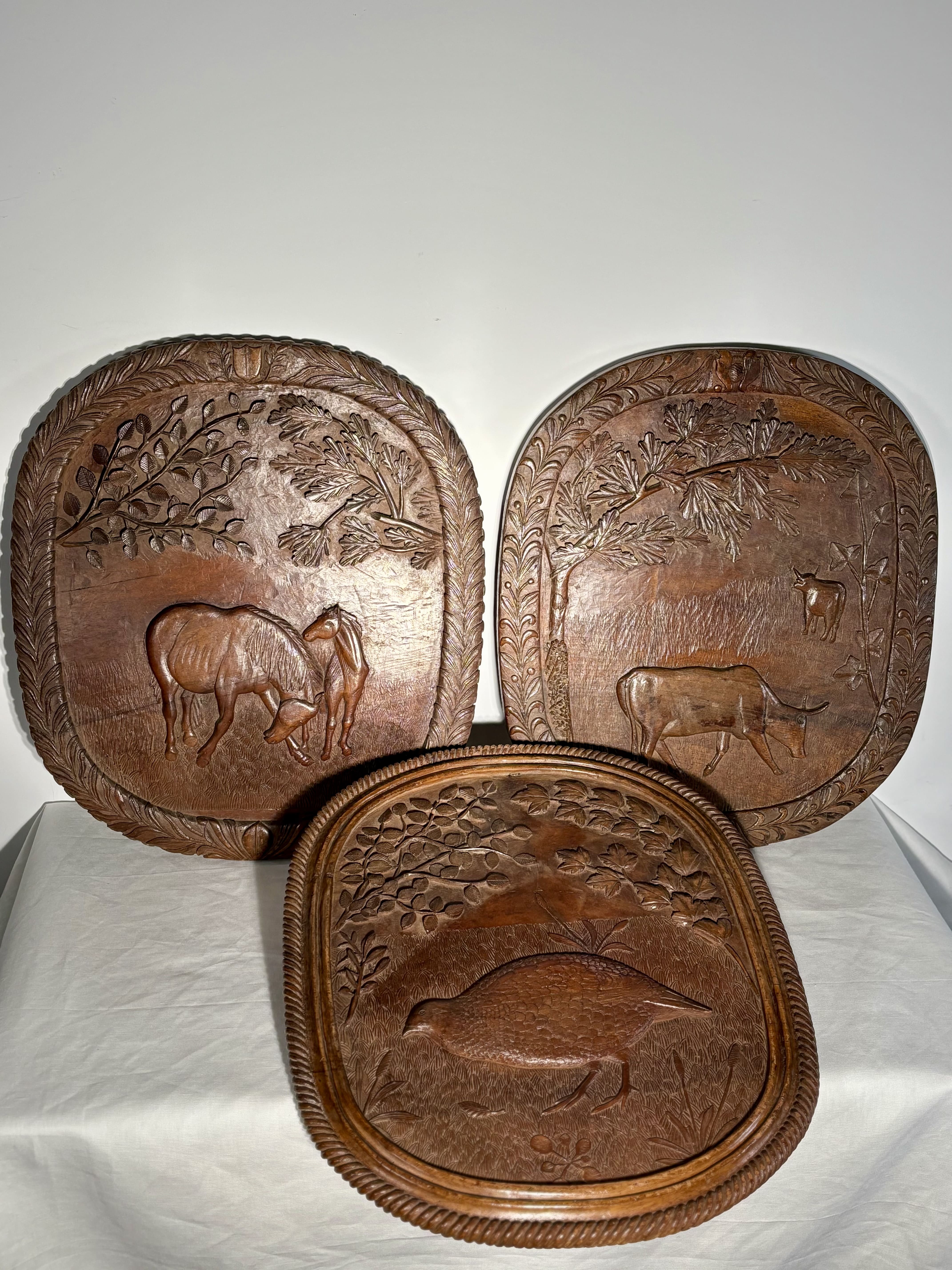
A set of three carved wood panels, executed in a single block, depicting animal scenes. Each panel is carved from a single piece of wood and presents a deep relief, a clean line, together with a handsome group of foliate motifs, leaves and framings entirely carved by hand. The scenes depict a mare and her foal, cattle at pasture and a partridge in a rural setting, typical of the pastoral repertoire of the late 19th and early 20th centuries. The reverse, left raw, shows tool marks and confirms a traditional and authentic artisanal work. A very fine early patina.
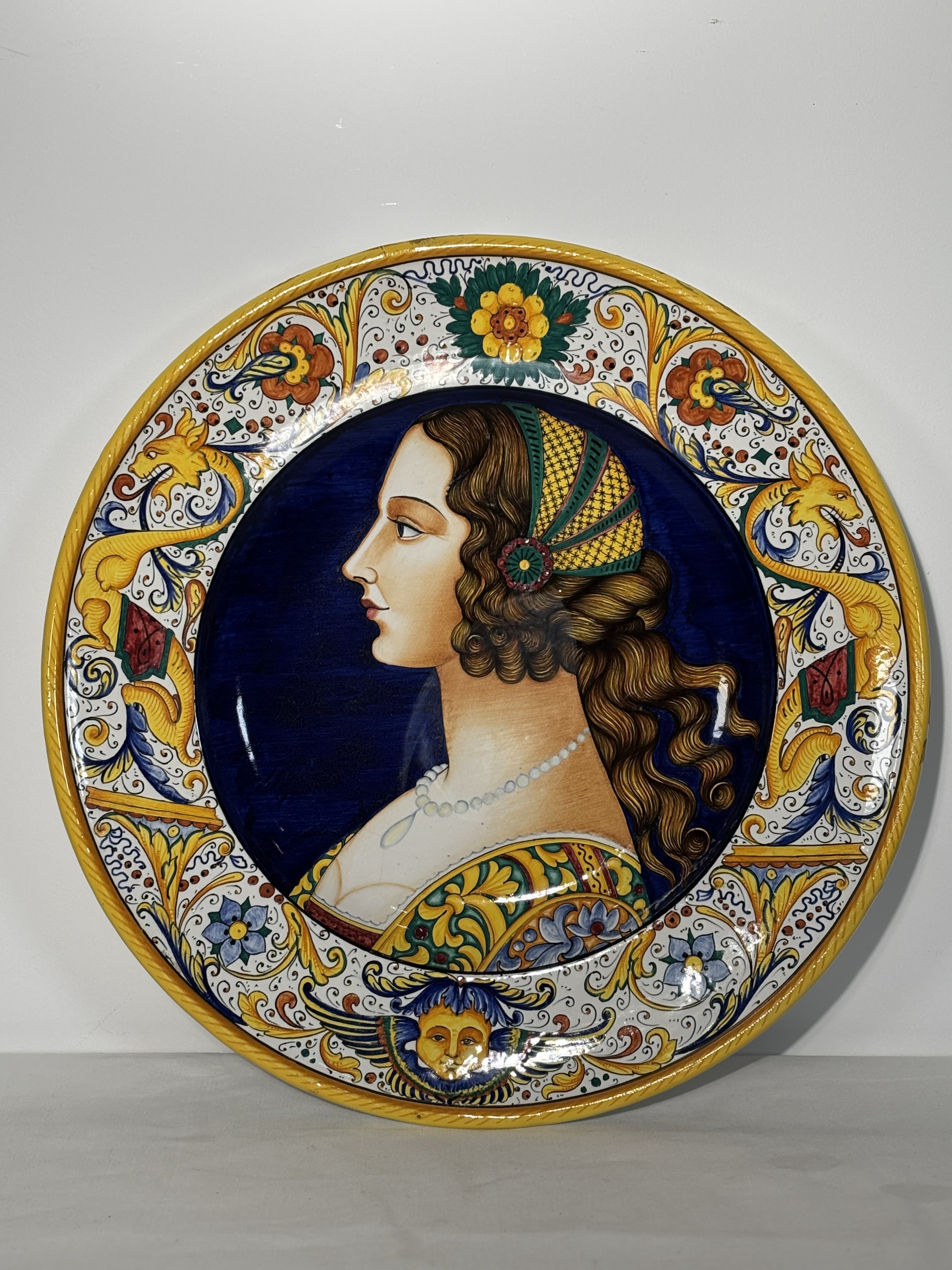
An elegant and large majolica plate from the workshops of Deruta, the celebrated Italian ceramic centre in Umbria. Signed "S. Volpi" "In Deruta".
Serafino Volpi, ceramicist active in Deruta between 1916 and 1918, became director of the "Maiolica Deruta" manufactory. In 1928, he founded, in partnership with Gino Veschini, the "Maiolica Derutese Volpi" manufactory. The following year, he became its sole proprietor. The firm remained active until the early 1950s. Serafino Volpi played a decisive role in the international renown of Deruta in the 20th century, making the town one of the principal centres of ceramic production in Italy.
The plate depicts a female profile in the manner of the Renaissance Italian "Bella donna". The portrait, of great refinement of features, stands out against a deep blue ground. The border, typical of the Deruta tradition, presents a decoration of stylised dragons, foliage, polychrome flowers and a mascaron. The palette is luminous. Some marks on the edges. Italy, mid-20th century. Signed S. Volpi, in Deruta.
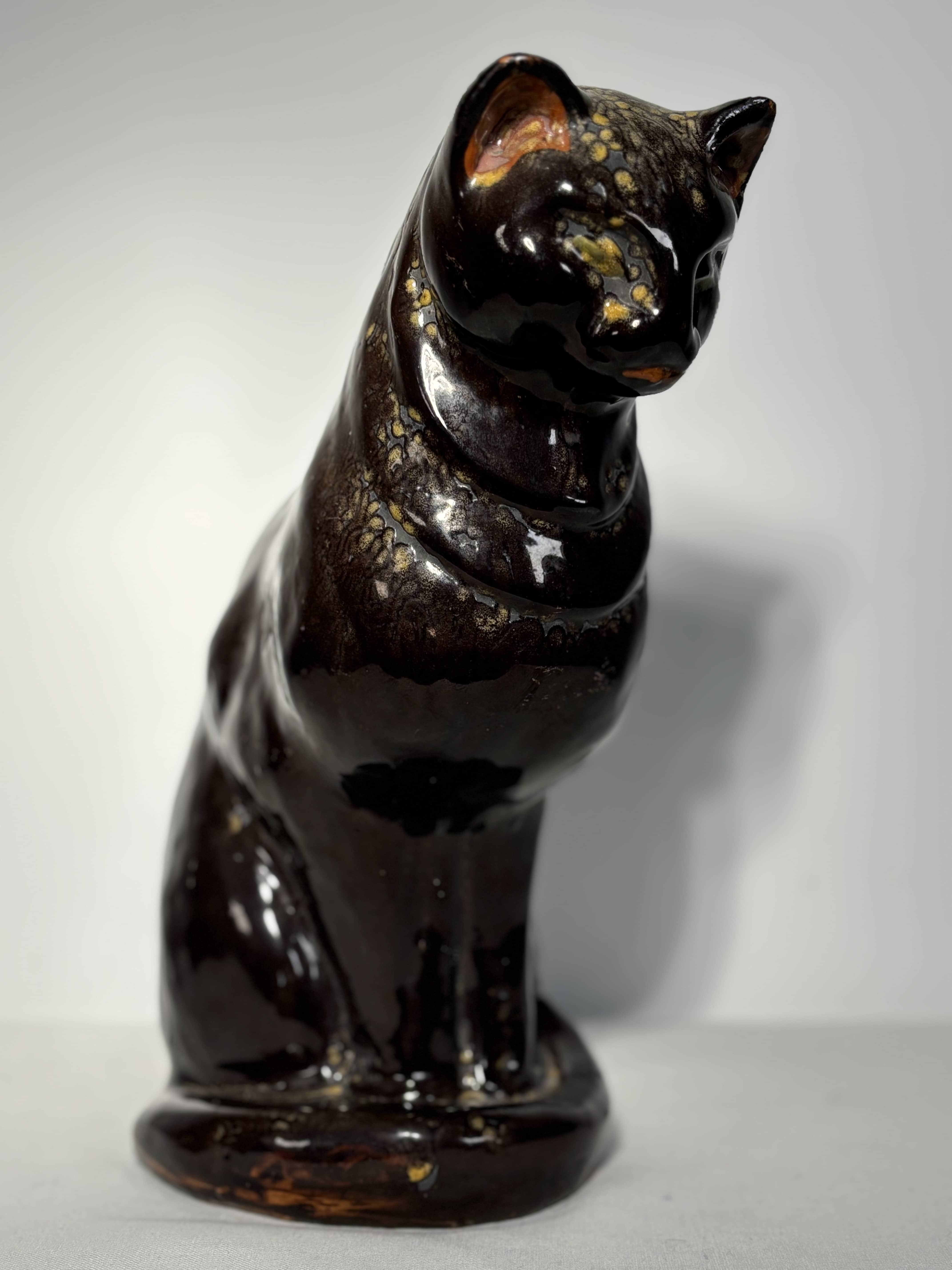
A ceramic sculpture figuring a seated cat, treated in a stylised manner. The piece is covered with a deep brown glaze, animated with amber and ochre nuances. The surface presents chromatic variations. The modelling is fluid, highlighting the full volumes of the body and the softness of the dorsal line. Origin: Normandy region, probably Bavent.
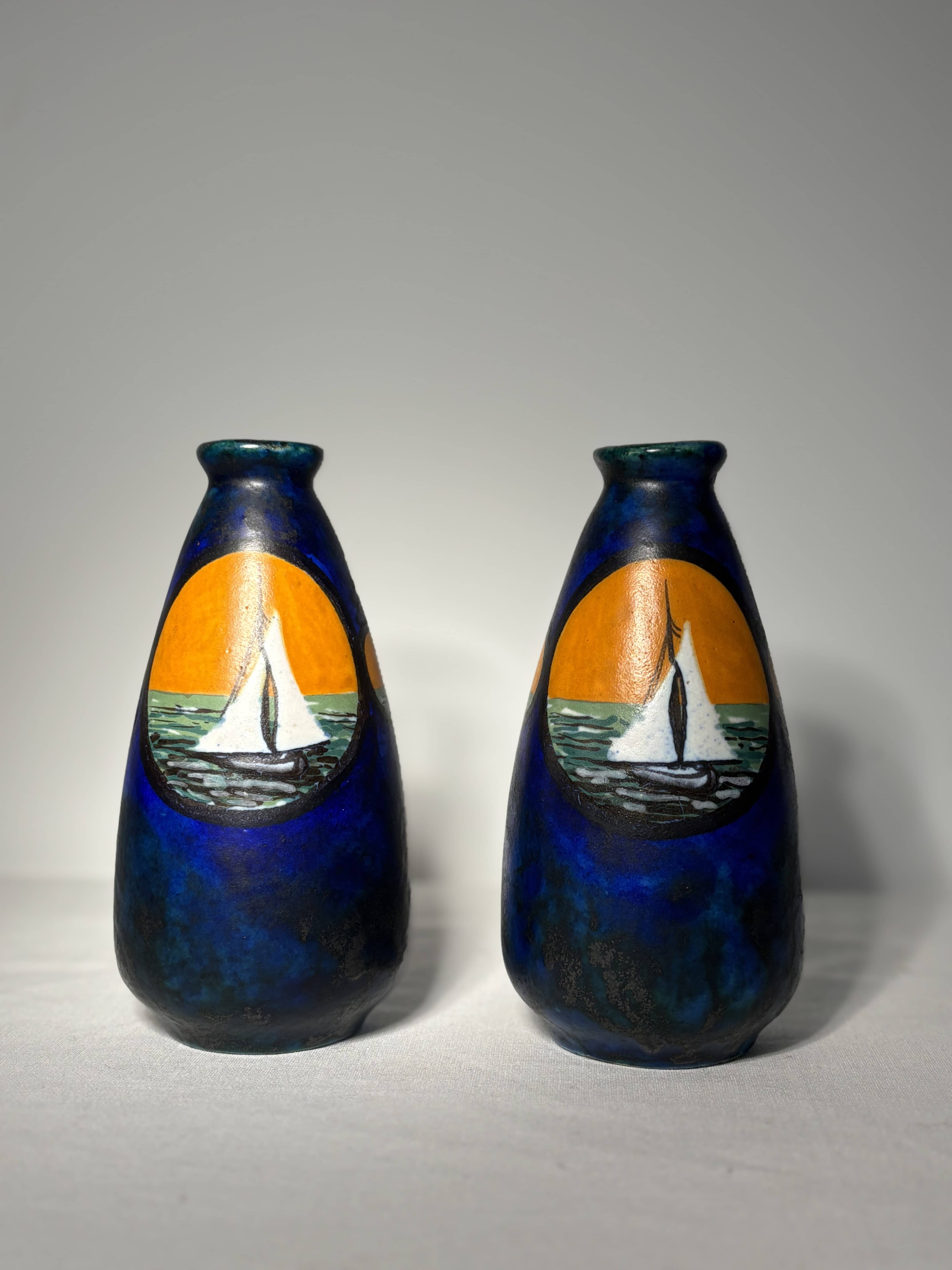
An elegant pair of ceramic vases, signed Louis Dage. The hand-painted decoration depicts a stylised marine scene: a sailboat on a green sea, an orange sunset, framed by large black circular cartouches on a deep cobalt blue ground with clouded effects. The composition, at once geometric and poetic, fits fully within the Art Deco aesthetic: simplification of forms, graphic lines, contrast of vivid colours and flat areas. The two vases form a pair of strong presence. Louis Dage is a major figure of French ceramics of the interwar period. Established in Antony from the early 1920s, he developed a production emblematic of the Art Deco style, combining pure forms and hand-painted decorations in intense colours. In perfect condition.