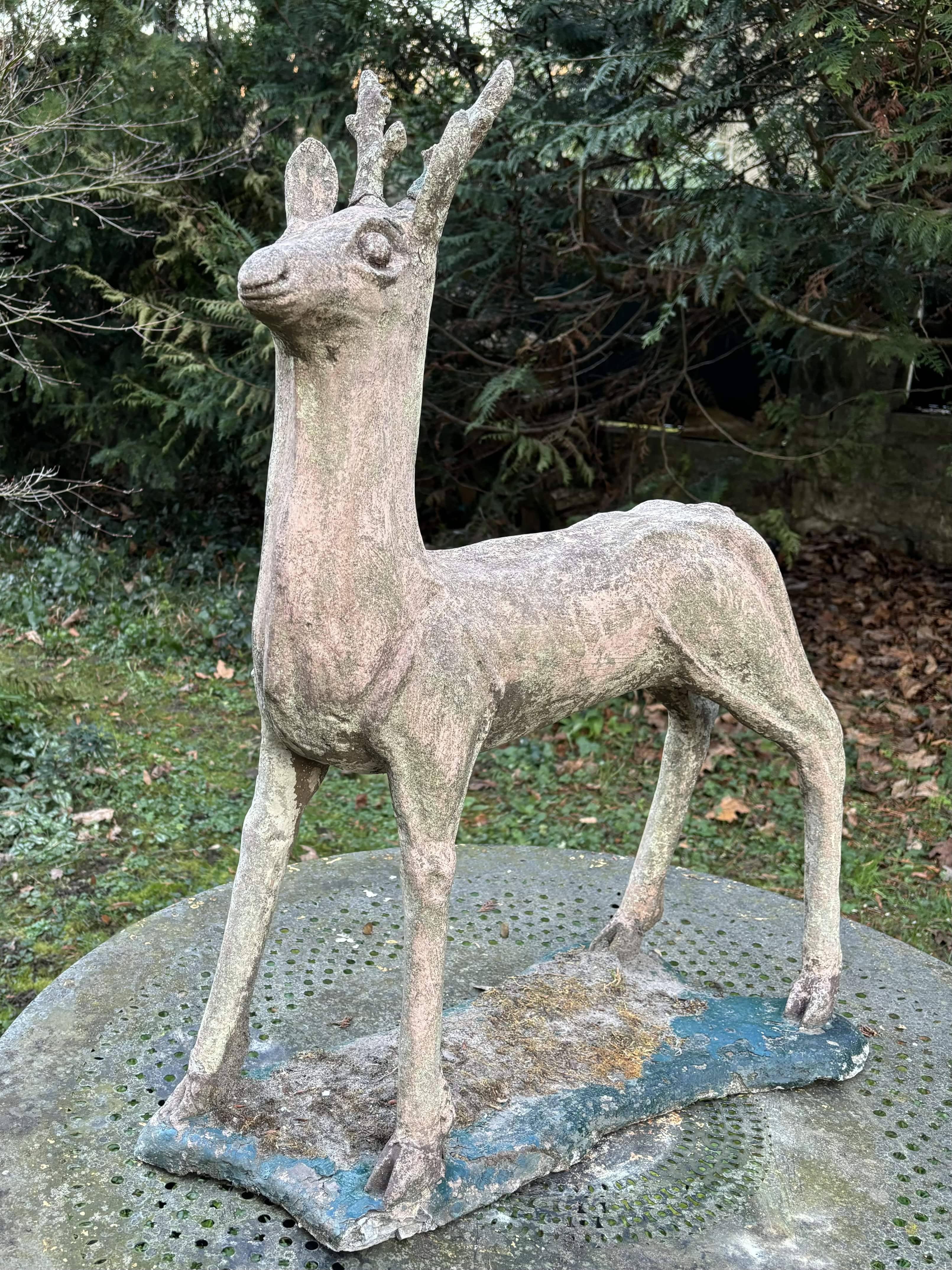
Artistic elegance for this cement deer, patinated by time, on its plinth. This unique piece of folk art dating from the 1960s lends a poetic atmosphere to your garden or interior.

A splendid prestige jardinière in high-fired faïence, from the workshops of the celebrated Touraine manufactory Jaget et Pinon (1890-1919 period). This masterpiece is distinguished by its ‘Eagles and Bees’ decoration, the noblest and most sought-after iconography of Touraine production. Colouring & Enamel: Imperial green ground enamel of rare depth, achieved through high-temperature firing, offering a striking contrast with the gilding. Ornamentation: Rich fine-gold decoration comprising two confronted Imperial Eagles and a scattering of Napoleonic bees. Lateral elements: Sculpted handles in relief depicting oak branches laden with acorns, emblems of strength and permanence, entirely heightened with gold. Frieze: Neck encircled by a frieze of neoclassical scrollwork and palmettes on a dark green band. Perfect state of preservation. Highly lustrous enamel. Gilding showing slight wear from use on the raised areas consistent with its age. Weight 6.700 kg

A master ceramist of Sicilian origin established at Vallauris, Jean Gerbino perfected in 1930, after fifteen years of research, his unique terres mêlées technique: several clays coloured with oxides are assembled in blocks, thrown together on the wheel, then subjected to a double firing beneath a transparent glaze. The process was awarded the Grand Prix at the Concours Lépine in 1931.
This flower-holder sphere is distinguished by the exceptional quality of its execution. The palette is particularly rich and luminous — iron-red terracotta, soft celadon, slate blue, cream ivory, warm ochre and manganese brown — with a brilliant glaze that enlivens each colour and lends the whole an almost mineral depth. The upper body displays the polychrome diagonal chequerboard characteristic of the workshop, whilst the lower register is treated in sgraffito with Hispano-Moresque motifs — medallions with star-shaped rosettes on a cream ground, framed by green scrolling foliage. Nine apertures at the summit. Remarkable precision and mastery.
Signature “Gerbino Vallauris” incised beneath the base. France, circa 1950-1960
France, circa 1950-1960
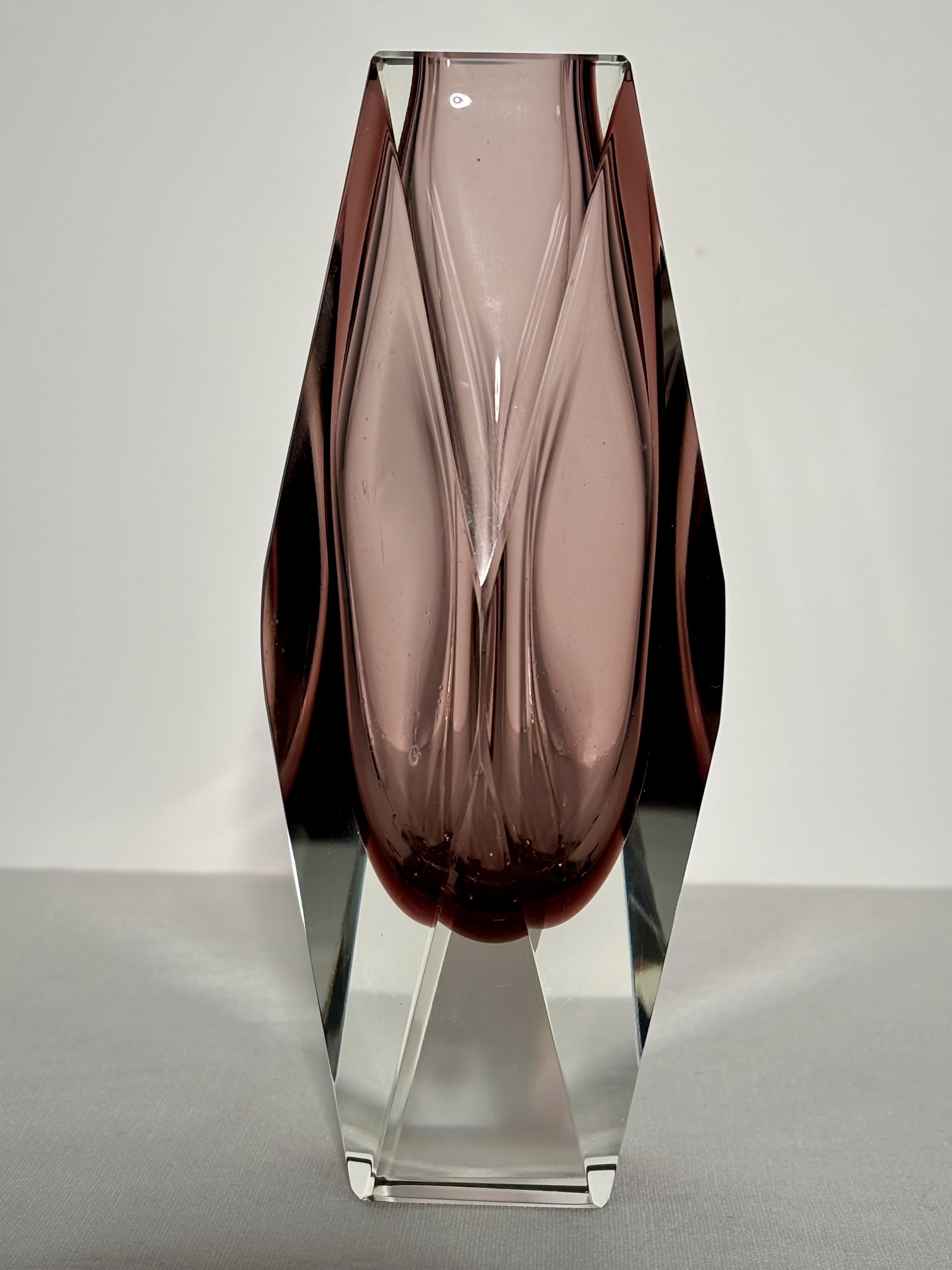
Sommerso vase in Murano glass crafted according to the traditional technique of superimposing layers of molten glass, requiring complete mastery of hot working. This method achieves a depth of material and an optical density of particular note, hallmarks of the great Murano productions of the twentieth century. The smoked amethyst hue, encased within a thick mass of clear glass, creates a subtle interplay of transparency and depth. The design is accentuated by an architectural facetting with taut, crisp lines, lending the piece a pronounced sculptural presence. This vase belongs to the great tradition of formal experimentation pursued in Murano during the 1960s and 1970s, a period in which glass came to be regarded as a genuine material for architecture and sculpture, beyond its merely decorative function. Perfect condition. No chips or nibbles. Murano—Italy, twentieth century, circa 1960-1970
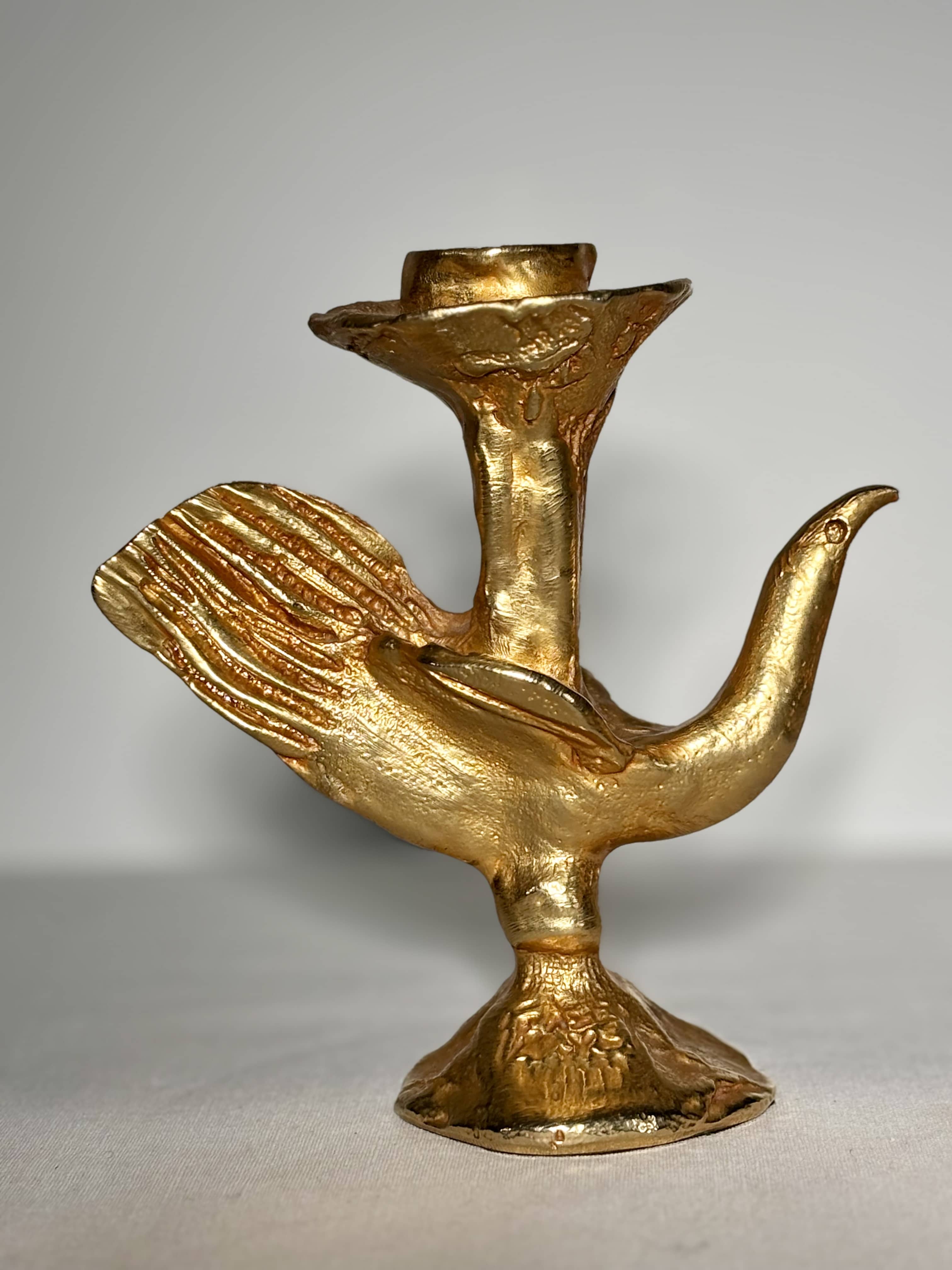
An elegant sculpted bronze candlestick with gilt patina, created by the artist and designer Pierre Casenove. This emblematic piece, characteristic of the artist’s poetic brutalist style, depicts a stylised bird with organic lines, its body soaring upward. The textured treatment is typical of Casenove: an animated surface that catches the light. The work bears witness to the aesthetic of the 1980s–1990s, fusing utilitarian object and animal sculpture. Signed on the base. France, 20th century

Five-branch stoneware candelabrum, an emblematic example of the Brutalist movement of the 1960s-70s. This piece is distinguished by its organic, sculptural appearance, evoking arborescent forms or primitive anthropomorphic figures.
The treatment of the material is remarkable: an earthy-toned glaze, ochre-brown, displaying a rough, scarified texture that catches the light. The circular base, pierced with almond-shaped openings, anchors the visual balance whilst reinforcing the architectural quality.
This work sits perfectly within the lineage of La Borne ceramics or the œuvre of artists such as Robert Deblander or the Accolay workshop in its most raw productions. It bears witness to the return to origins and to the hand of man typical of the second half of the twentieth century.
The base bears two felt-tip marks covering a signature “Calsat”.
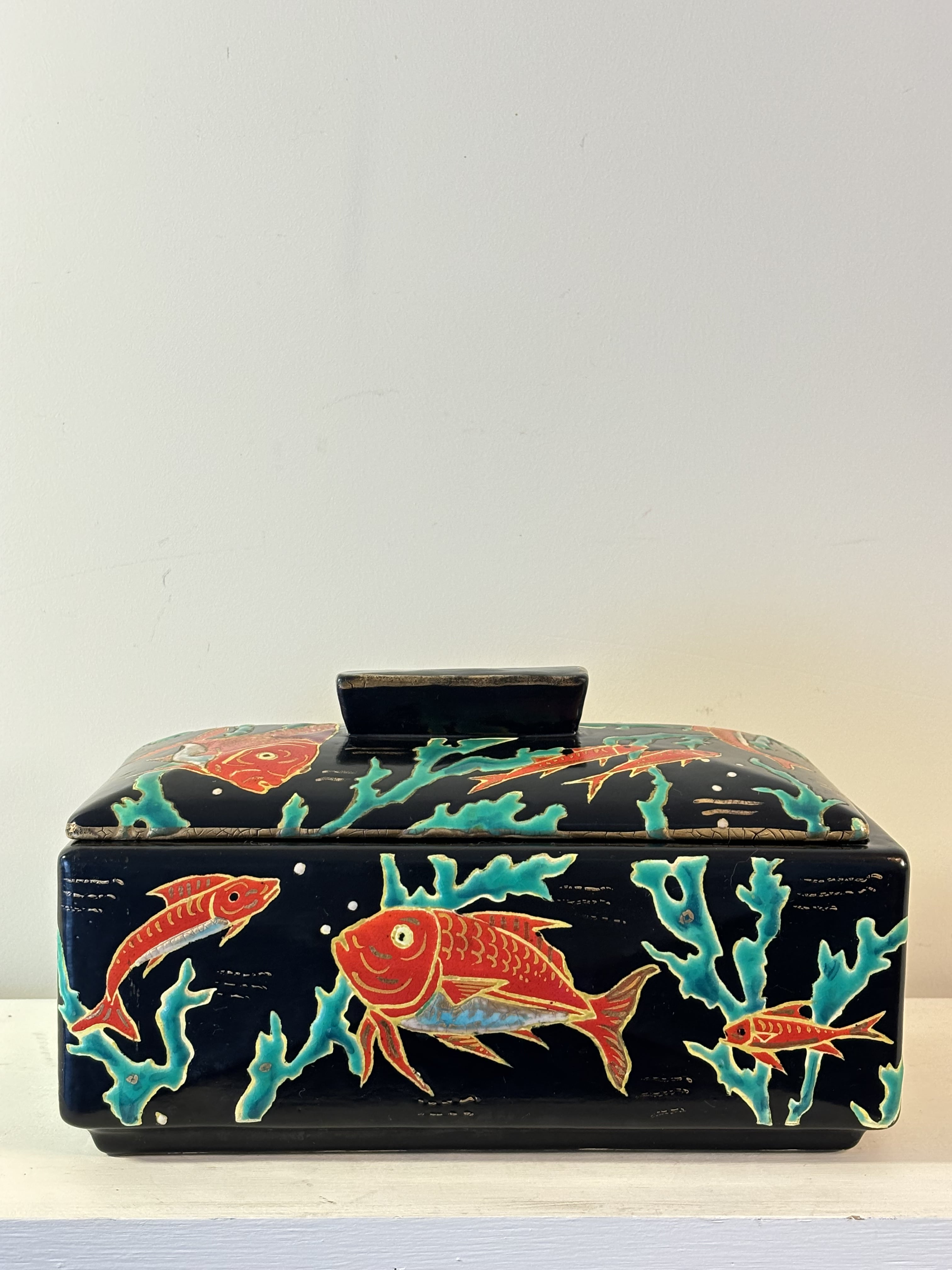
Rare. A superb biscuit box in Longwy enamels, Neptune model, decorated with polychrome cloisonné enamels depicting fish in marine settings, in red, green and gilt enamels on a black ground. Celadon green enamel interior. Cartouches stamped "Émaux de Longwy" "Décoré main" "Neptune" "France" "Création MP chevalier". Very good condition. No chips.
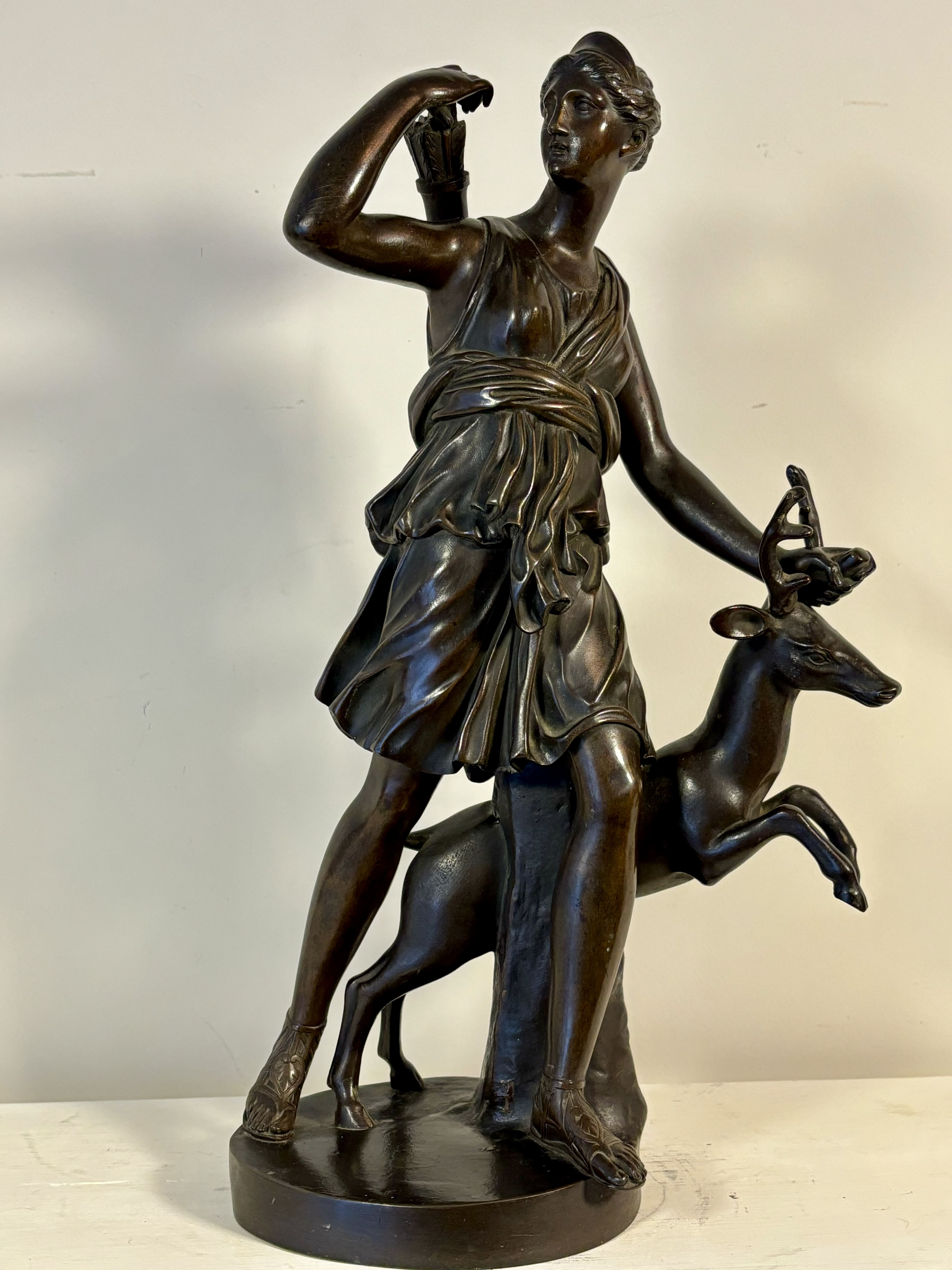
A very fine dark brown-patinated bronze of Diana with the Hind, also known as Diana the Huntress or Diana of Versailles.
After the Antique. 19th century.
The work depicts the goddess of the hunt in motion, her hand resting on the antlers of a small stag.
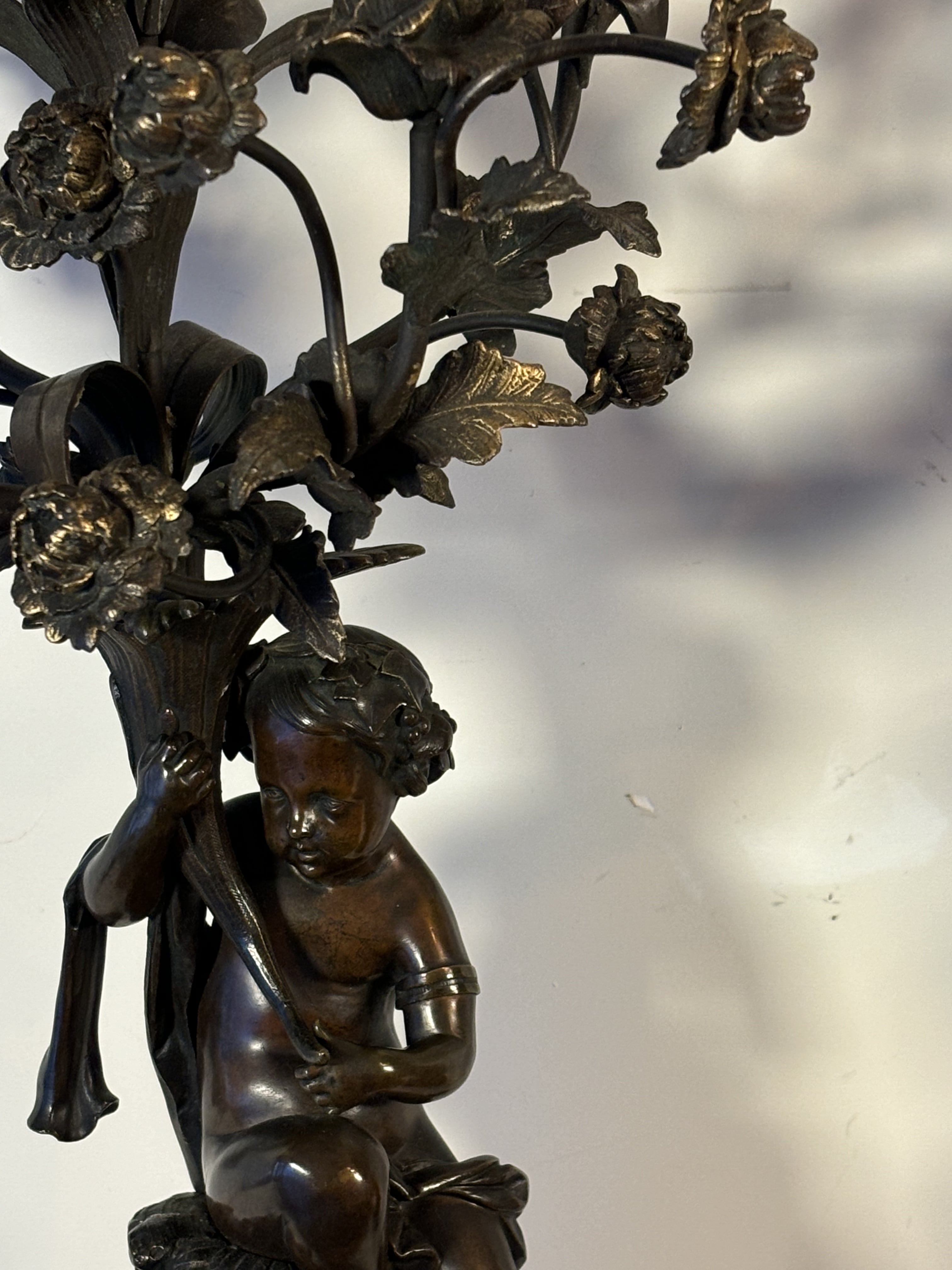
A pair of large brown-patinated bronze candelabra, decorated with putti holding a cornucopia of flowers with five lights, with two snuffers at the top.
Black marble bases.
Late 19th century.
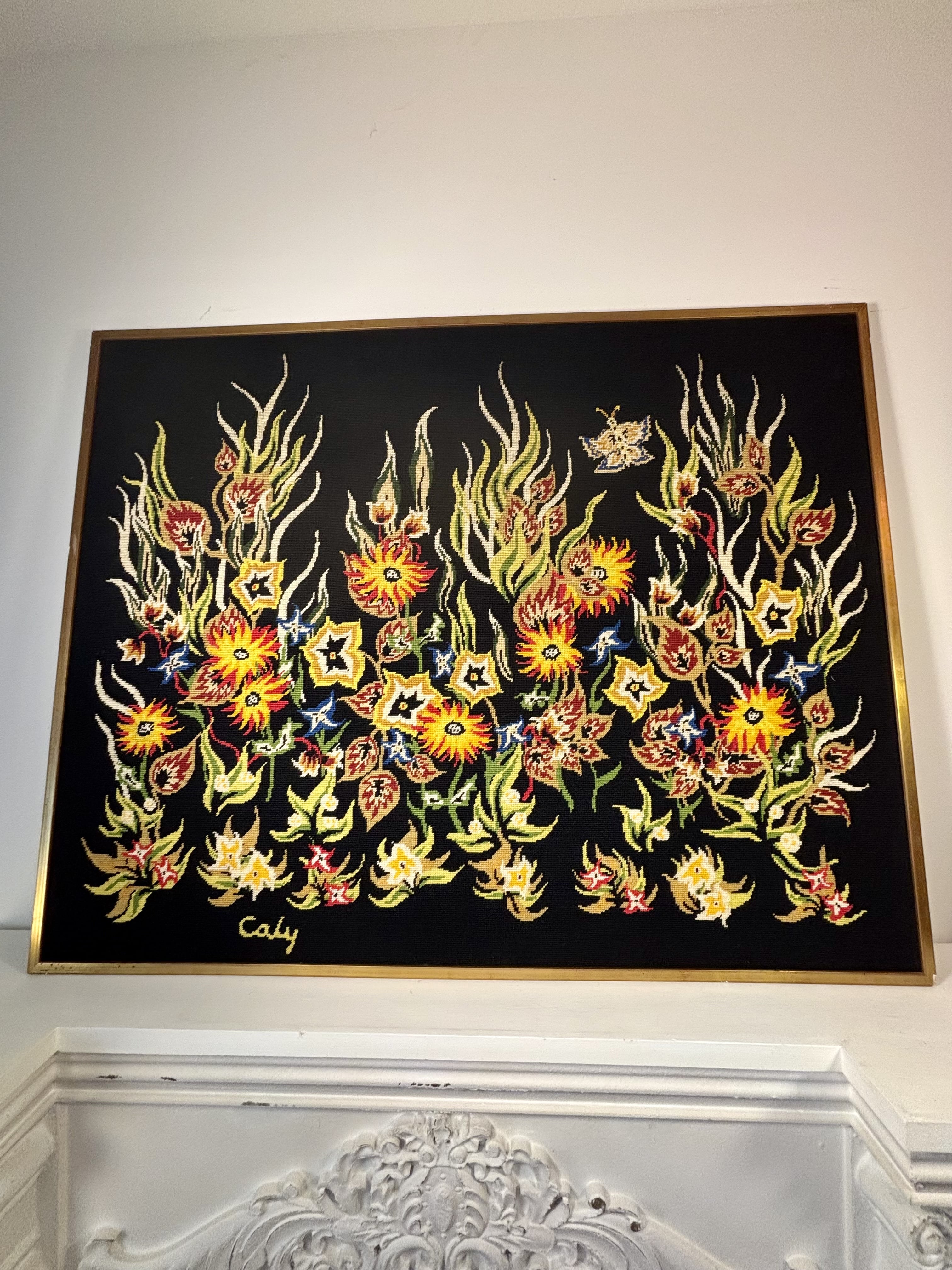
A magnificent limited-edition tapestry, titled "Soir de Rêve", woven from the original cartoon by Odette Caly. This work was produced by the Atelier d'Art Contemporain La Lice, under the artistic direction of Jean Picart Le Doux, celebrated for his influence in contemporary tapestry art.
. Edition: Series A, number 65/250
. Technique: Tapestry woven by hand with coloured threads on a black ground, depicting vibrant, dreamlike floral motifs
. Signature: the tapestry is signed "Caly" lower left and bears a certificate of authenticity from the atelier on the reverse.
Odette Caly collaborated with renowned ateliers linked to the Aubusson tapestry tradition. The Atelier d'Art Contemporain La Lice, under the direction of J. Picart Le Doux, perpetuated the Aubusson tradition of quality while innovating and allowing contemporary artists such as Odette Caly to contribute to the modernisation of this centuries-old art.
This tapestry is a typical example of the revival of textile art in the 1960s-1970s, combining vibrant colours and Modernist motifs.
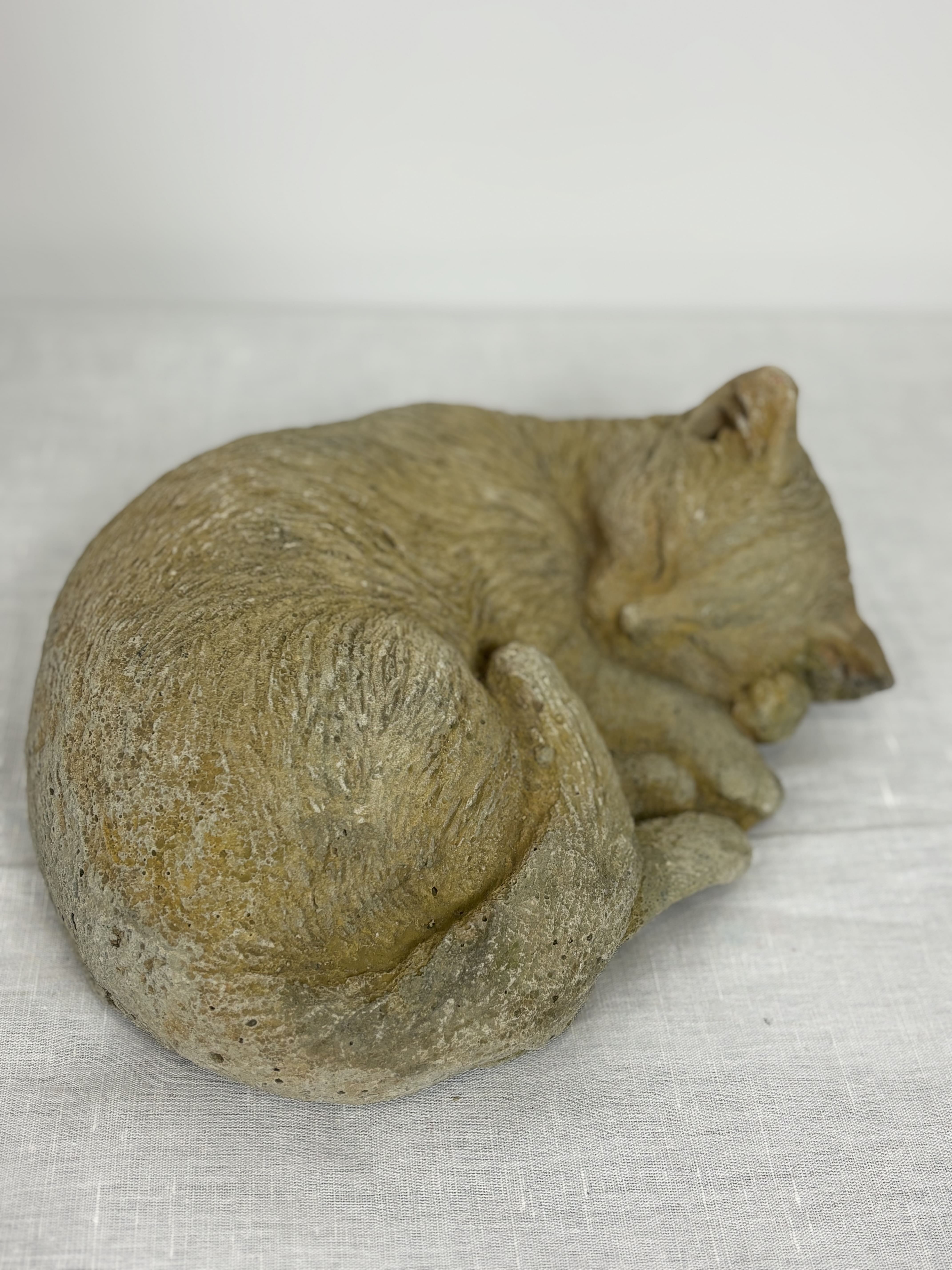
A sculpture in Rognes stone depicting a peacefully sleeping cat, executed by the sculptor Danilo, originally from Carpentras in the South of France.
About the artist: Danilo (born around 1930) is a local artist who has left his mark on the Provençal artistic scene with his sculptures. He ceased production 23 years ago.
Good condition, fine natural patina. Weight 3.330 kg

A sculpture in Rognes stone depicting a seated cat, executed by the sculptor Danilo of Carpentras in the South of France. About the artist: Danilo (born around 1930) is a local artist who has left his mark on the Provençal artistic scene through his sculptures. Production ceased 23 years ago. Good condition, fine natural patina.
Weight 7.850 kg