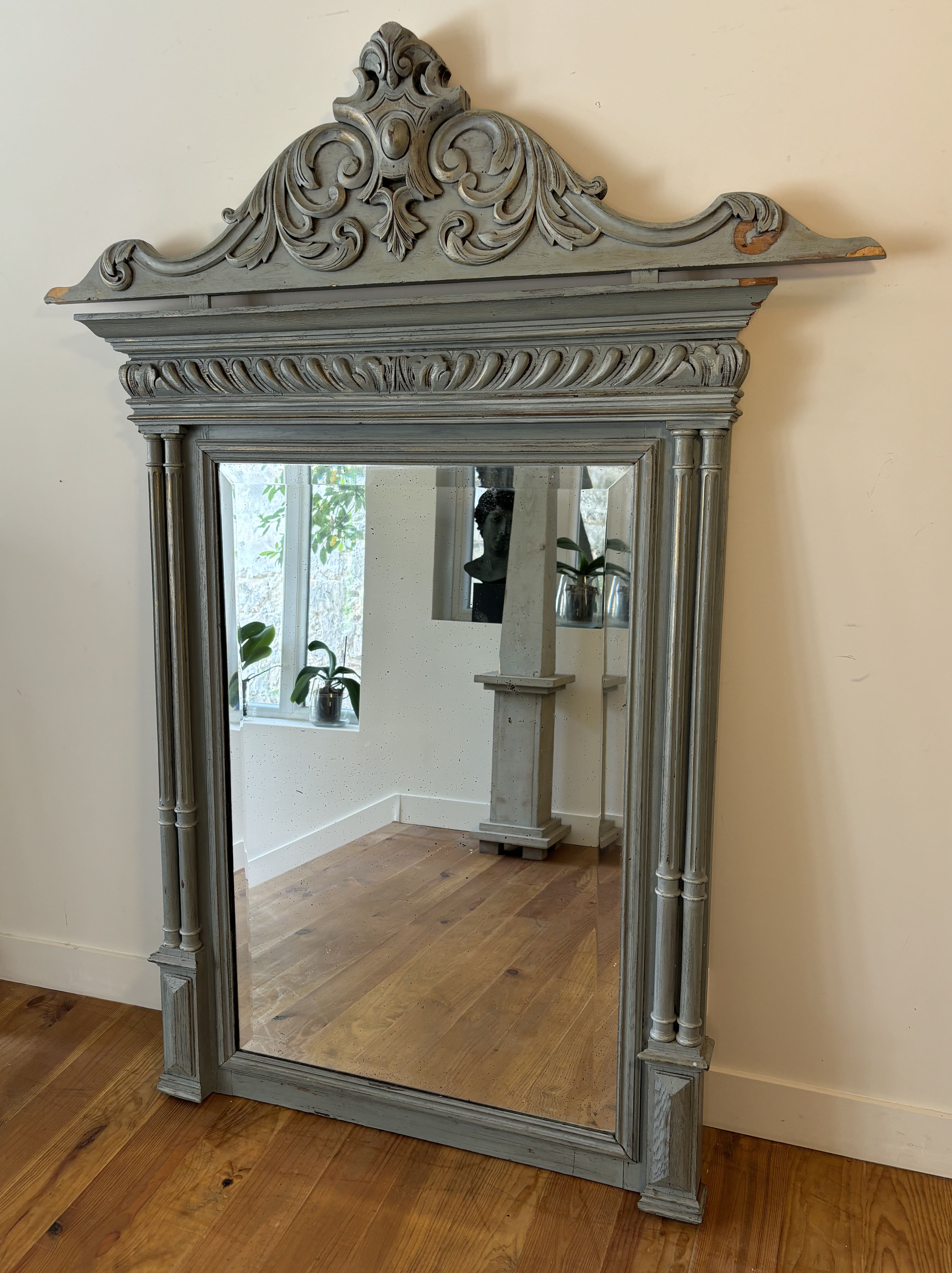
Large ornamental mirror with a cornice in grey-patinated wood. Applied and removable pediment. Mirror flanked by double columns on each side with pedestal. Original mercury glass. Lovely patina.
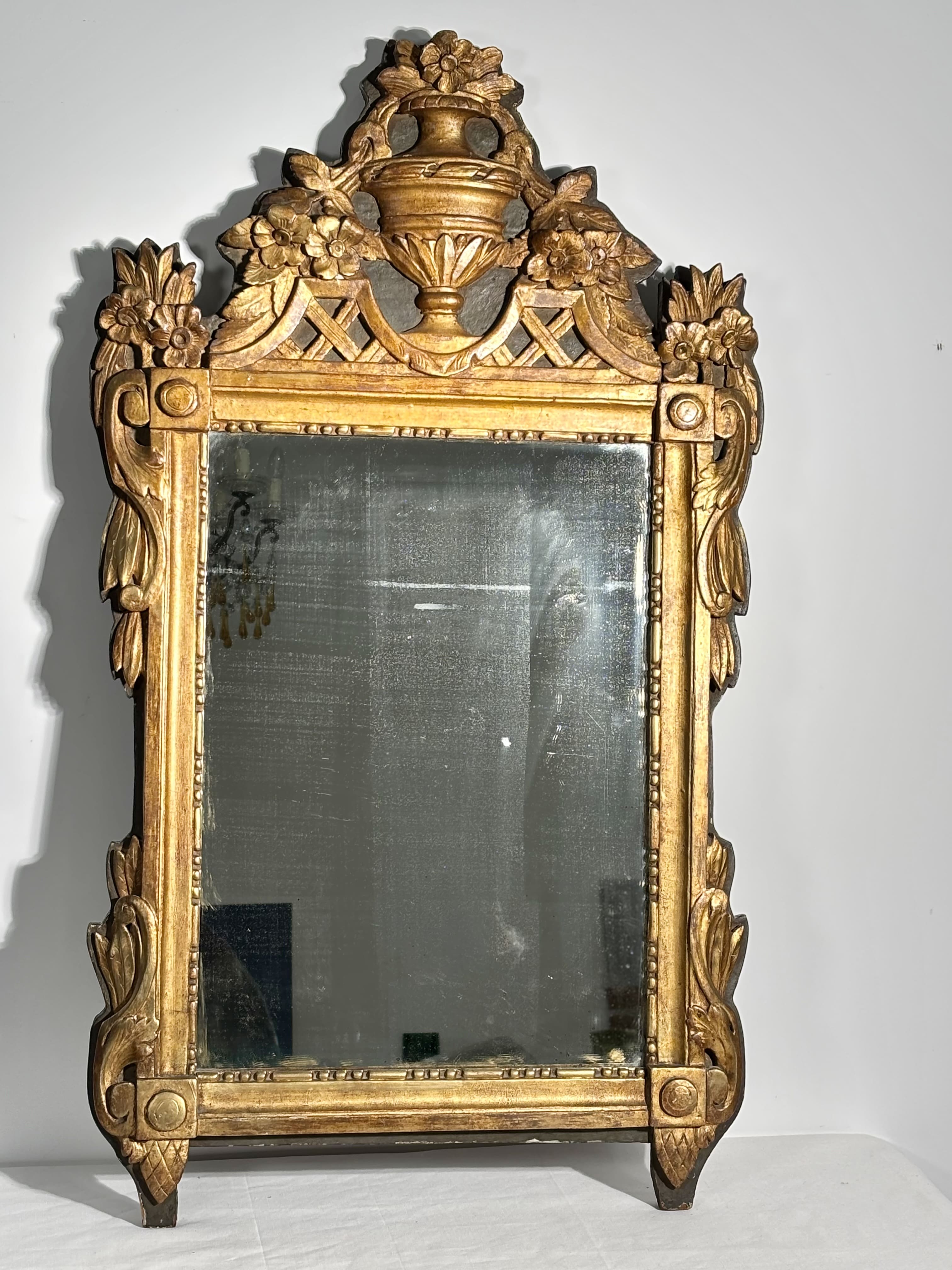
A fine pediment mirror, the giltwood and stucco frame highlighted by a frieze of pearls and broken batons, surmounted by a flowering vase finial. Mercury glass. Louis XVI period. France, 18th century
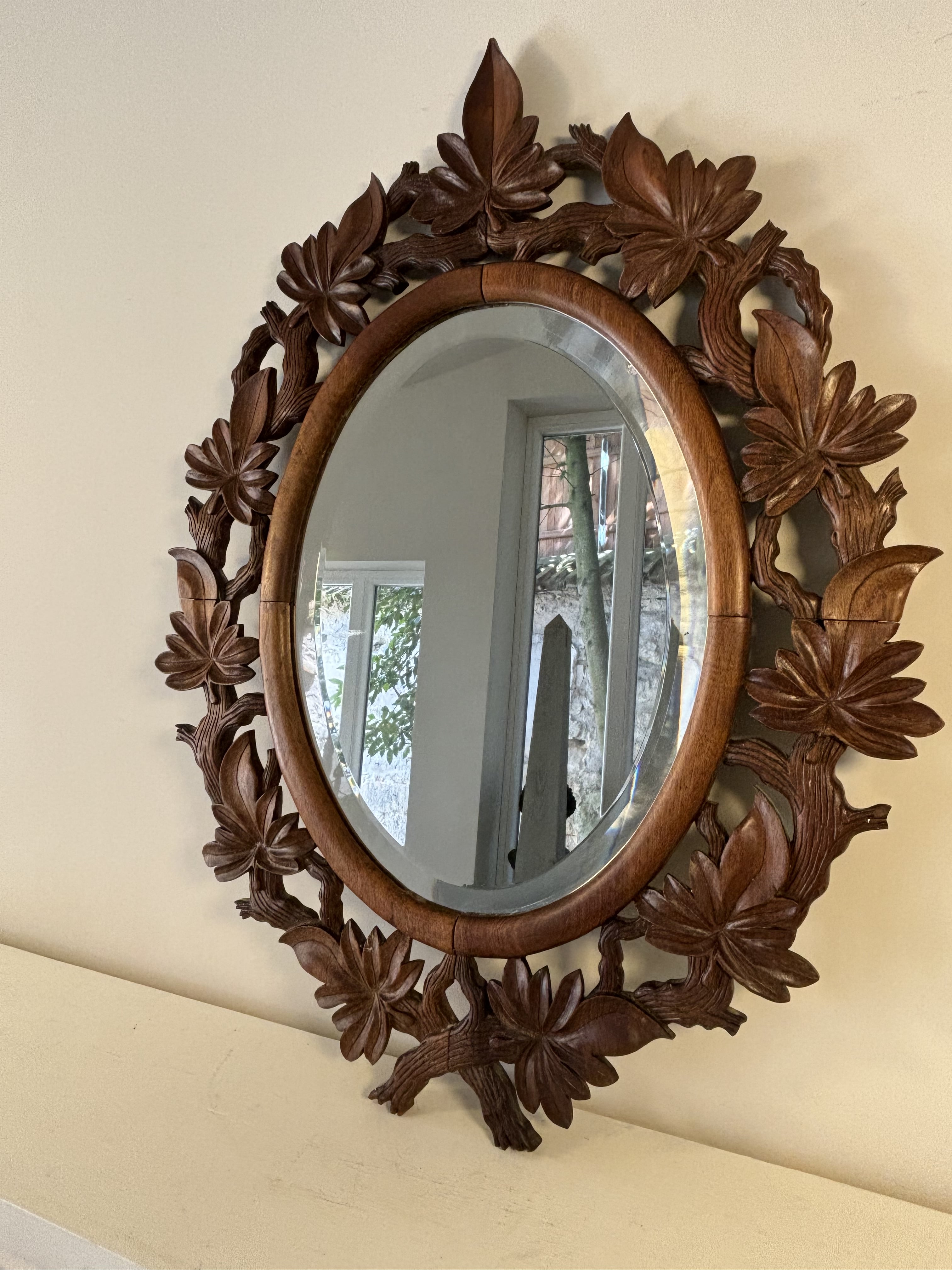
An elegant carved wood oval mirror, finely worked with branches and foliage decoration. Mercury-backed bevelled plate, 19th century. In the Black Forest style.
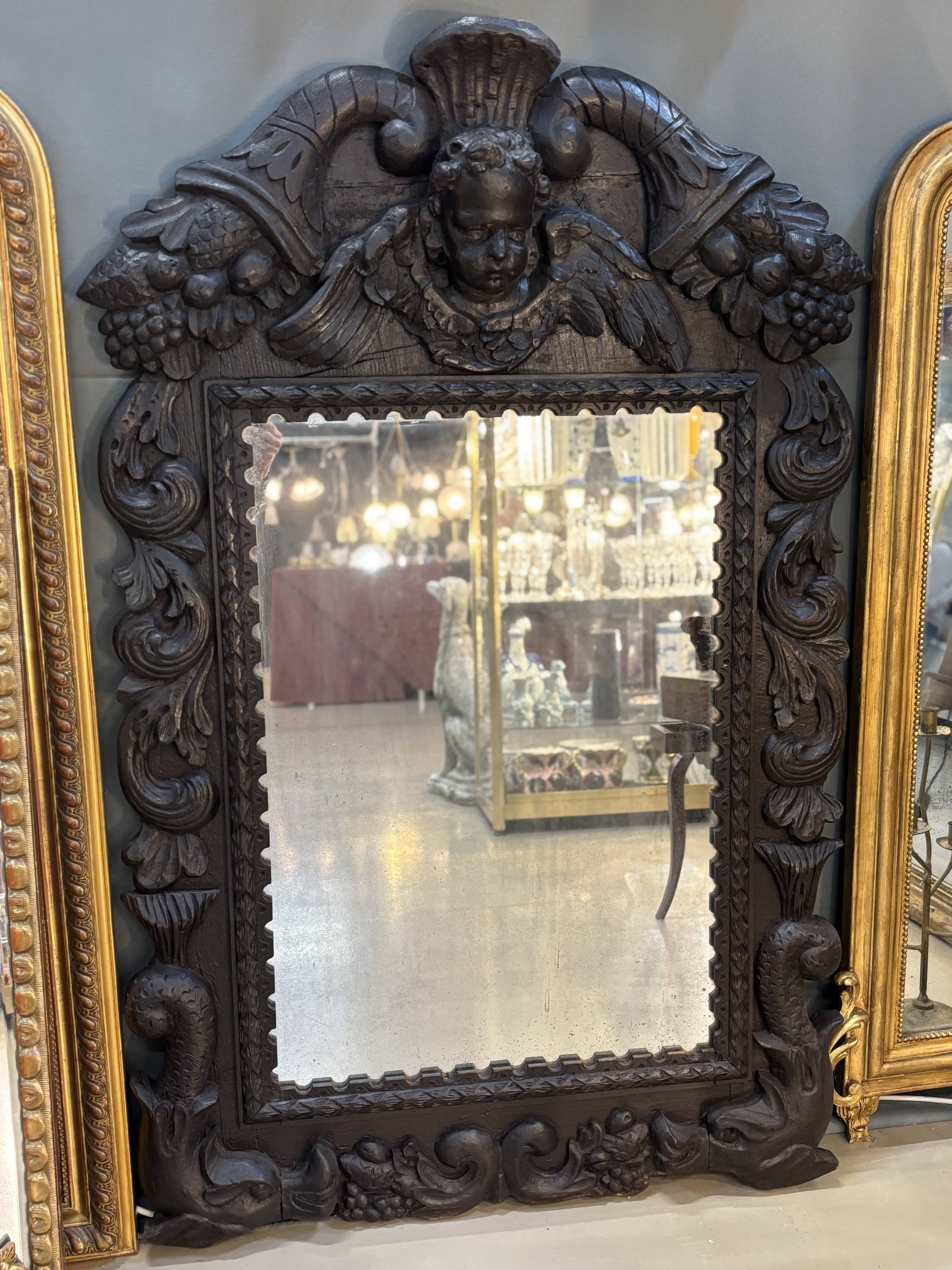
An important ceremonial mirror in richly carved and moulded oak. The pediment is centred with a high-relief mascaron depicting the face of a Putto (or cherub) with fleshy features, emerging from a stylised shell and outspread wings. The upper crosspiece is adorned with generous garlands of fruit (bunches of grapes, pomegranates, pinecones) symbolising abundance. The lateral uprights, with their sinuous lines, are carved with acanthus scrolls and interlaced motifs. The lower section is distinguished by an architectural base resting on two stylised confronted dolphins, a classical motif of Rhenish Baroque symbolism. The mirror is framed by a fine inner moulding decorated with a row of pearls and dentils, providing a delicate contrast to the powerful exterior carving. Structure: excellent state of stability. Superb deep, dark patina, characteristic of productions from Eastern France and the Rhine Valley. Joinery: period assembly with solid plank back, showing traces of ancient tools and natural shrinkage splits attesting to its age. Mirror: glass replaced at a later date (decorative scalloped border), in perfect condition.
17th century
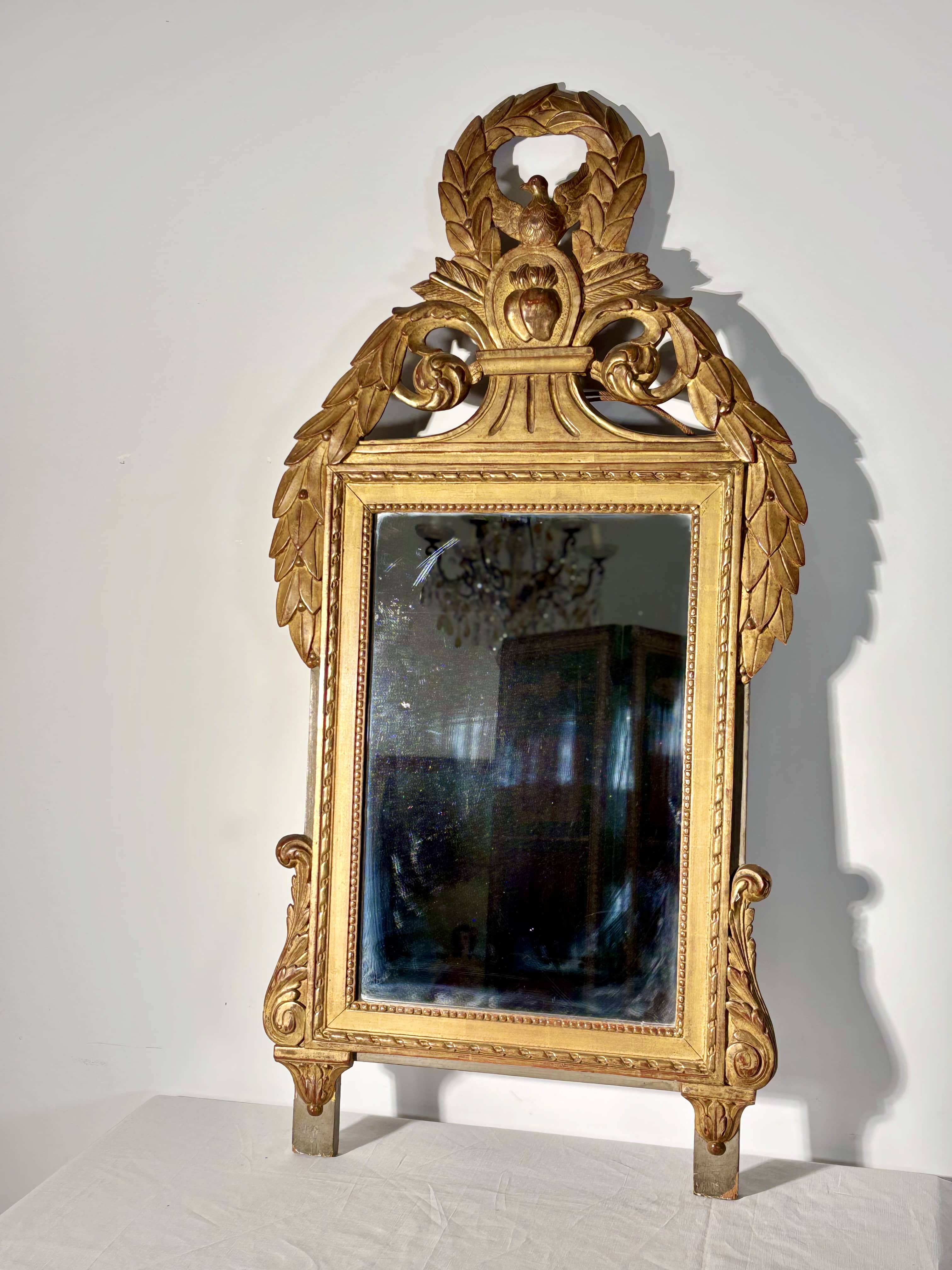
An important rectangular mirror in carved and giltwood. This model stands out by a striking and richly worked pediment. At the summit, a dove with deployed wings, symbol of peace or love, is inscribed within a laurel wreath. It surmounts a central medallion adorned with two flaming hearts pierced by arrows, resting on a fluted base. Frieze of twisted ribbons and pearl frieze. The frame is flanked by broad foliage and laurel drops descending along the uprights. The lower section is adorned with two stylised volute consoles, allowing the mirror to rest elegantly on a chimneypiece or console.
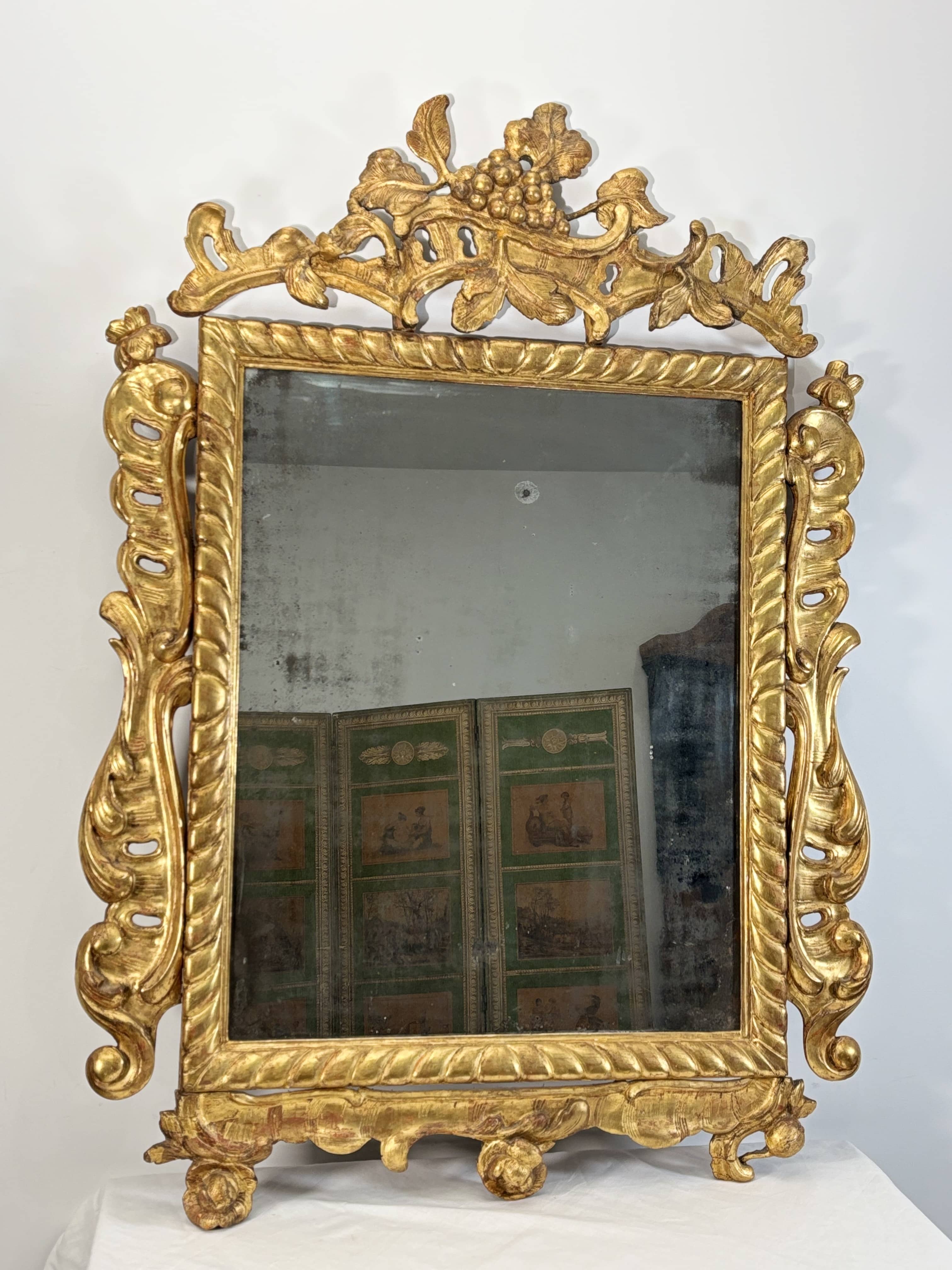
Elegant Italian mirror from the mid-18th century, in carved wood gilded with gold leaf.
The frame is adorned with a twisted moulding with oblique gadroons.
Openwork pediment with naturalistic decoration centred on a cluster of grapes in high relief, flanked by vine leaves with incised veining and sinuous asymmetrical tendrils, a Bacchic motif characteristic of mid-18th-century Italian workshops.
The openwork lateral uprights are rhythmed with water leaves and terminate in ball volutes.
The base is composed of scrolls with carved rosettes. Original mercury glass showing some foxing.
Original gilding largely preserved, revealing the red bole, natural patina.
Italy, 18th century
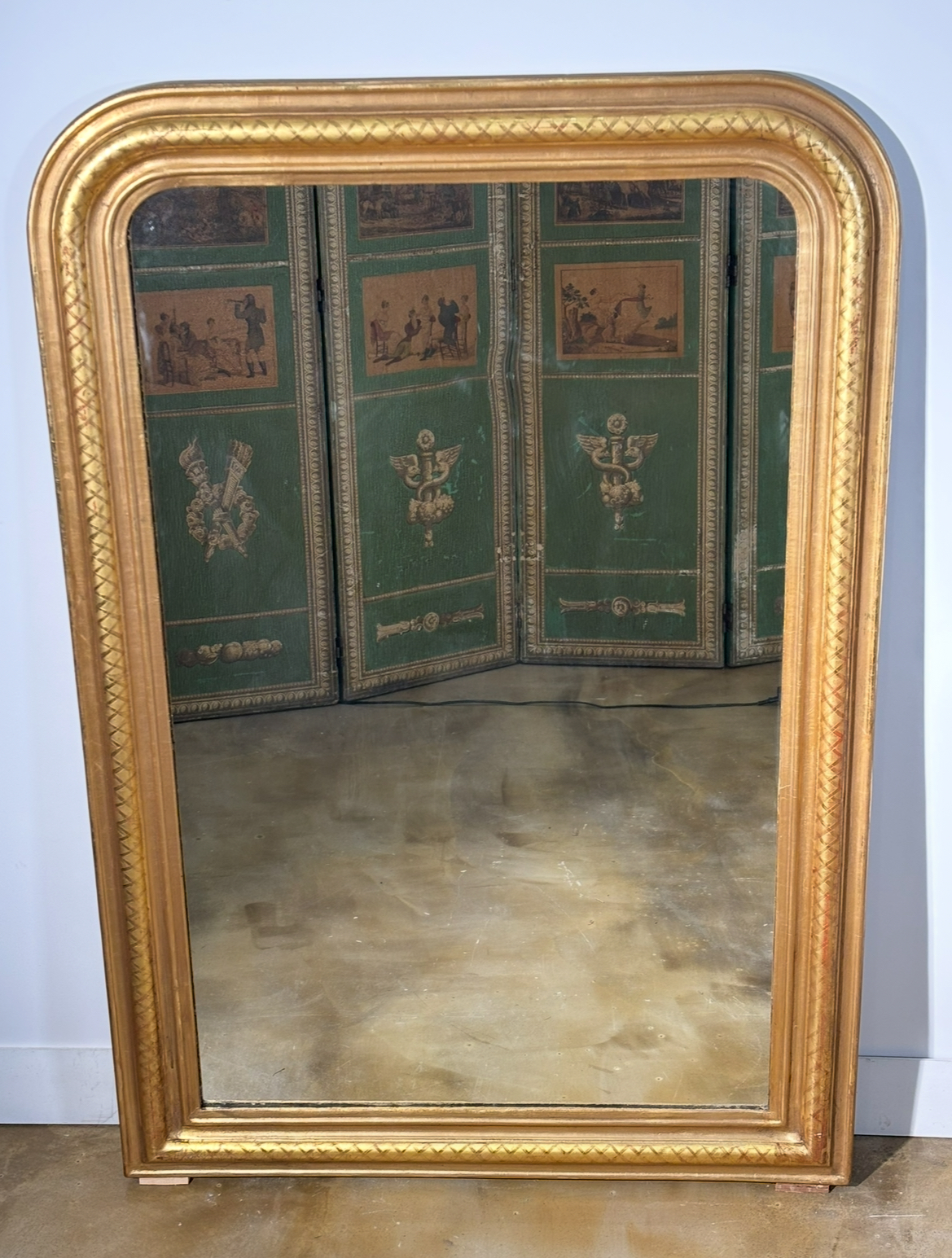
Louis-Philippe period overmantel mirror (circa 1850) featuring a characteristic silhouette with rounded upper corners (known as “à épaules”, or shouldered).
The wood and stucco frame is adorned with its original gold-leaf gilding, displaying a fine patina. This model is distinguished by its principal moulding decorated with a frieze of engraved lattice-work, a classic and understated motif lending a geometric refinement to the whole. The inner border is emphasised by a row of smooth beading accentuating the relief of the frame.
The mirror plate is original, offering that deep lustre characteristic of period looking-glasses.
The reverse of the mirror is entirely enclosed by its original wooden backboard.
The red bole is visible in places beneath the gilding, bearing witness to traditional gilding techniques.
Fine state of preservation.
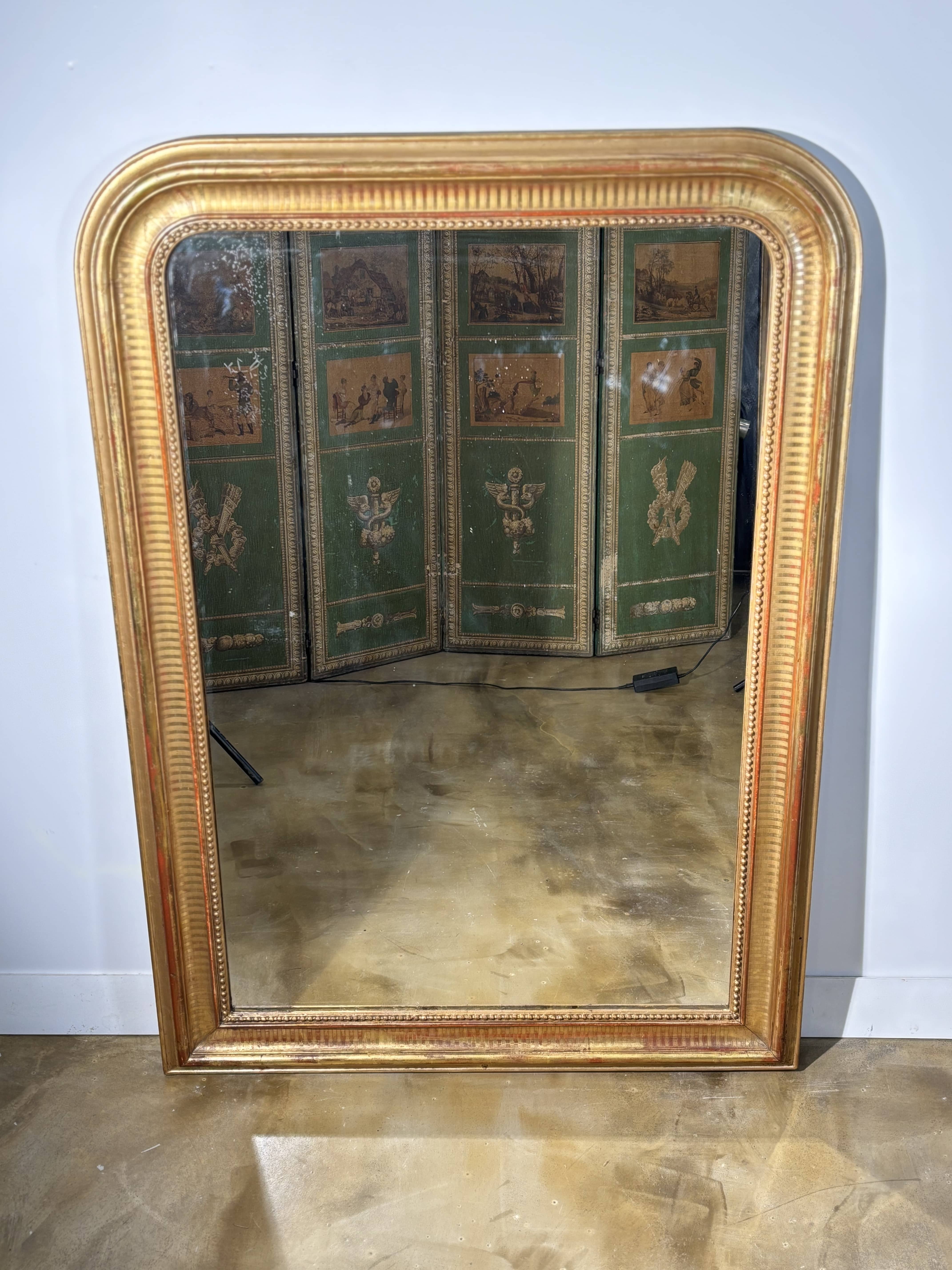
Large Louis-Philippe period overmantel mirror in moulded and stuccoed wood, gilded with gold leaf over a red bole ground. Rounded upper corners and straight base, the characteristic signature of this French production from the third quarter of the nineteenth century.
The principal moulding is enriched with a finely incised radiating fluting, rhythmically bordered by a frieze of pearls.
The whole rests upon a broad, smooth flat band. The original mercury glass, with its characteristic spotting, unambiguously attests to the antiquity of the piece.
Period backing of assembled pine planks to the reverse.
The gilding, preserved almost in its entirety, allows the underlying red bole to show through in places — a trace of the traditional fine-gold work of nineteenth-century French gilders, lending the piece a luminous and warm patina.
Fine overall state of conservation.
Wear consistent with age and use.
France, nineteenth century
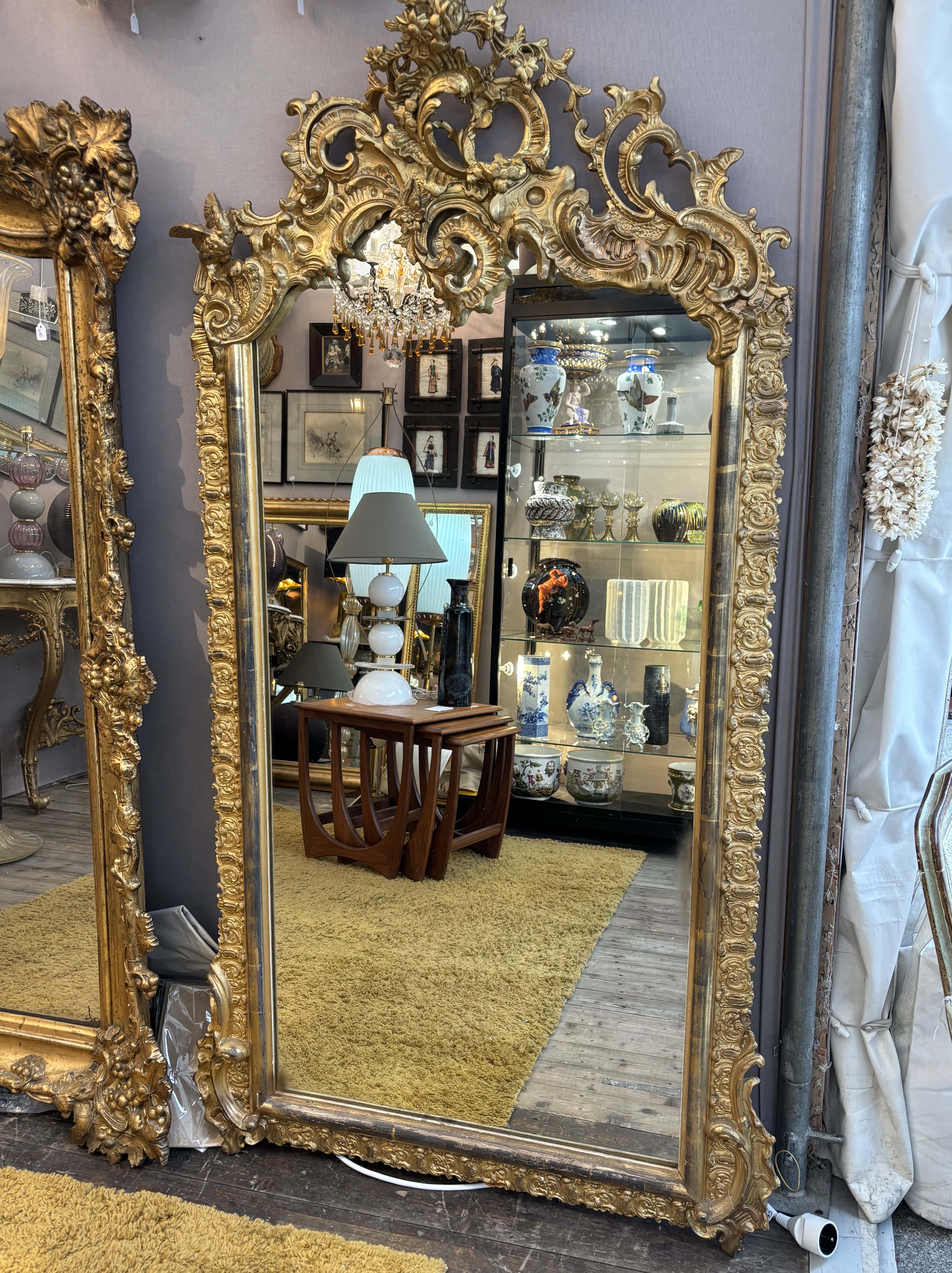
A Louis XV-style mirror in carved and giltwood, adorned with an openwork pediment decorated with a bird amid scrollwork and foliage. The frame, with floral and volute decoration, presents a fine and balanced carving. Antique gold-leaf gilding, with a fine patina and some signs of use. Original mirror plate. French work, 19th century.
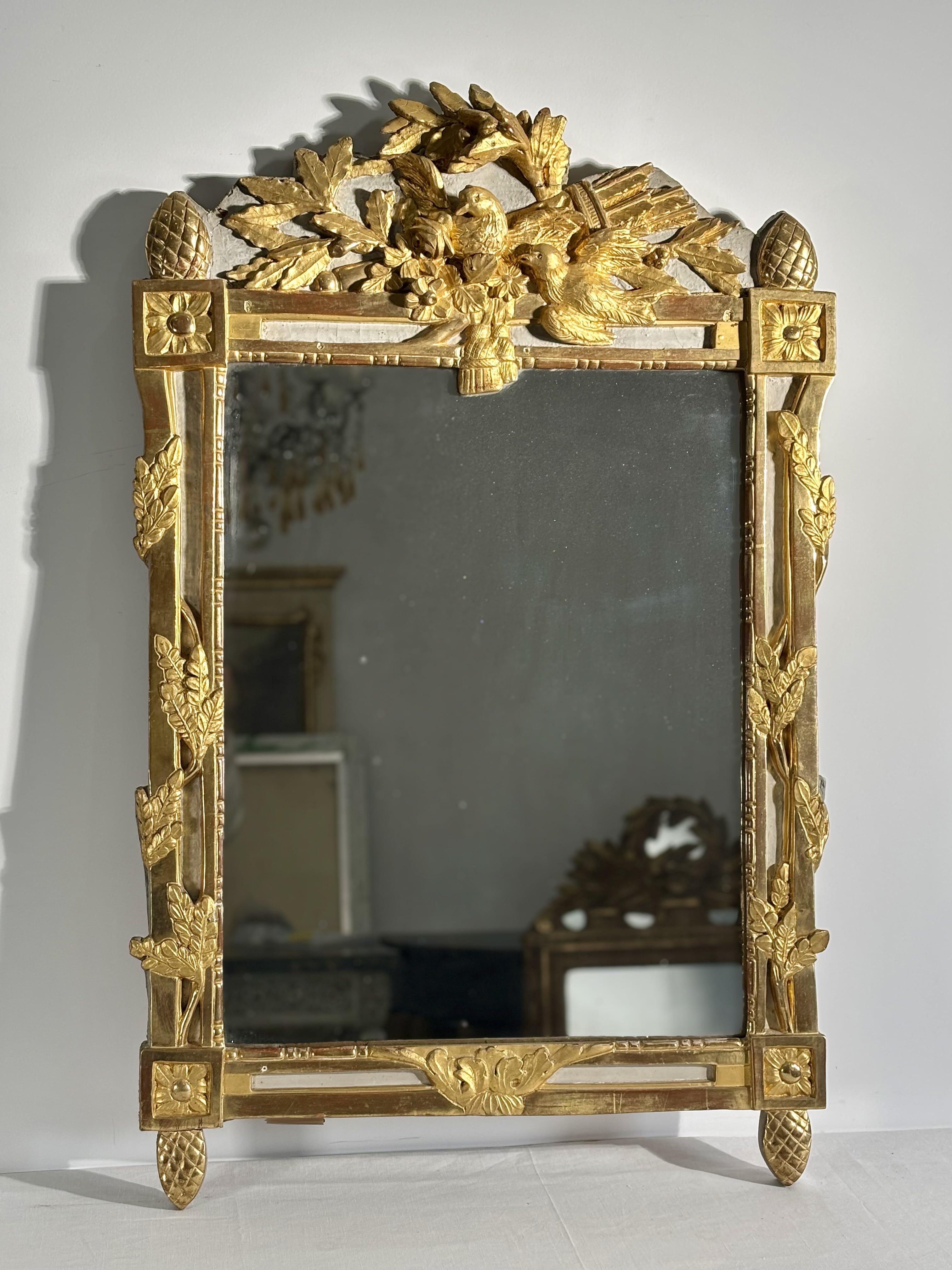
A very fine Louis XVI-period mirror in carved giltwood and parcel-gilt, with a pediment adorned with birds, a quiver filled with arrows, and flowers. Gold-leaf gilding. The uprights are decorated with foliage and terminate in pine cones. Original mercury-backed mirror plate. Later wood backing.
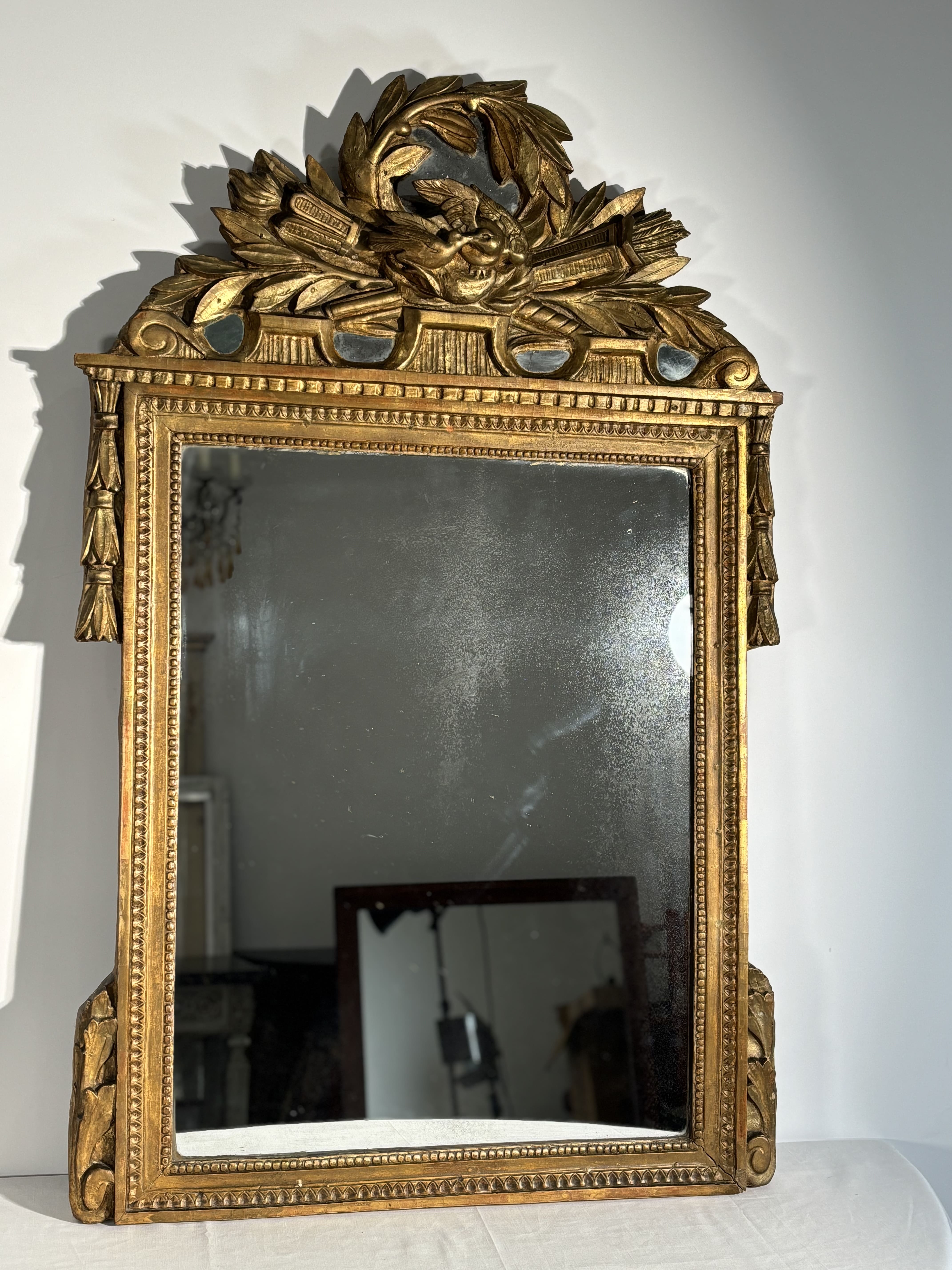
A very fine carved giltwood mirror of the early 19th century in Louis XVI style. It presents a pediment adorned with a laurel wreath, symbol of success, doves, symbol of peace, and a quiver filled with arrows, symbol of love. Frame with pearl friezes, side drops decorated with acanthus leaves. Original plate.
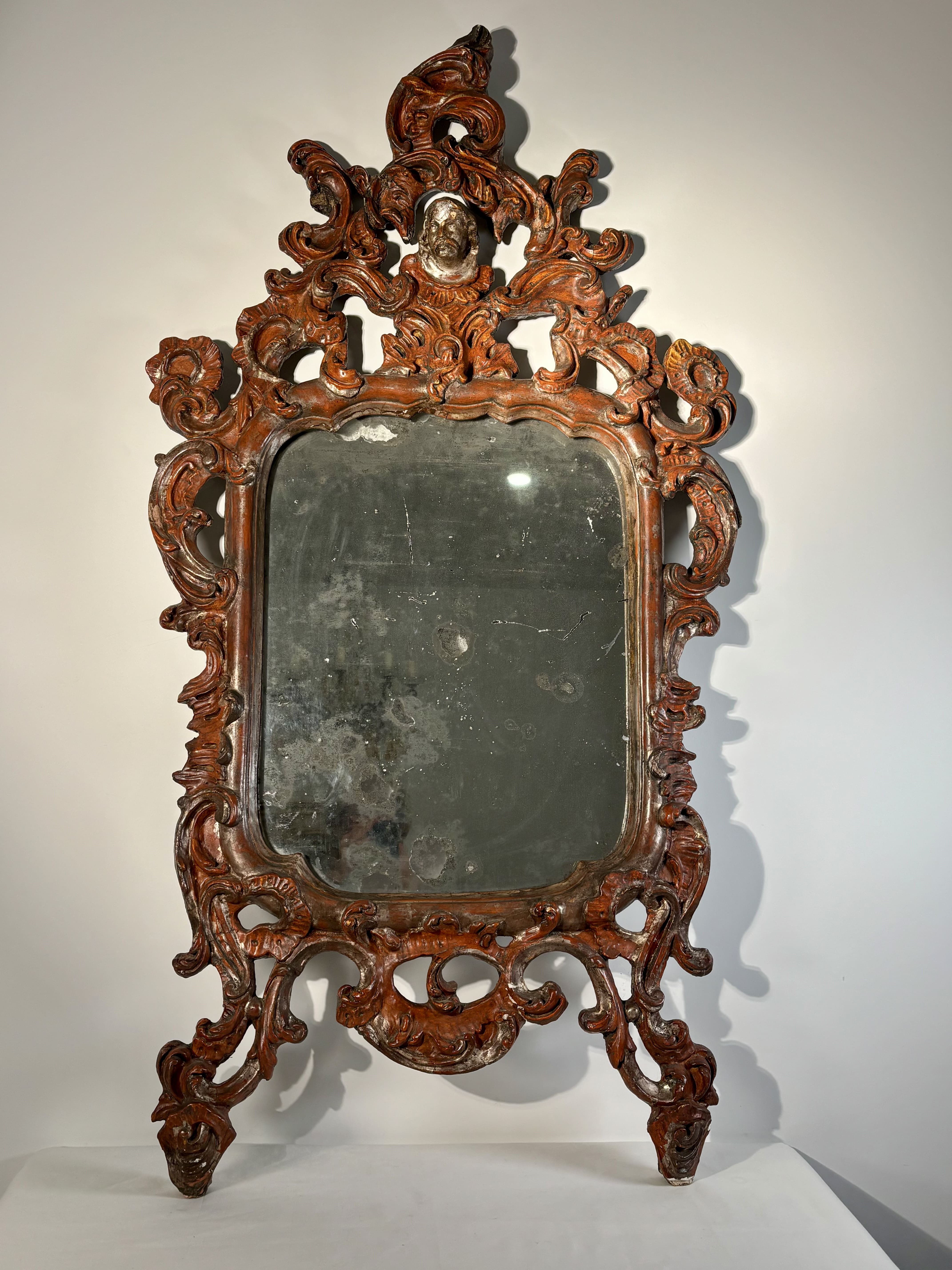
A superb Italian Baroque mirror in carved openwork wood, presenting a highly animated Rocaille decoration and great richness of execution. The frame is entirely worked by hand, with a remarkable interplay of volutes, foliage, cartouches and scrolls characteristic of the Baroque style of Northern Italy. The upper section is adorned with a figure sculpted in high relief, set within a Rocaille decoration. The deep piercings testify to virtuoso work, typical of the 18th-century Italian ateliers. The feet are integrated into the frame decoration in a continuous ascending movement, according to a typology proper to the Veneto and Piedmont. Original plate. Wear and losses, spotted silvering linked to age.