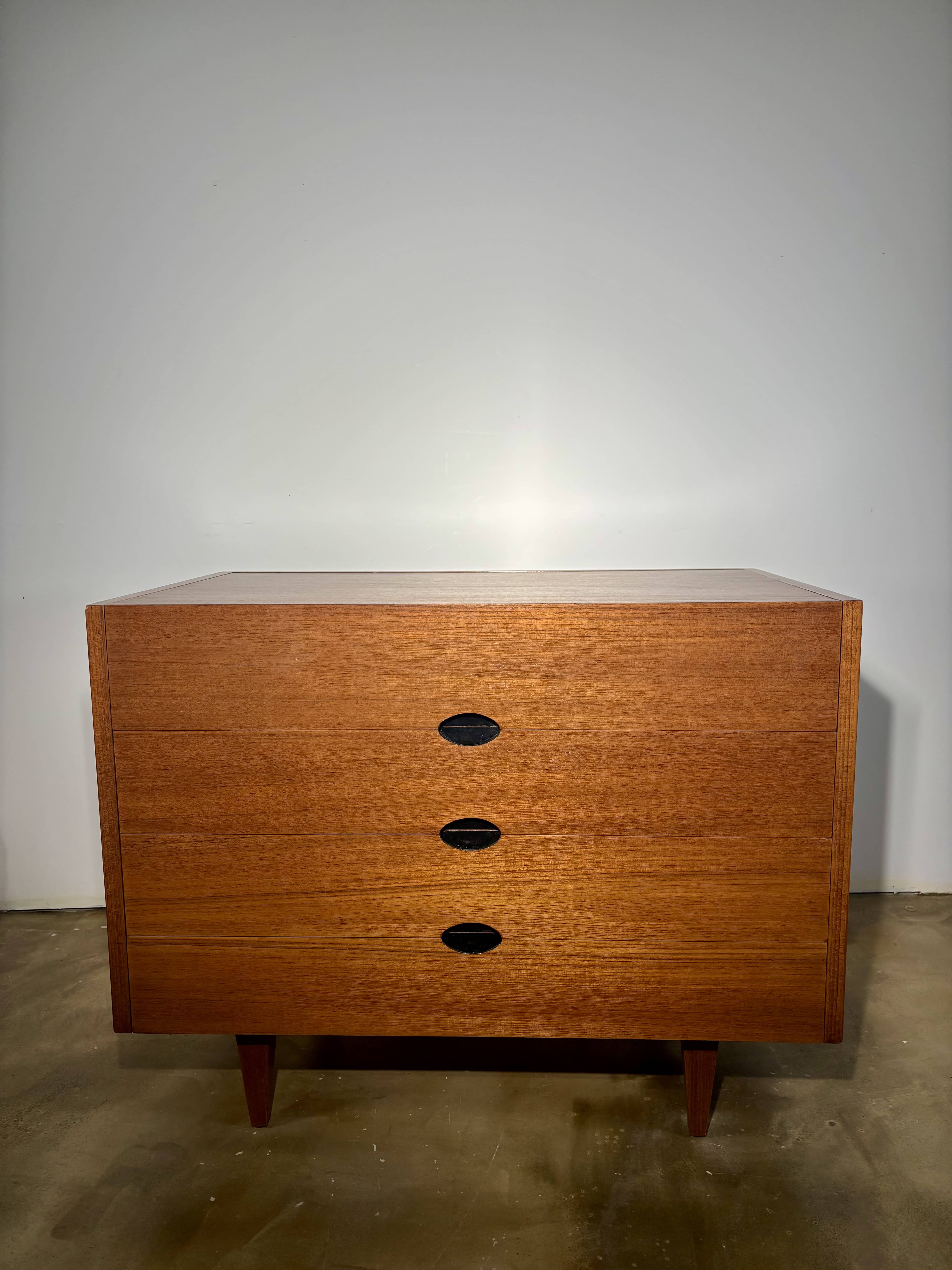
This piece takes the form of a compact chest of drawers resting on four slender compass legs, a signature of 1950s–60s design. The front, of great sobriety, is punctuated by three drawers with recessed oval handles in contrasting black, lending a discreet and refined graphic touch.
The teak veneer, with its warm and luminous tones, has been carefully selected to showcase a fine and regular grain.
The remarkable feature of this piece lies in its transformable system:
- The upper top opens by means of a lift-up flap- The inner face of this flap is entirely fitted with a mirror- A second mirror is integrated into the lower section (the top), creating a play of reflections and a true visual depth
- The sliding top extends towards the user, forming a functional shelf (dressing table or writing surface). This ingenious device, typical of 1960s design, perfectly illustrates the pursuit of space optimisation and versatility: a piece of furniture that is at once discreet and transformable, conceived for modern interiors.
Paul Geoffroy’s work is part of the post-war French modernist movement, influenced by Scandinavian design and functionalist principles. Here one finds:. Pure lines and balanced proportions. Restrained ornamentation. The pursuit of intelligent and modular use. Quality of execution and attention to detail. This piece bears witness to a design that is both elegant and pragmatic.
Traces on the silvering of the mirrors attest to their authenticity.
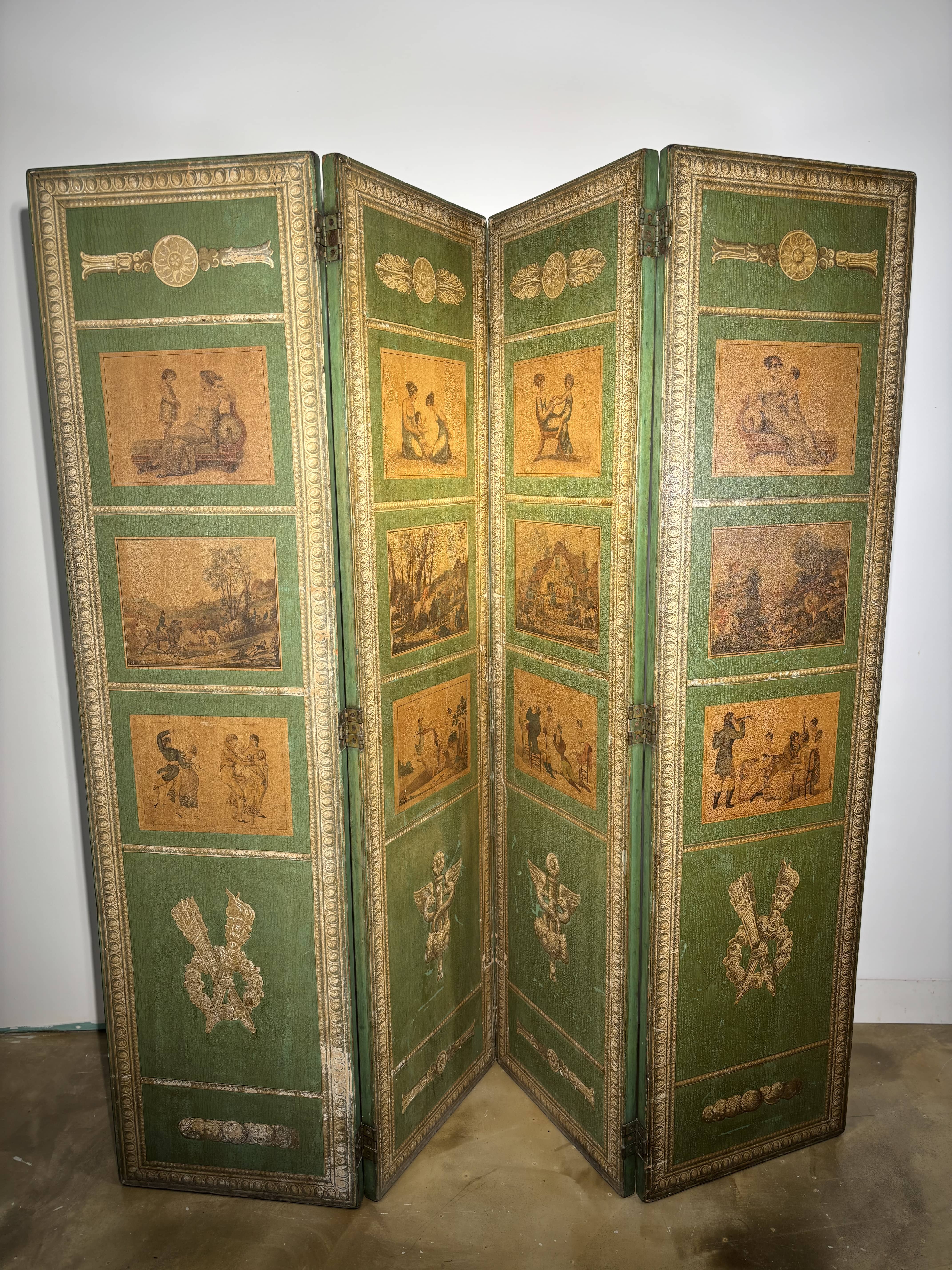
An exceptional and rare four-leaf screen presenting Arte Povera (or Lacca Povera) decoration on an antique-green lacquered ground. This piece constitutes a refined testimony to the taste of the Directoire period, marking the transition between the delicacy of the eighteenth century and the rigour of the First Empire. The decoration is composed of applied engravings after the works of Carle Vernet (1758–1836). One recognises the artist’s favoured themes: hunting scenes, genre scenes, and the neoclassical repertoire including winged caducei, quivers, torches and laurel wreaths. The Arte Povera technique consists of the meticulous application of engravings onto a painted support, the whole protected by numerous coats of resin varnish. The reverse of the screen is treated with equal care, presenting moulded panels painted in a tone of green. Late eighteenth / early nineteenth century.
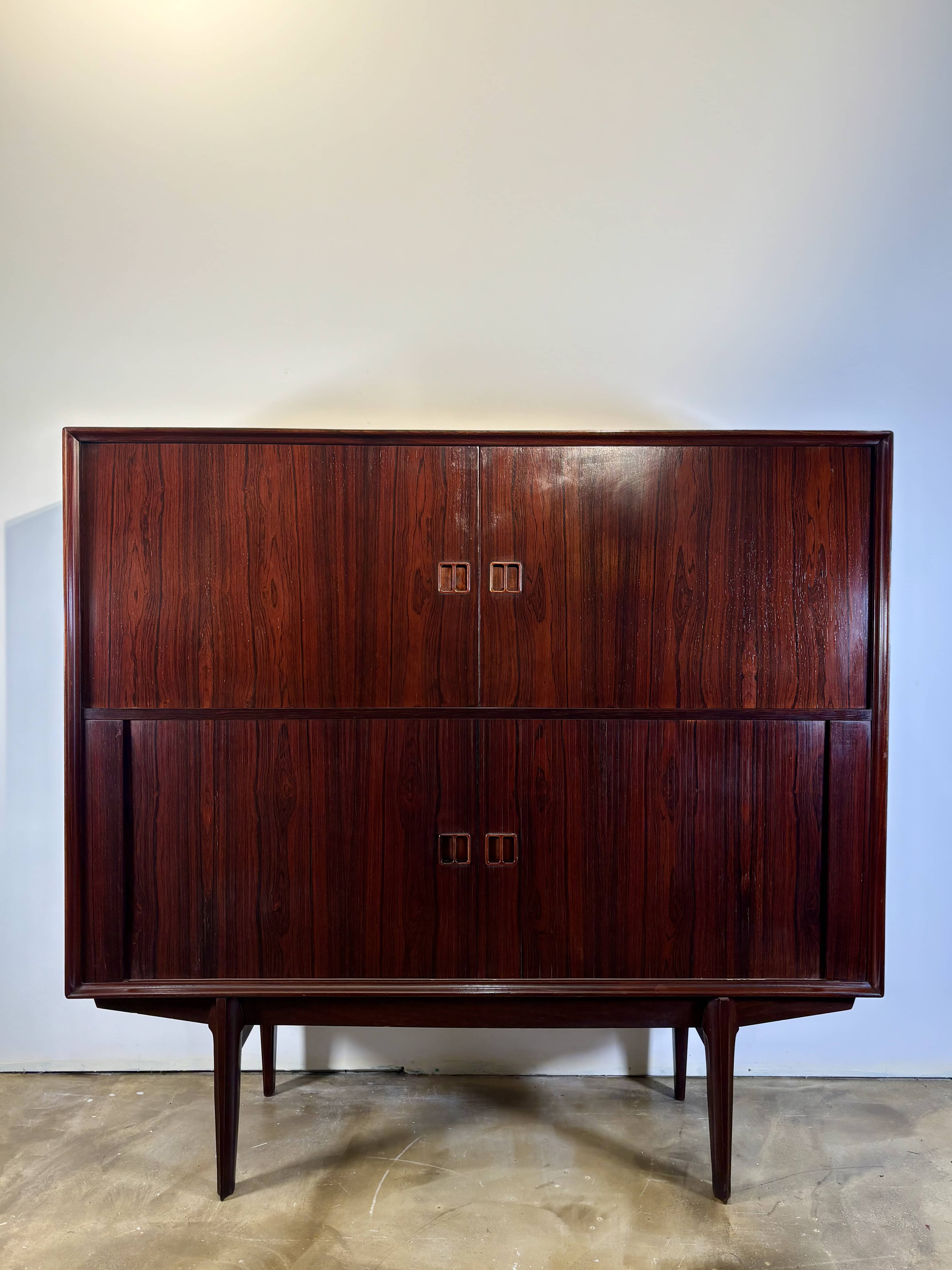
Exceptional Highboard-type storage cabinet (tall sideboard) designed in the 1960s by the celebrated Belgian designer Oswald Vermaercker. This masterpiece perfectly embodies the golden age of Belgian modernist design and the Scandinavian refinement that strongly influenced Belgian creation during the mid-twentieth century.
Quality of Materials and Woodwork:
This piece stands out for its use of Rio rosewood veneer (Brazilian Rosewood) of remarkable quality. The wood grain, dark, contrasted and deeply expressive, has been meticulously selected and applied in a “book-matched” pattern on the doors and the top. The flamed patterns of the rosewood lend this piece of furniture a unique sculptural presence and a highly decorative dimension.
Design and Features:
The cabinet presents a superb geometric façade divided into two distinct sections:
• Upper section: Opens with two hinged doors onto a fitted interior, comprising shelves and removable vertical dividers, ideal for use as a bar or writing desk.
• Lower section: Fitted with two sliding doors that optimise space, revealing wide adjustable storage shelves.
The signature detail lies in its handles: magnificent rectangular finger pulls, carved in relief directly from the solid wood, typical of Oswald Vermaercke’s craftsmanship. The whole rests on a slender, tapered sledge base, which brings an impression of airy lightness elegantly contrasting with the robustness of the cabinet’s body.
This piece is in excellent original condition. The original varnish has retained all its lustre, revealing the superb natural warm patina of the rosewood. Structure perfectly sound and stable. The doors and sliders operate smoothly. Rare minimal traces of use consistent with its age. Excellent condition, very beautiful patina.
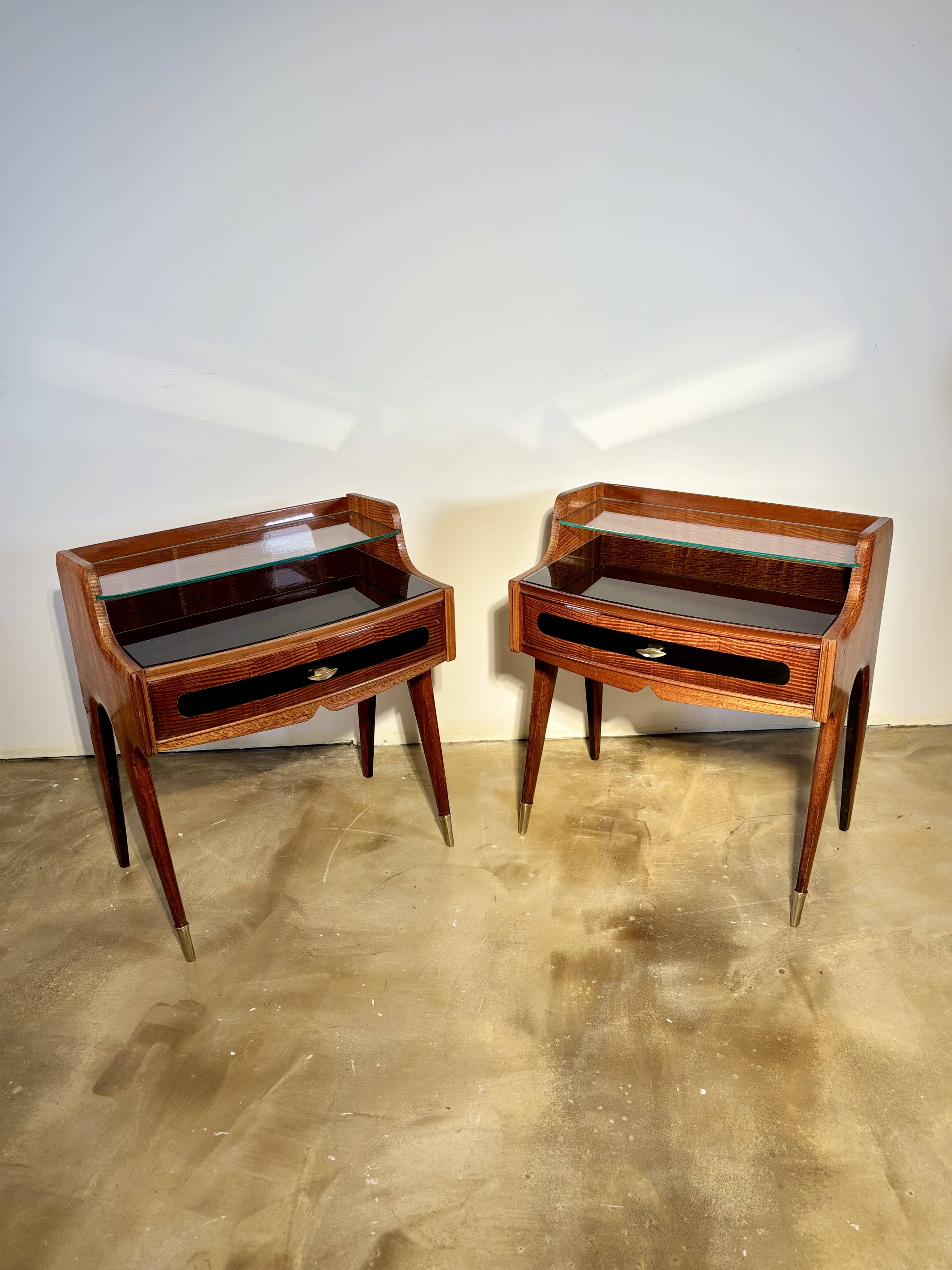
A remarkable pair of bedside tables (or sofa ends) in flamed mahogany veneer, representative of prestigious mid-twentieth-century Milanese cabinetmaking, in the manner of Paolo Buffa.
The veneer reveals a russet-orange shimmer with golden reflections that shift according to the light. The sides, sculpted in an inverted arch, lend the whole a remarkable lightness despite the presence of the material. Four tapered legs terminate in conical feet of cast brass.
Each piece is fitted with a drawer featuring a two-tone façade — a band of pear wood stained black, a noble substitute for ebony, set against a warm mahogany ground — closed by an elegant ogee cut-out. The cast brass handle, shaped as a flattened gondola, is characteristic of the decorative vocabulary of northern Italy in the 1960s. The top, covered with black églomisé glass, is surmounted by an open gallery with a clear glass shelf edged in green.
Sold as a pair only.
Very good overall condition. Veneer intact, drawers functional. Slight traces of use consistent with age.
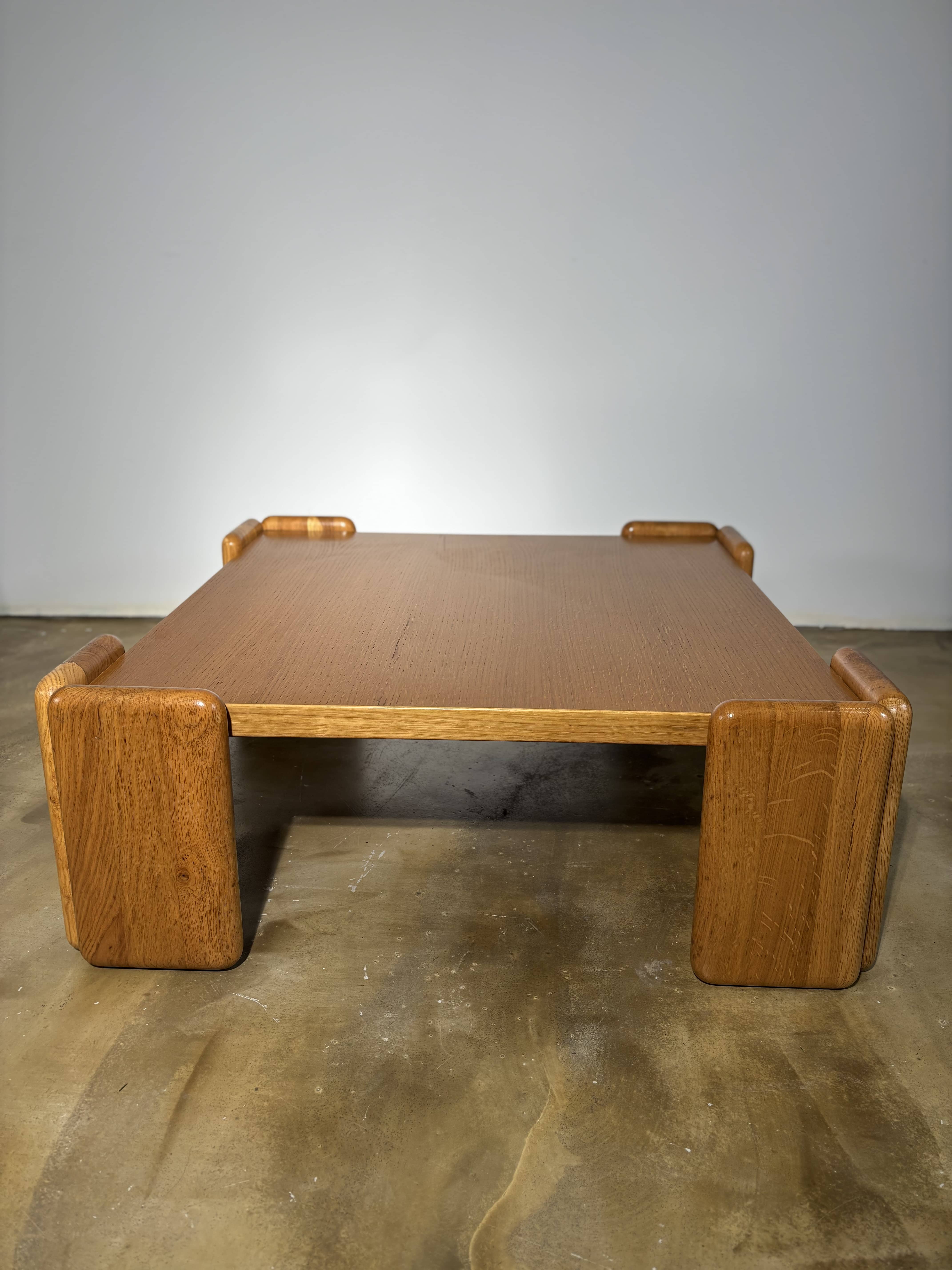
A fine coffee table designed by Mario Marenco for Mobilgirgi, Italy, 1970s.
Crafted in solid oak, this table is distinguished by its four characteristic legs composed of rounded slats that rise above the top — an immediately recognisable signature of Mario Marenco’s design.
The top rests between the legs in a perfect balance of sturdiness and lightness. The texture of the oak, the knots in the wood and the carefully rounded edges bear witness to superior craftsmanship.
Very good overall condition, with a patina of use consistent with the age of the piece.
Italy, 1970s.
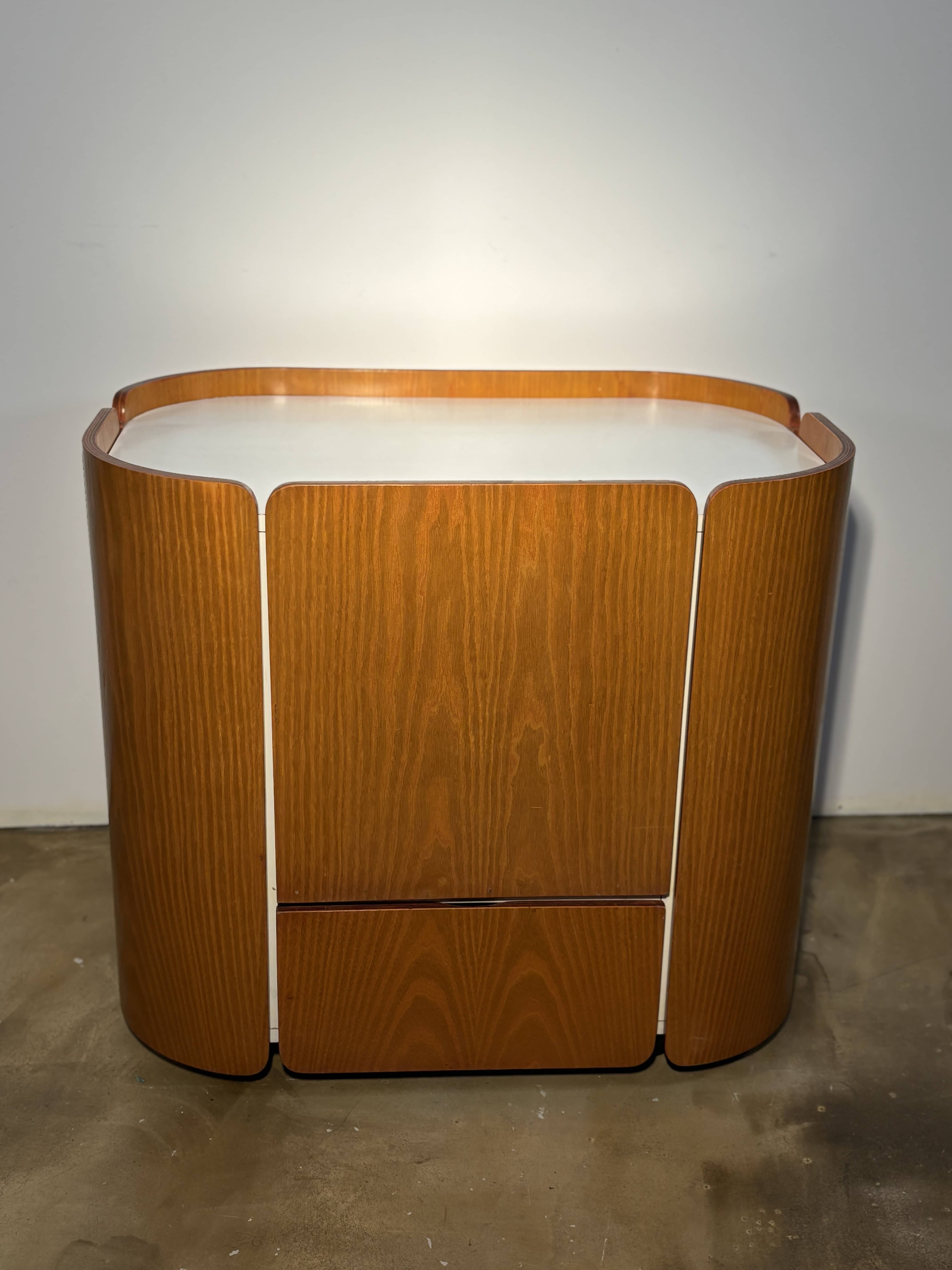
A rare wheeled occasional drinks cabinet known as a Dry Bar Cart, an emblematic creation by the celebrated Milanese architect and designer Carlo di Carli (1910-1999) for the prestigious Italian editor FARM (Scorzè), circa 1960/1965.
This piece is distinguished by the masterly use of thermoformed bent wood, the editor’s speciality, offering lines of organic and fluid purity. Conceived to be both functional and mobile, it stands on original castors discreetly concealed beneath its base, allowing it to be moved with ease about a drawing room.
Two large curved doors open to reveal suspended semi-circular shelves, fitted with original silvered metal retaining straps to secure glasses and decanters.
The front opens by means of a fall-front fitted with an articulated mechanical stay. It reveals a generous central compartment lacquered in white, specially designed to store bottles upright in complete safety. In the lower section, a wide concealed drawer is harmoniously integrated into the plinth for the storage of bar accessories.
As the rear of the cabinet benefits from the same carefully applied veneer as the front, this bar may be used at the centre of a room or at the end of a sofa.
Materials: blond walnut veneer, service surfaces in laminate/white lacquer, original stay and fittings.
Excellent overall condition, smooth mechanism, functional castors. Light oxidation on the hinge metalwork commensurate with its age (see photograph).
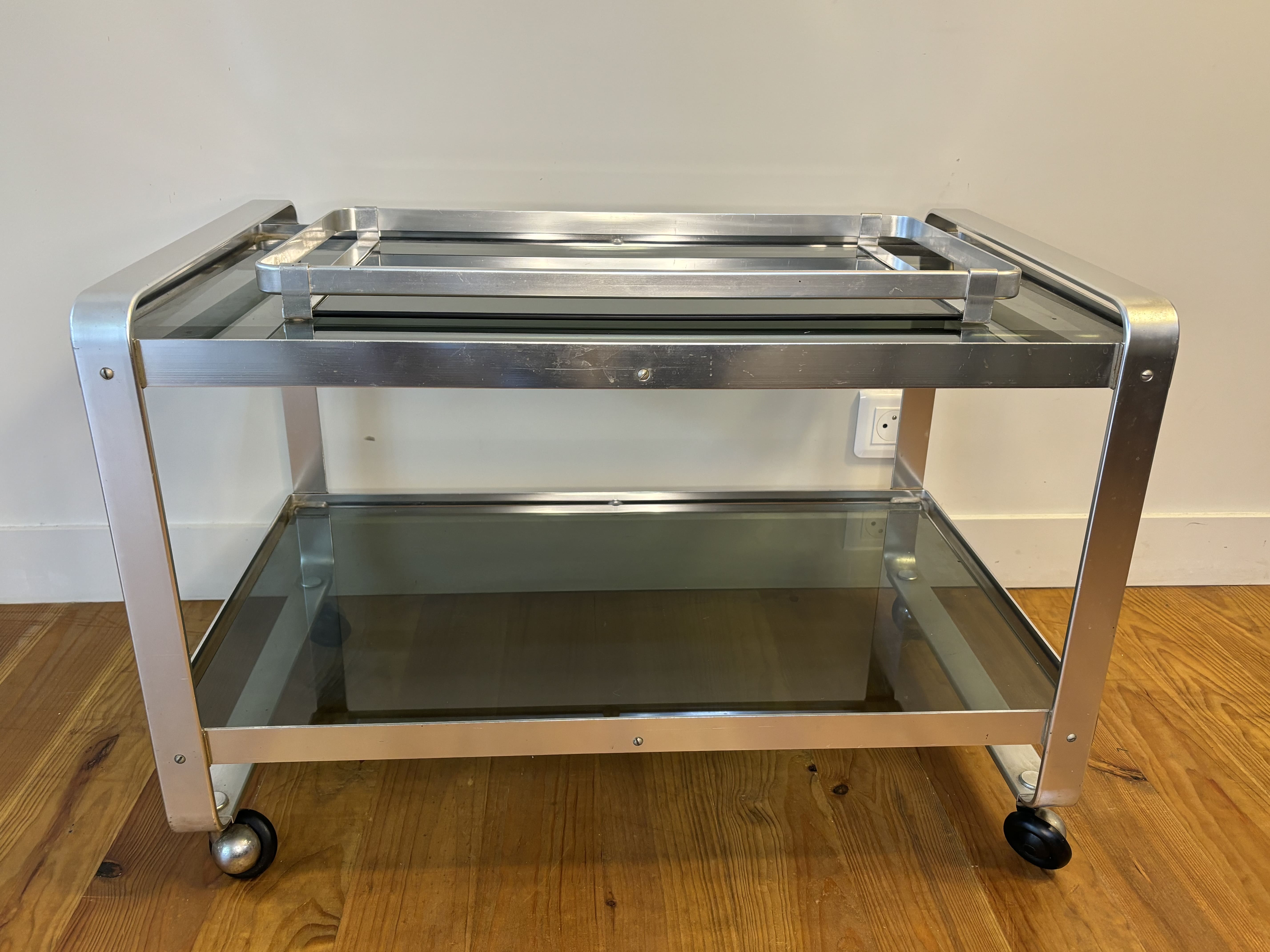
A very fine design rolling cart in brushed steel and dark-green smoked glass on swivel wheels. The table is sold with its serving tray. 1970s.
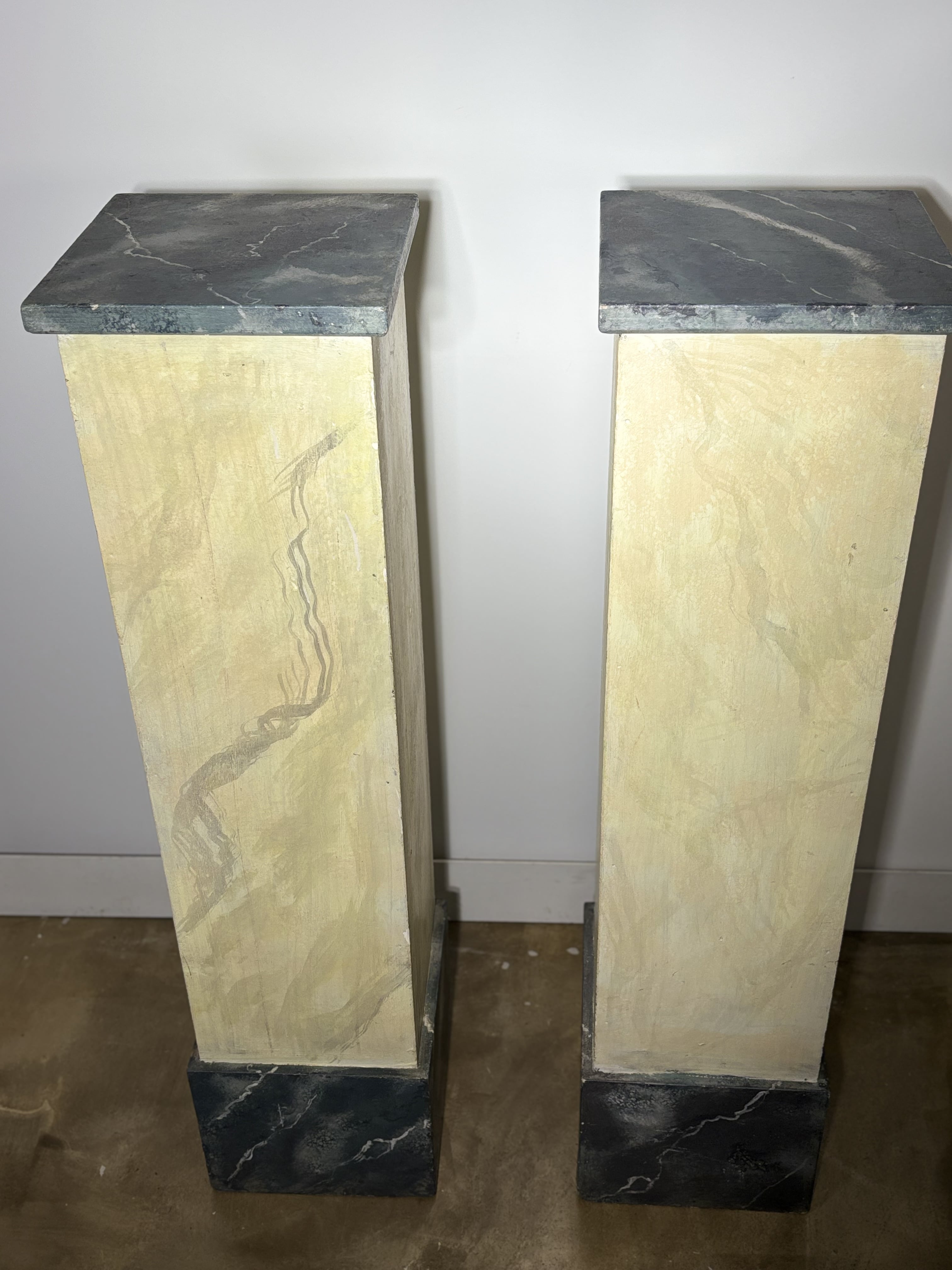
An elegant pair of pedestal columns in wood, with painted decoration in faux-marble trompe-l'œil. The central shaft imitates a beige-yellow marble with fluid veining, while the bases and upper tops evoke a black marble veined with white. Decorative work executed by hand in the 1970s in the spirit of revisited classical interiors. Perfectly stable and solid. Very good general condition. Weight: 11.500 kg each.
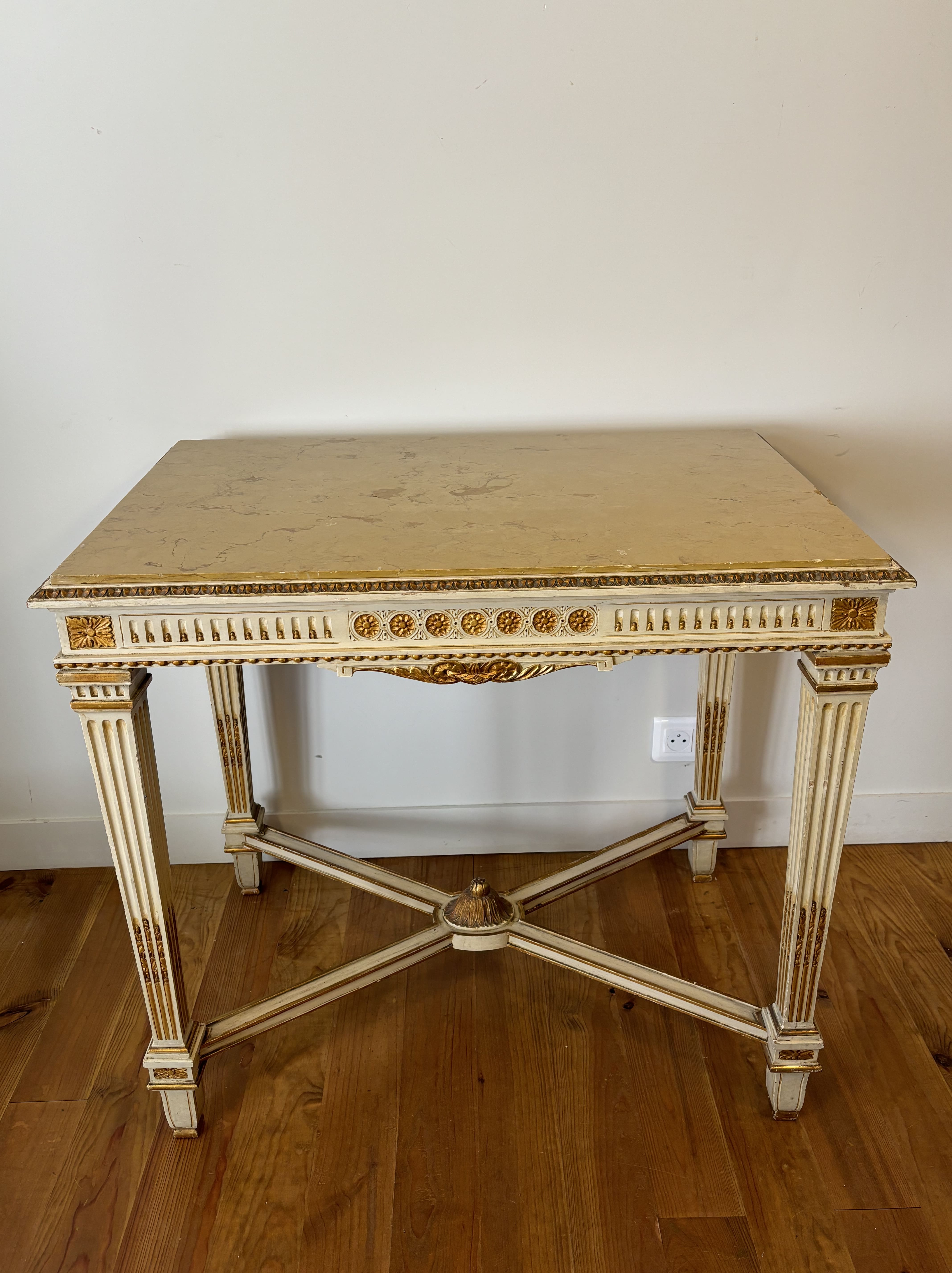
A fine Italian Neoclassical console table from the mid-20th century, standing on four legs, in cream lacquered and gilded wood, the frieze decorated with rosettes, square-section legs tapered and fluted. Stretcher surmounted by a finial, cream marble top.
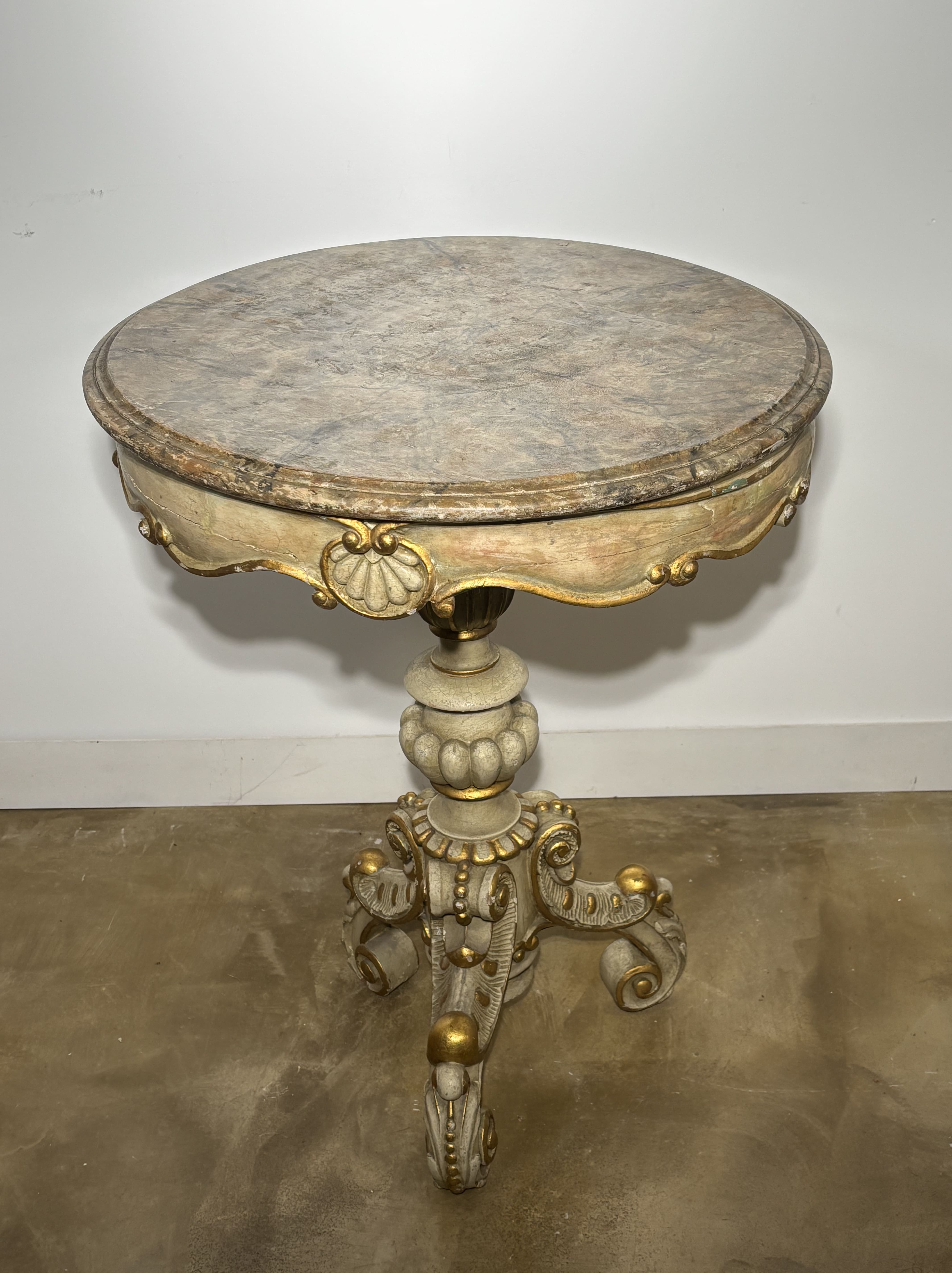
An elegant round guéridon in painted wood resting on a tripod base richly carved with scrolls, beading and stylised shells, enhanced with gilt highlights. The central baluster shaft is ornamented with gadroons and bead motifs, in a Baroque and Rocaille spirit revisited in the 19th century. Later patina. The circular top is in painted wood decorated in faux marble in tones of brown and ochre, a sought-after decorative technique that lends the whole piece refinement and originality. Good overall condition, with wear and patina of time.
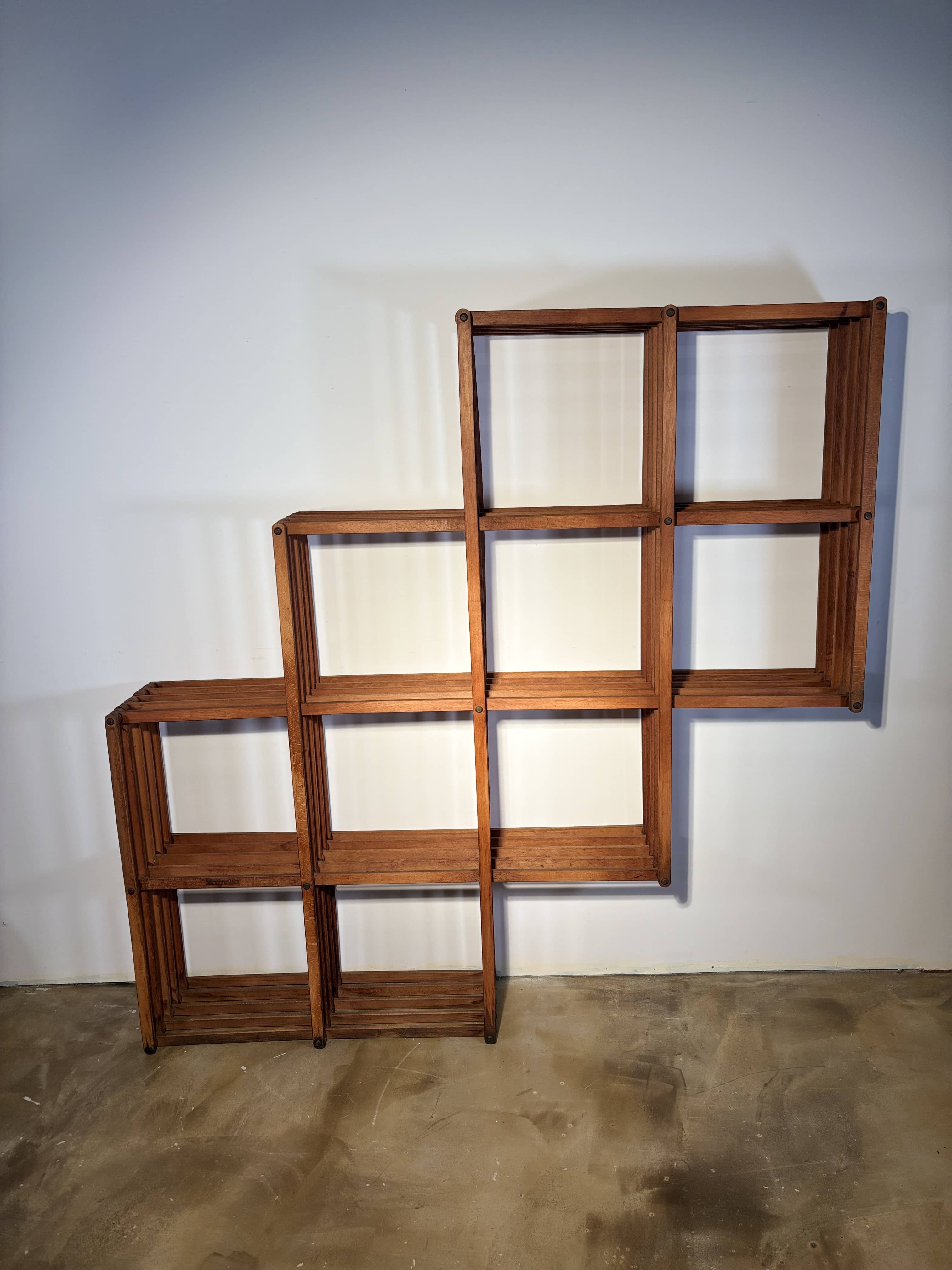
Architectural bookcase composed of articulated modules in slatted wood with parallel battens, joined by metal pivots.
The accordion folding system allows for flat storage and free reconfiguration: stepped, symmetrical or asymmetrical, according to space and use.
Wooden structure, fine period patina, original fittings.
Nine compartments in the standard configuration.
A rare piece of Italian design from the 1970s.
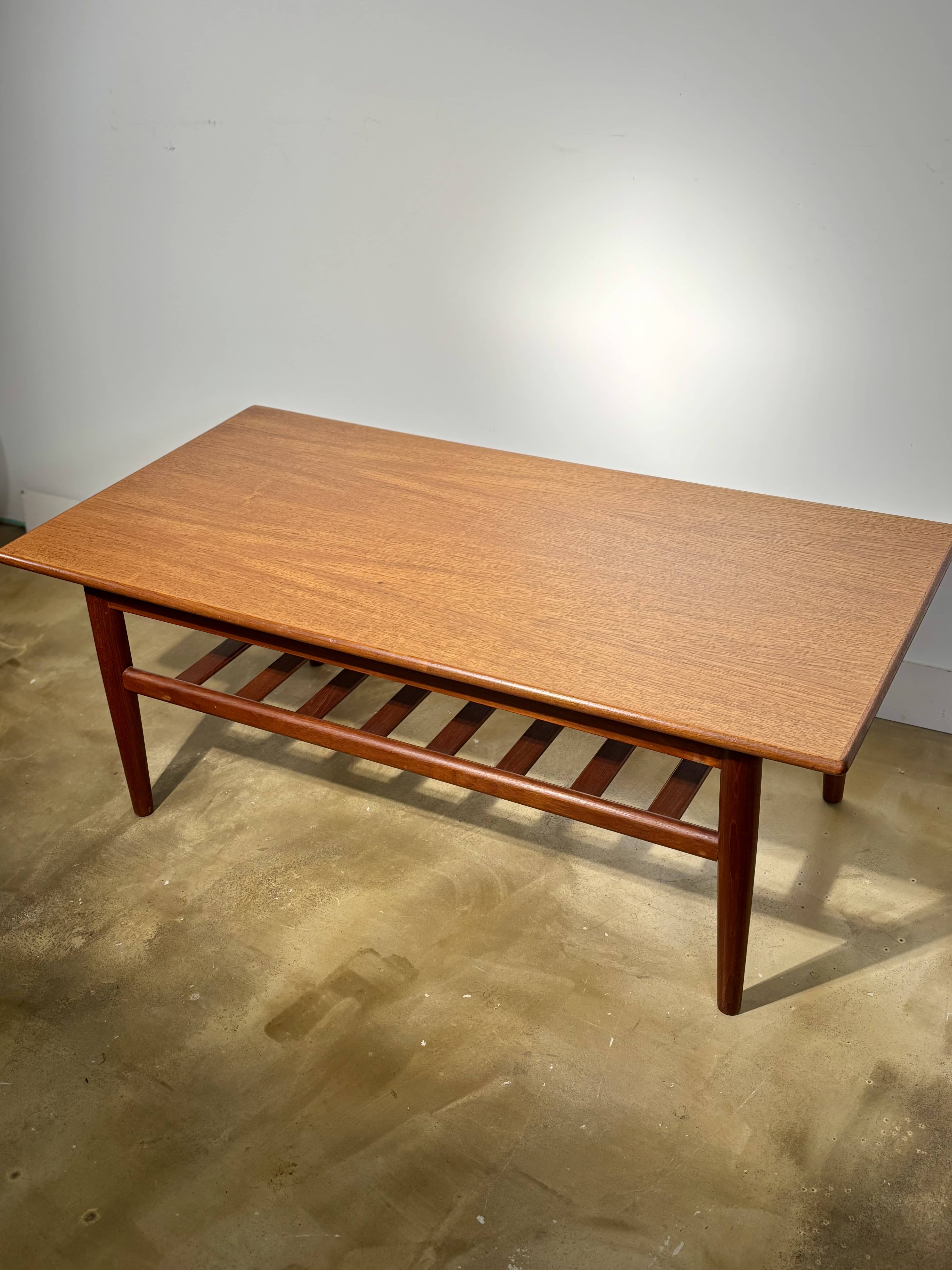
A very fine rectangular teak coffee table, emblematic of 1960s Scandinavian design, produced by the renowned Danish manufacturer Trioh. This piece is distinguished by the elegance of its lines and the quality of its finish. It features an upper top with gently curved edges and a slatted lower shelf (magazine rack), offering functional storage whilst emphasising the airy graphic quality of the structure. The tapered legs, typical of Danish modernism, lend great visual lightness to the whole. The table bears the original stamp “Trioh — Made in Denmark” struck beneath the top, guaranteeing its authenticity and its value on the art market. Excellent state of preservation. The teak displays a deep, warm honey patina. The structure is perfectly stable.