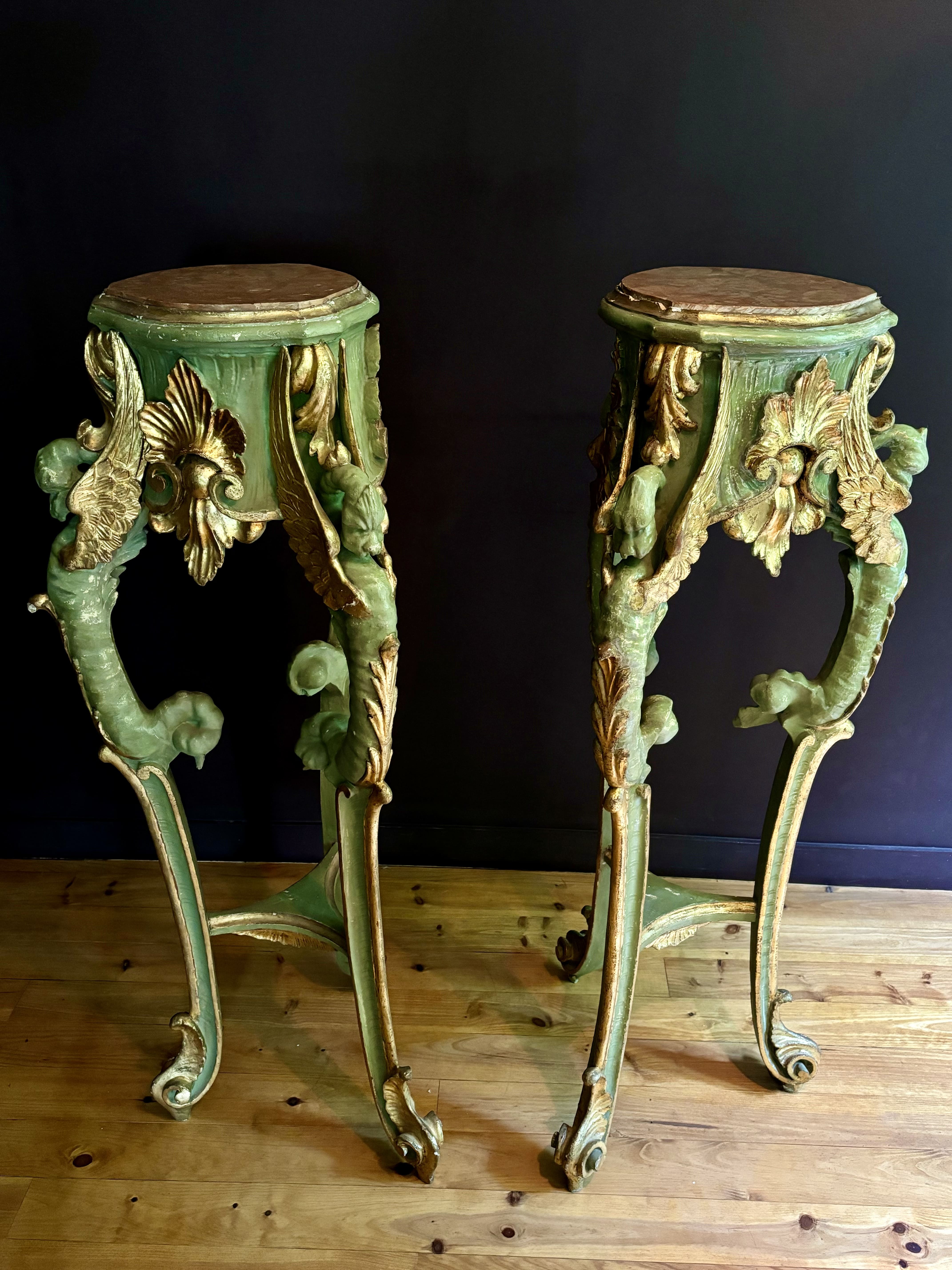
A striking and elegant pair of carved, painted and gilt wood pedestals. Apron decorated with acanthus leaves, red marble top supported by three legs decorated with winged dragons in the upper section, joined by a stretcher shelf. Italy, 19th century.
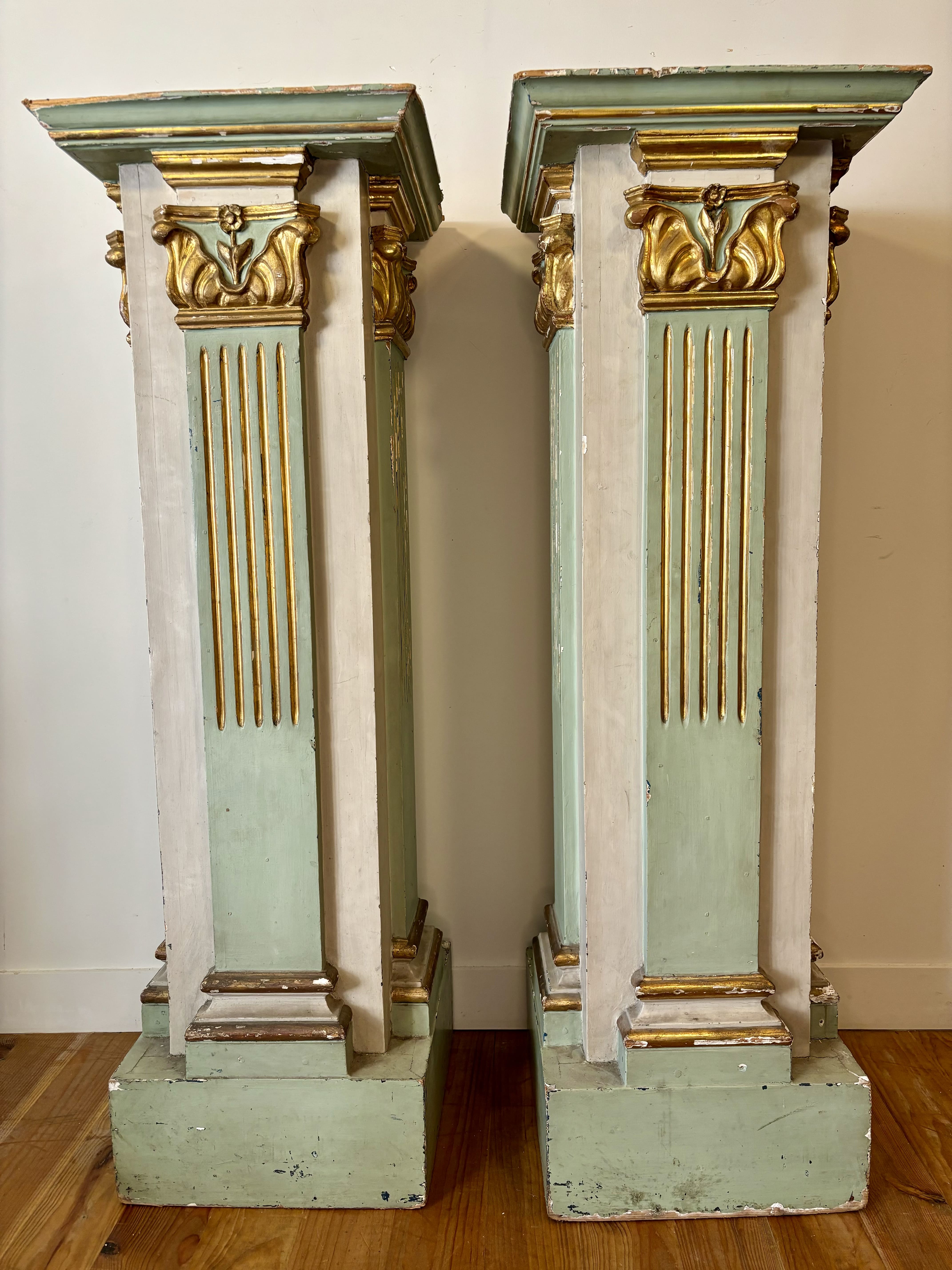
A very fine pair of Italian Neoclassical-style pedestals in painted and giltwood, fluted, decorated with acanthus leaves, drawing on themes of classical antique art and architecture. Late 19th century. With signs of wear and minor losses consistent with age.

Kurt Østervig (Denmark 1912 – 1986), pair of two-tier side tables in teak. 20th century.
Can be used as sofa-end tables, bedside tables or side tables. K. Østervig began his career as a naval architect before changing direction to work for E. Knudsen's at Odense, one of the most renowned furniture manufactories of the 1930s and 1940s.
In the 1960s, he was one of the first Danish designers to be temporarily exhibited at the Museum of Modern Art in New York.
Some marks on one of the tables (see photos).
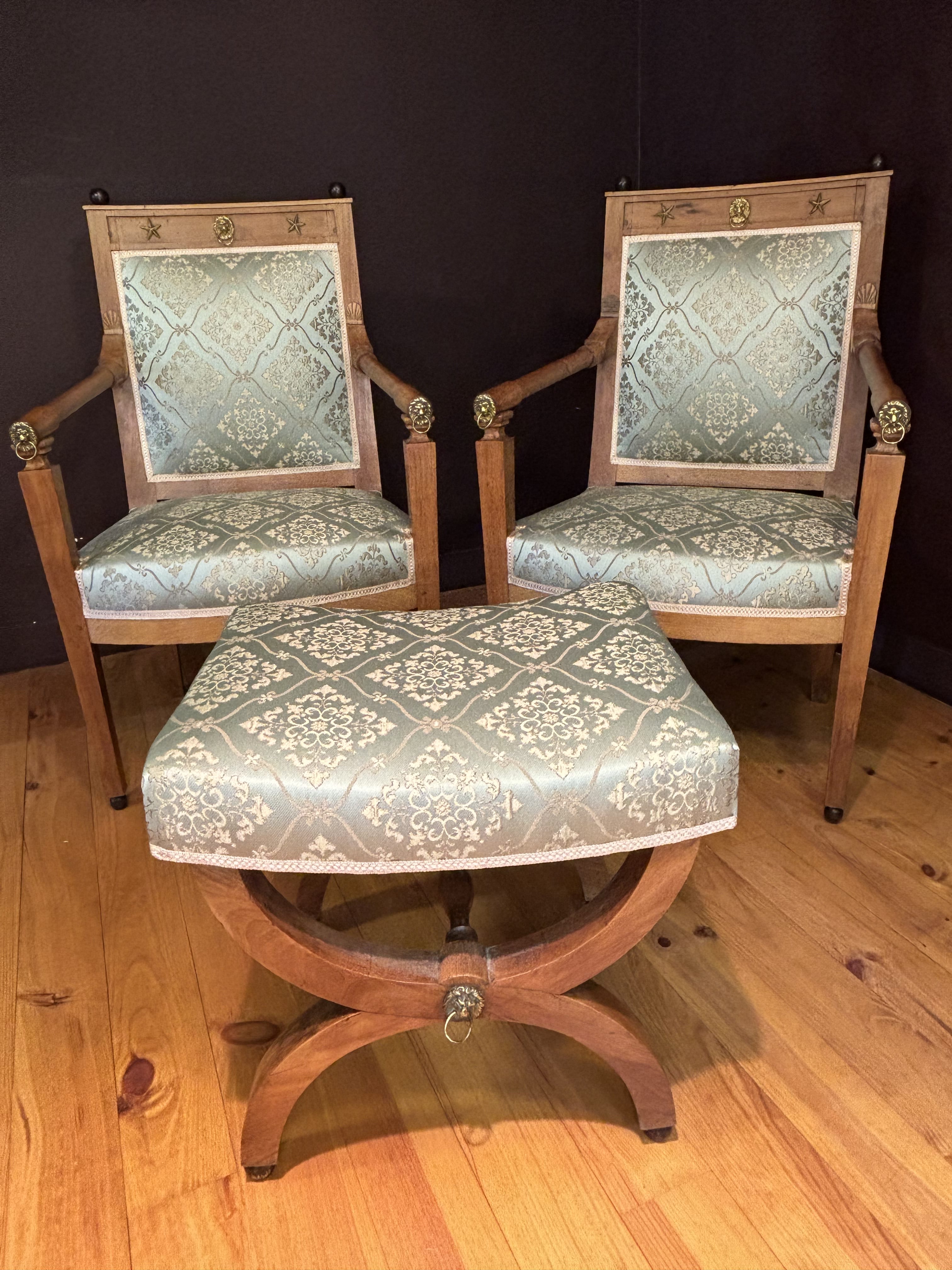
A set composed of a pair of armchairs in turned and moulded cherrywood, the cresting-rail backs surmounted by ebonised-wood balls, applied with stars and a lion mask in gilt brass, the rounded armrests terminating in gilt-brass lion masks, resting on sheath-form front legs ending in ball feet and sabre-form rear legs.
The pair is accompanied by a matching curule stool.
Restoration period.
Recently reupholstered.
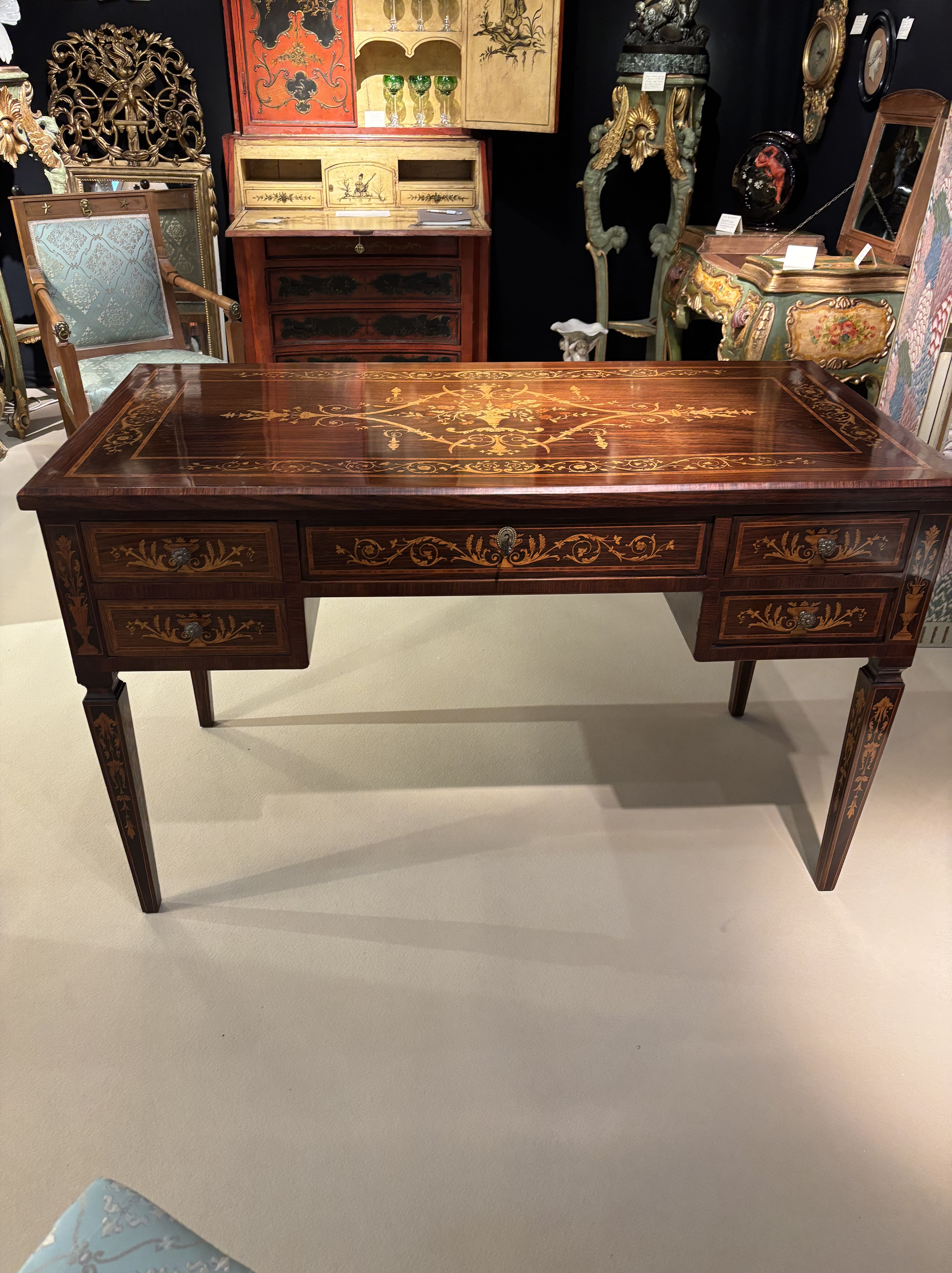
A desk in fine woods with finely executed marquetry, inspired by the work of Giuseppe Maggiolini (1738-1814), the cabinetmaker renowned for his detailed Neoclassical-style marquetry.
Desk in rosewood, mahogany and walnut veneer, with marquetry in boxwood and citronwood depicting scrollwork, floral garlands and a central vase on the top, drawers and legs.
Rectangular structure, tapered legs adorned with inlays. Three drawers to the front, brass handles and locks. Italian work, probably Lombardy, 20th century.
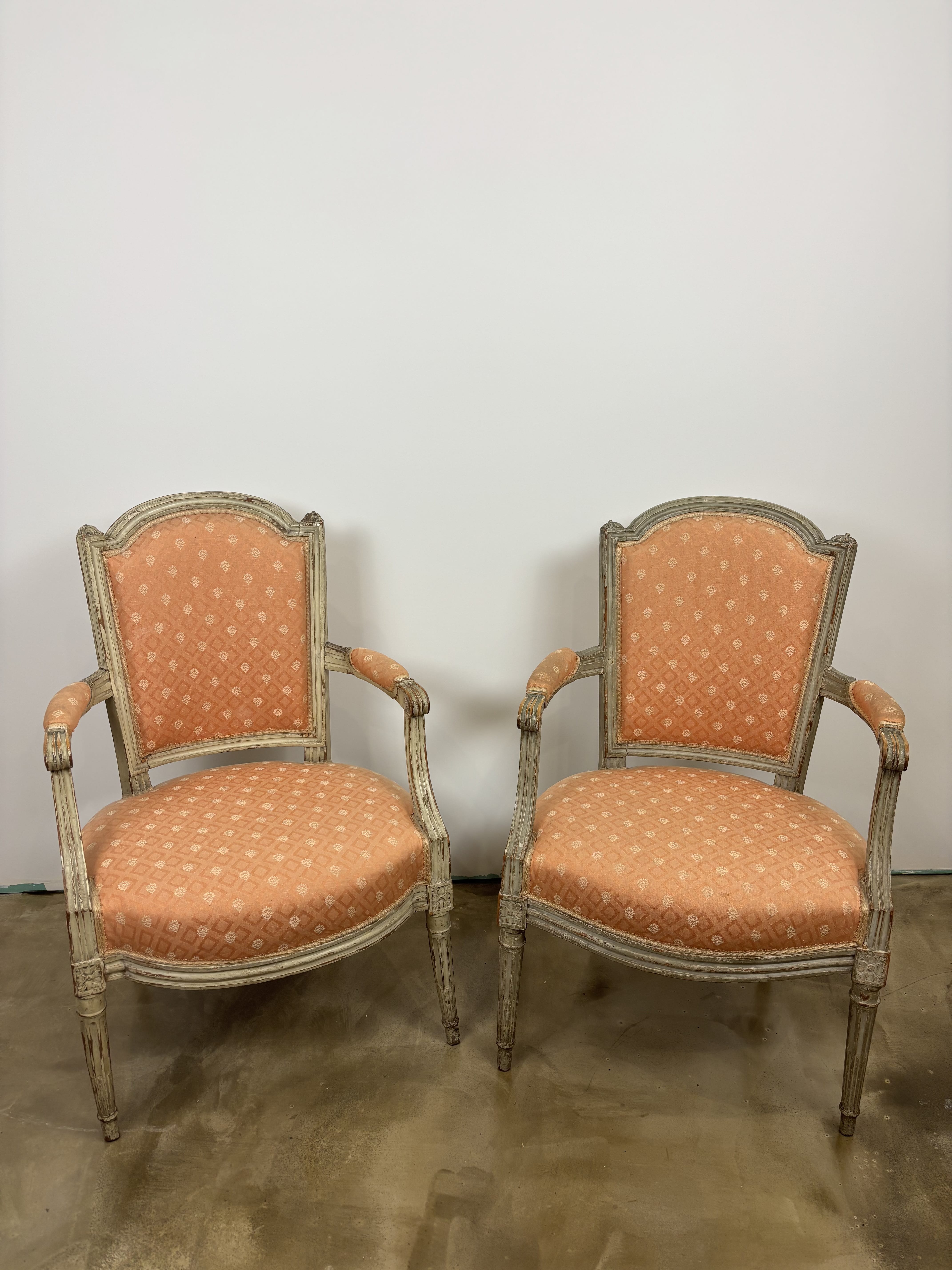
An elegant pair of armchairs with chapeau-de-gendarme backs in moulded wood, relacquered grey. Resting on tapered fluted legs, the front legs stop-fluted.
Louis XVI period.
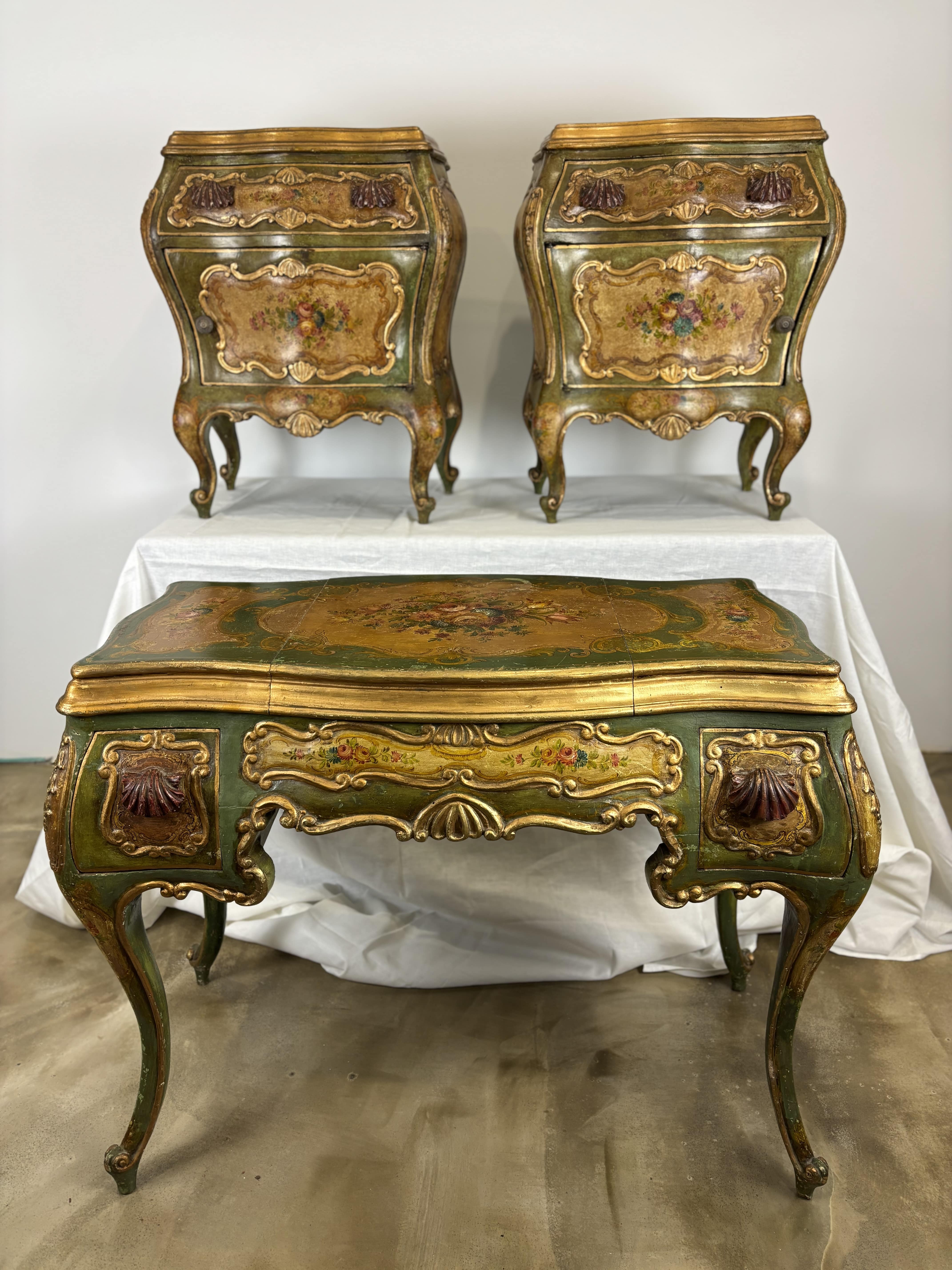
A Venetian set in carved and hand-painted wood comprising:
. A dressing table with integrated mirror, compartment and two drawers
. Two matching bedside tables with drawer and gilt ornaments
Italy, 20th century
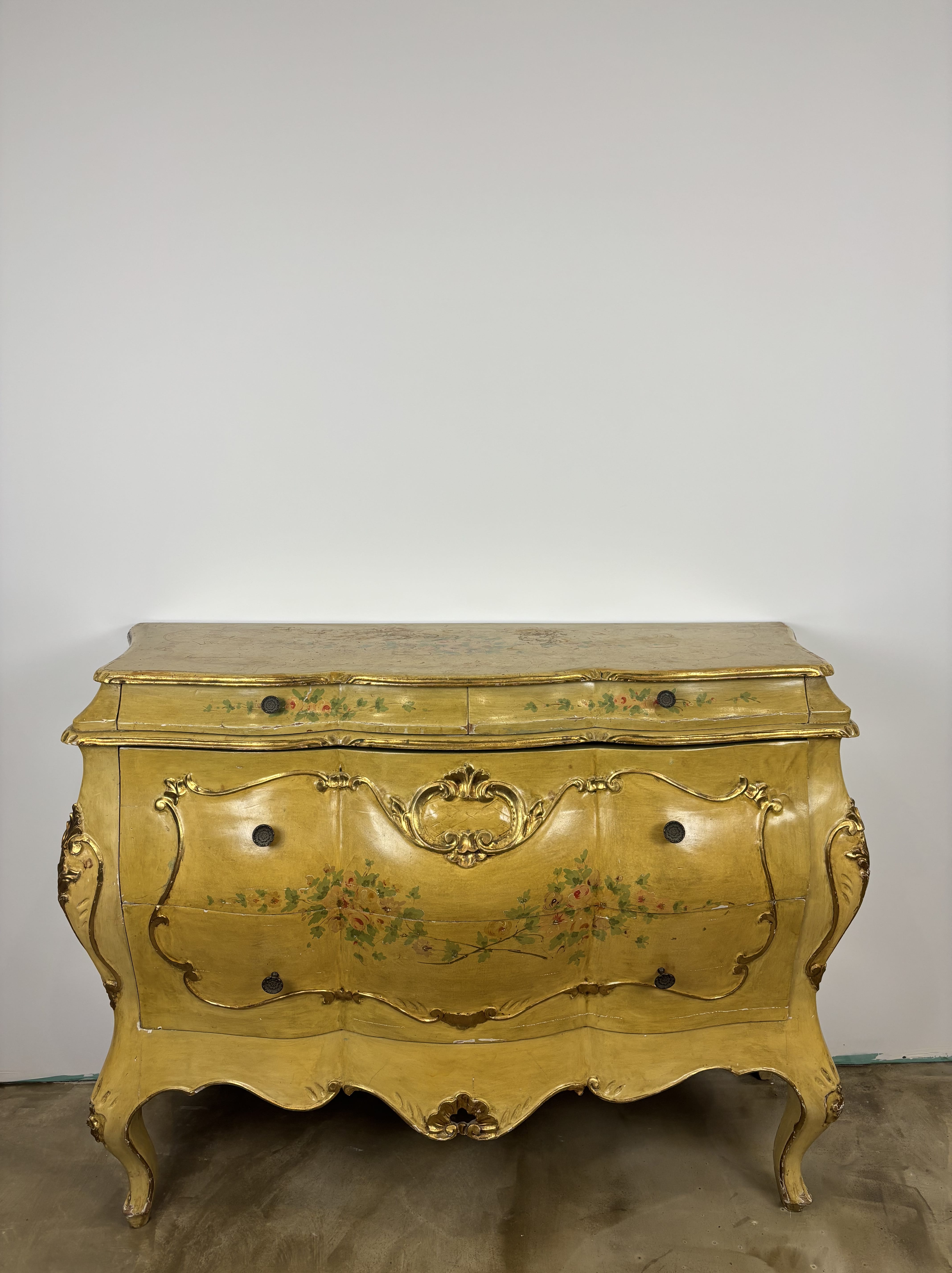
A serpentine commode, hand-painted, moulded, carved, with floral decoration on a cream ground, opening with four drawers in three rows. Cabriole legs.
Italy, 20th century

A guéridon in mahogany and walnut with circular top and four tapered cabriole legs on a swollen central support.
Signed with the shell mark on the top.
Minor loss to the edge of the top and slight signs of use (see photo).
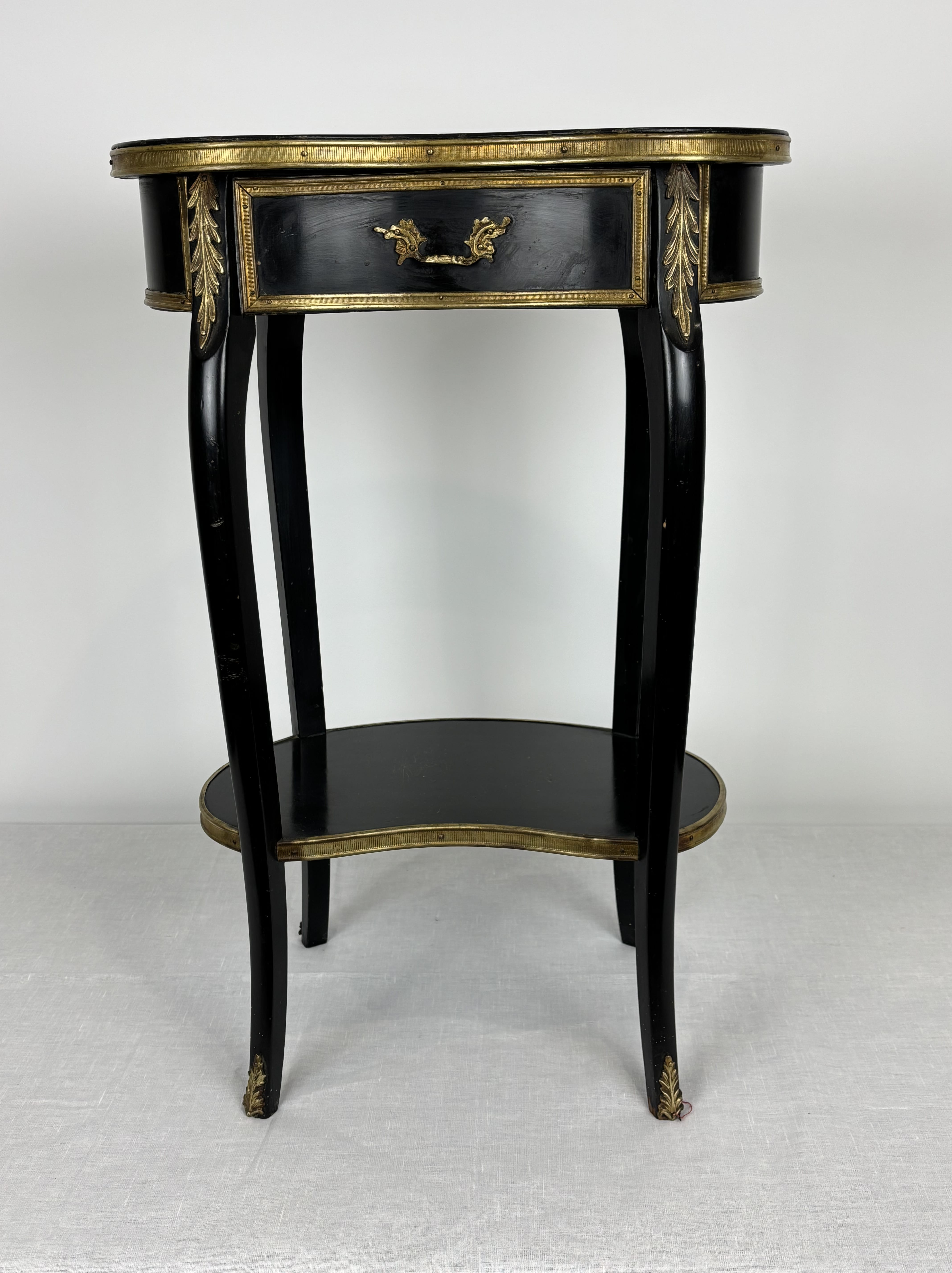
A kidney-shaped table in black lacquered wood, opening with one drawer in the apron, resting on curved legs with a stretcher shelf.
The top is gold-lacquered in the Far Eastern taste, decorated with a pagoda by moonlight.
Napoléon III period.
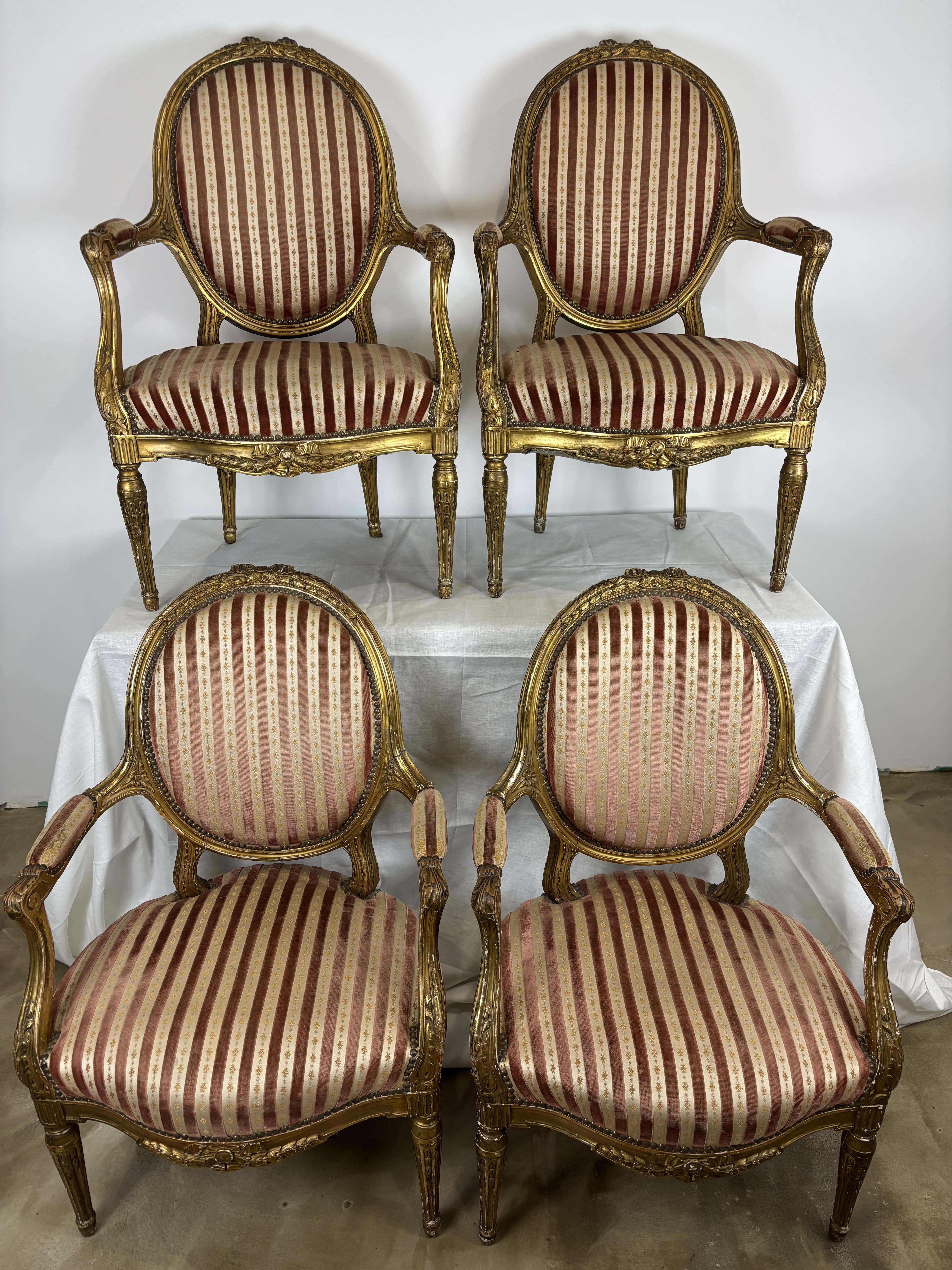
A suite of four 19th-century armchairs in carved giltwood with floral and foliate motifs, medallion backs, tapered fluted legs. Gilding patinated by time. Solid and stable structure.
Original gilding with wear in places.
Upholstery in good condition.
A rare and refined suite.
Possibility of purchasing a pair of 2 armchairs at 800 euros.
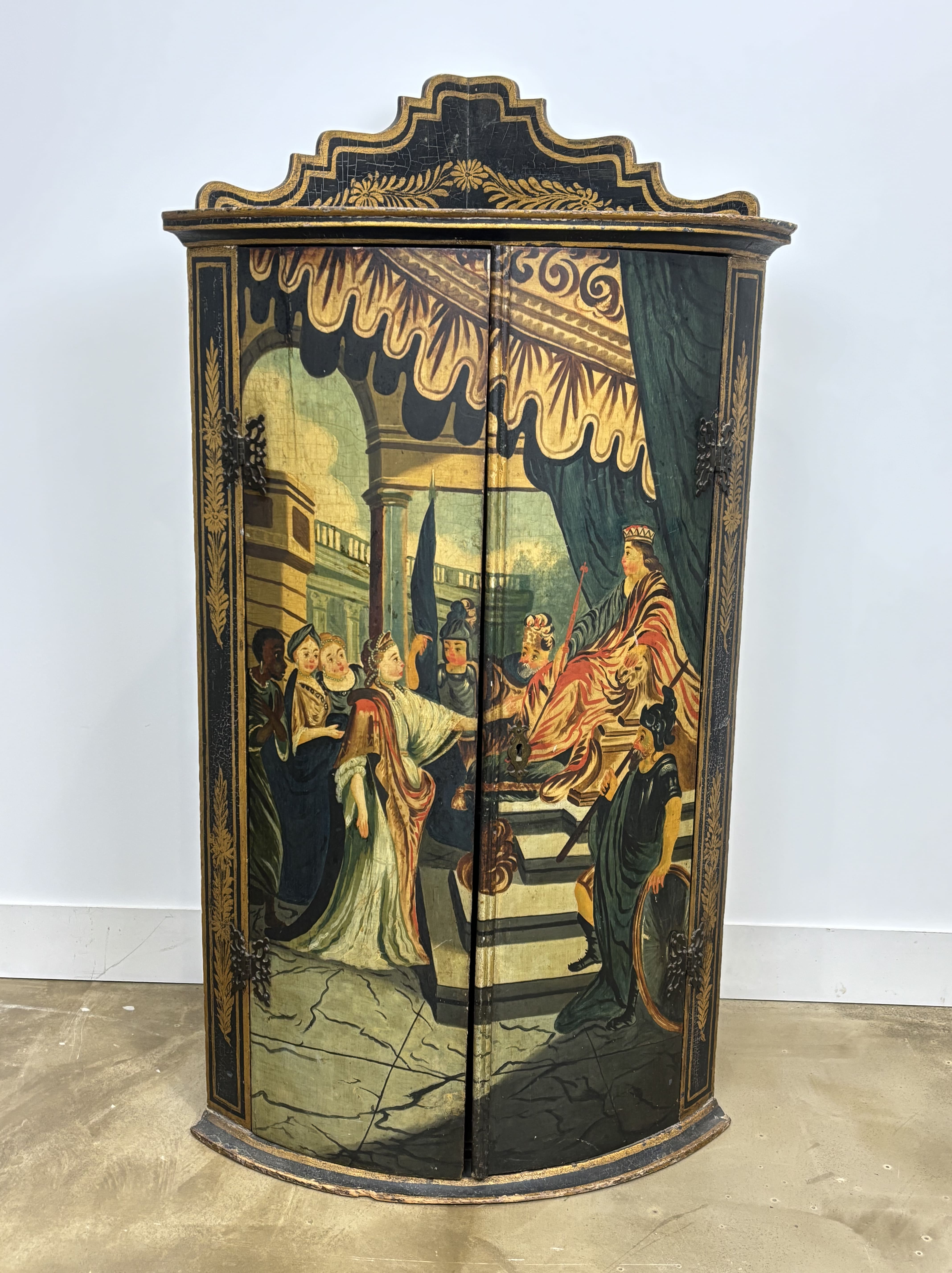
A charming corner cabinet in polychrome painted and lacquered wood, with a serpentine front, opening with two doors. It is entirely decorated with a theatrical court scene in a Neoclassical spirit, with figures in antique-inspired costumes and monumental architecture. The pediment is adorned with gilt palmettes on a black ground, repeated as a side framing motif. The deep red interior contains two shelves. The hardware and lock are original. French work of the late 19th to early 20th century, circa 1900, in the spirit of theatre sets and historicist genre painting.