
An important and rare rectangular ritual perfume burner in hardwood carved in relief, retaining superb traces of polychromy and Cinnabar-style red lacquer.
This cult vessel of exceptional dimensions, intended for incense offerings upon a major altar or within a temple, is distinguished by the strength of its lines and the quality of its carved elements.
The two impressive lateral handles, animated in reversed S-form, give the object its full presence. They are carved in low relief with a scroll of blossoming lotus flowers, the Buddhist symbol of purity.
The perfume burner rests upon four vigorous feet, carved in the round with heads of protective mythical creatures, heightened with red lacquer.
The body displays cyma-moulded panels of great structural sobriety, contrasting elegantly with the exuberance of the handles and the base.
One of the lateral faces of the body bears a rare ritual inscription incised with six sinograms, perfectly integrated into the patina of the wood. Translation: “Respectfully offered by (or in memory of) Yu Lin Shizhang”.
This nominative dedication attests that this perfume burner is an object of worship and devotion commissioned by a family or a lettered devotee.
Weight: 7,600 g
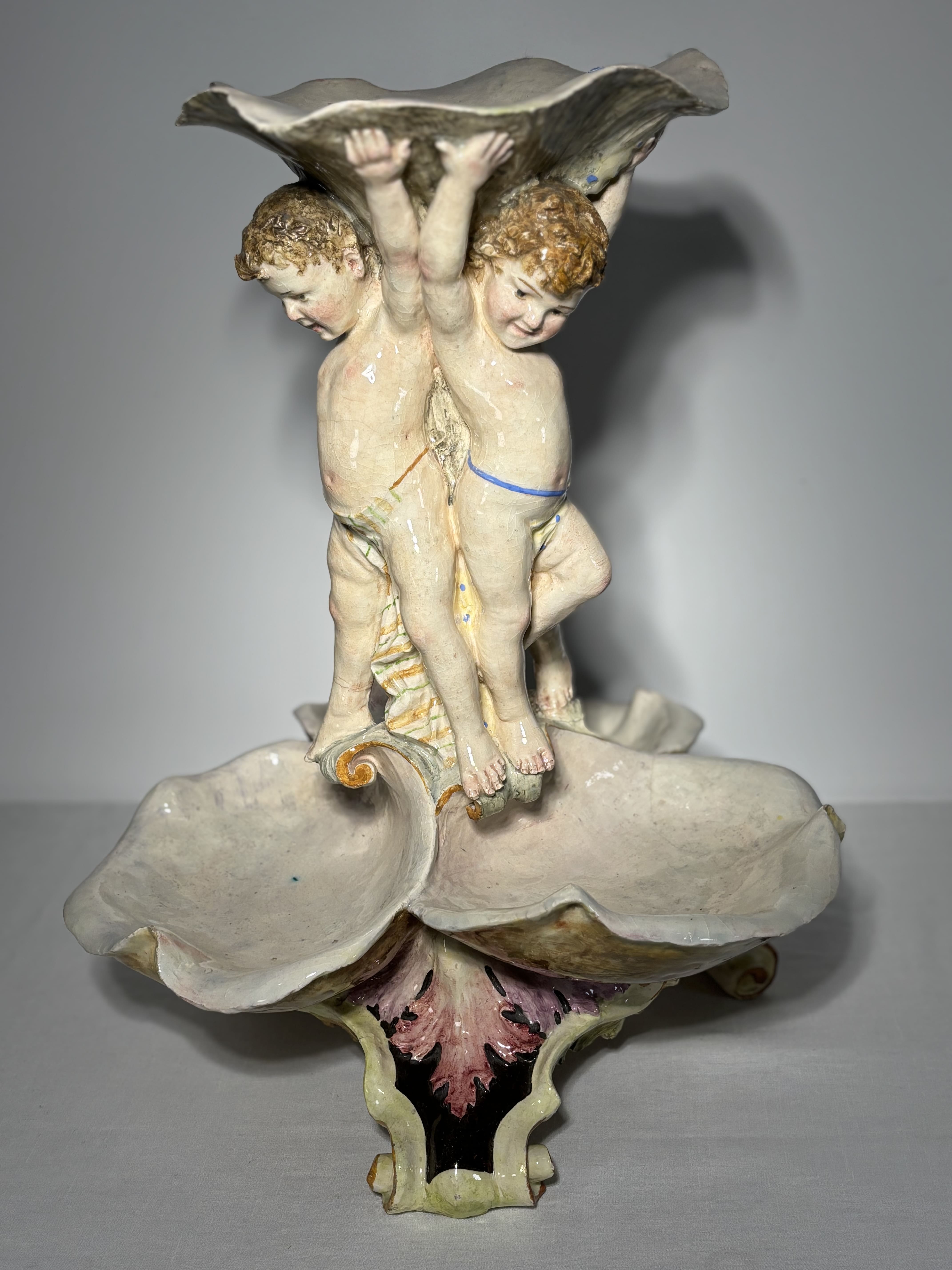
Large Italian majolica centrepiece in the Neo-Rococo style, depicting three Putti supporting a wide shell-shaped bowl, resting on a triple scrolling shell adorned with stylised polychrome foliage.
The naturalistic decoration and polychromy are typical of Italian decorative production of the late 19th century, in the tradition of the Capodimonte or Bassano workshops. Majolica with thick glaze, polychrome decoration. Finely modelled faces. Highly sculptural base.
Beautiful presence and a piece of generous proportions.
Italy, late 19th – early 20th century
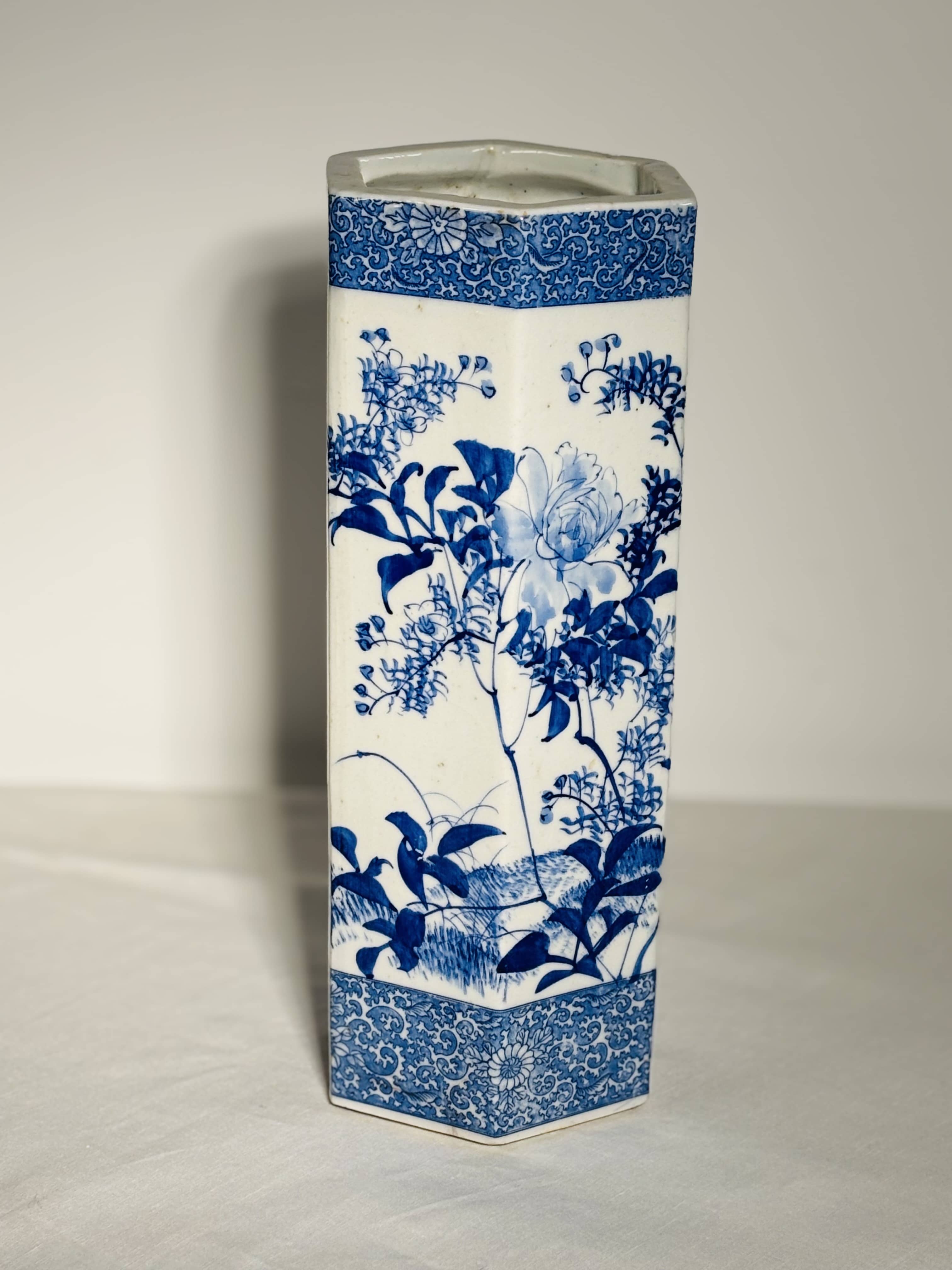
An elegant hexagonal porcelain vase decorated in “Blue and White”, dating from the late Meiji period (circa 1890-1910).
This vase displays a rich and balanced naturalistic decoration, depicting peonies in full bloom — a symbol of prosperity and nobility — together with butterflies, rendered with great graphic finesse. The drawing is distinguished by a lively line and the deep cobalt blue gradations characteristic of Japanese production from the Seto region intended for export.
The upper and lower registers are emphasised by intricate friezes of flowering scrolls and stylised lotus flowers, lending a classical structure and great elegance to the whole.
The hexagonal form, rarer and more sought-after than classical cylindrical shapes, offers captivating plays of light across the facets, making it an ideal decorative object for a contemporary setting or for mounting as a fine lamp.
In fine overall condition.
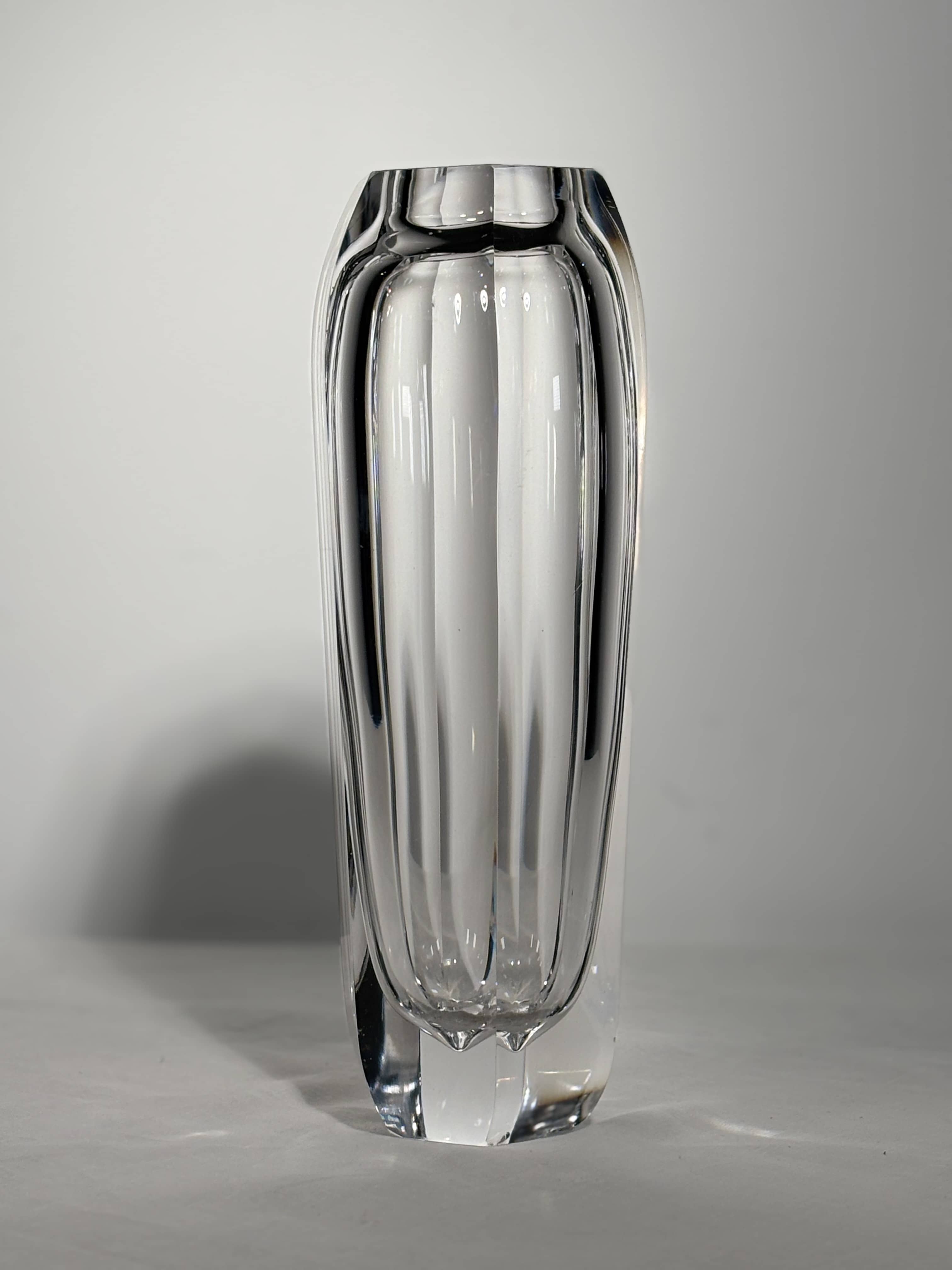
Large blown and cut crystal vase, signed and dated beneath the base Boda 1947. A piece from the Boda Glasbruk manufactory (Sweden), predating the Erik Höglund period and the merger of the manufactories that would give rise to Kosta Boda AB in 1976.
The vase displays a slender form with thick walls, structured by six vertical ribs cut into the mass of the crystal, creating a remarkable optical effect of an inner cylinder suspended within the material.
Colourless crystal of exceptional purity and clarity, of significant weight bearing witness to the high lead content characteristic of the quality productions of this period. In 1947, Boda Glasbruk was still an independent manufactory, producing pieces in the great glassmaking tradition of Småland.
This pre-Höglund period is little documented and signed and dated pieces from it are rare. The formal vocabulary of this vase — architectural rigour, the interplay of mass and transparency, the geometric treatment of surfaces — fits squarely within the nascent Nordic modernism of the post-Second World War years.
Good overall condition for a piece of this age. One will note a small chip on the base as well as two minuscule nibbles on one of the edges, without affecting the aesthetic legibility of the whole.
Engraved with a point beneath the base: Boda 1947
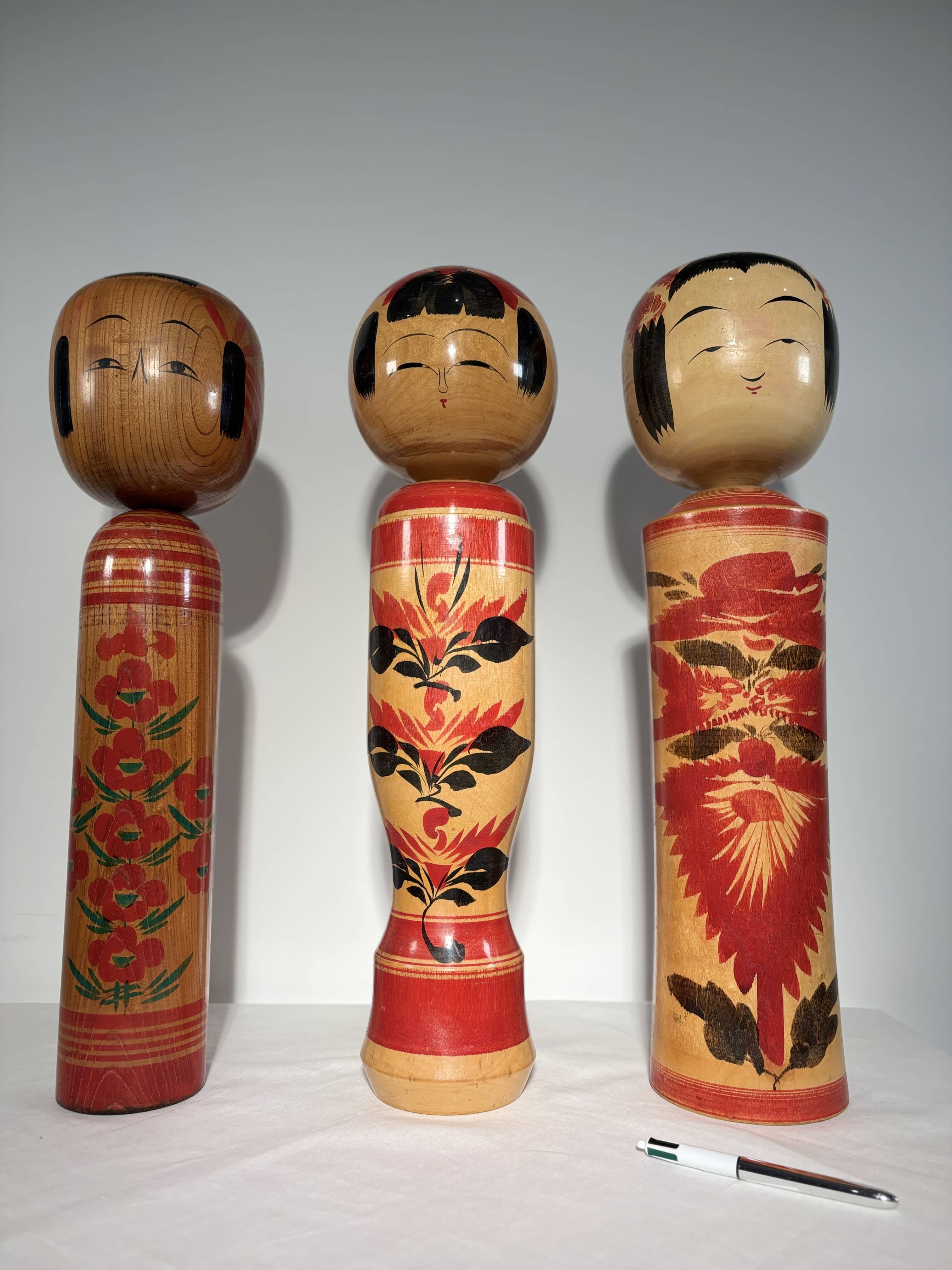
A rare set of three monumental traditional Japanese dolls in turned wood, known as Kokeshi Dentō. Originating from the mountainous Tōhoku region in the north of the archipelago, these sculptures of refined design embody the very essence of the Mingei folk art movement.
Their presence is all the more remarkable here owing to their monumental format (over 60 cm in height), a size rarely encountered for this type of artisanal piece, making them true collector’s objects for interior decoration or architectural display. Each piece is signed or stamped beneath its base by the master turner who fashioned it.
Lot details (from left to right):
1. Yajirō style Kokeshi (H. 60 cm): This model is distinguished by the use of a wood with a strikingly graphic and pronounced natural grain. The cylindrical body is adorned with stylised camellia (tsubaki) motifs, hand-painted in green and red pigments and framed by characteristic concentric lines. Calligraphed signature beneath the base.
2. Naruko style Kokeshi (H. 61 cm): Displaying the cream tone of traditional wood, this piece features a voluminous head assembled according to the traditional technique and an elegantly waisted silhouette. The painted floral decoration is accompanied by broad bands of red pigment at the shoulders and base. Artisan’s seal beneath the base.
3. Large monumental Tōgatta style Kokeshi (H. 62 cm): The centrepiece of the lot through its sheer presence. It bears a powerful design depicting a great radiating chrysanthemum painted in bold strokes. On the reverse, the base carries a long calligraphed honorific inscription indicating that it was awarded the Prize of the Japanese Ministry of Labour, a most prestigious official distinction recognising the high quality and craftsmanship of the artisan.
Fine overall condition for pieces of this size and period. The wood is sound, heavy and stable. The original colours and pigments have remained wonderfully warm, complemented by a superb natural patina. Light marks, minor superficial scratches and slight discolouration consistent with use, entirely in keeping with their age and authenticity.
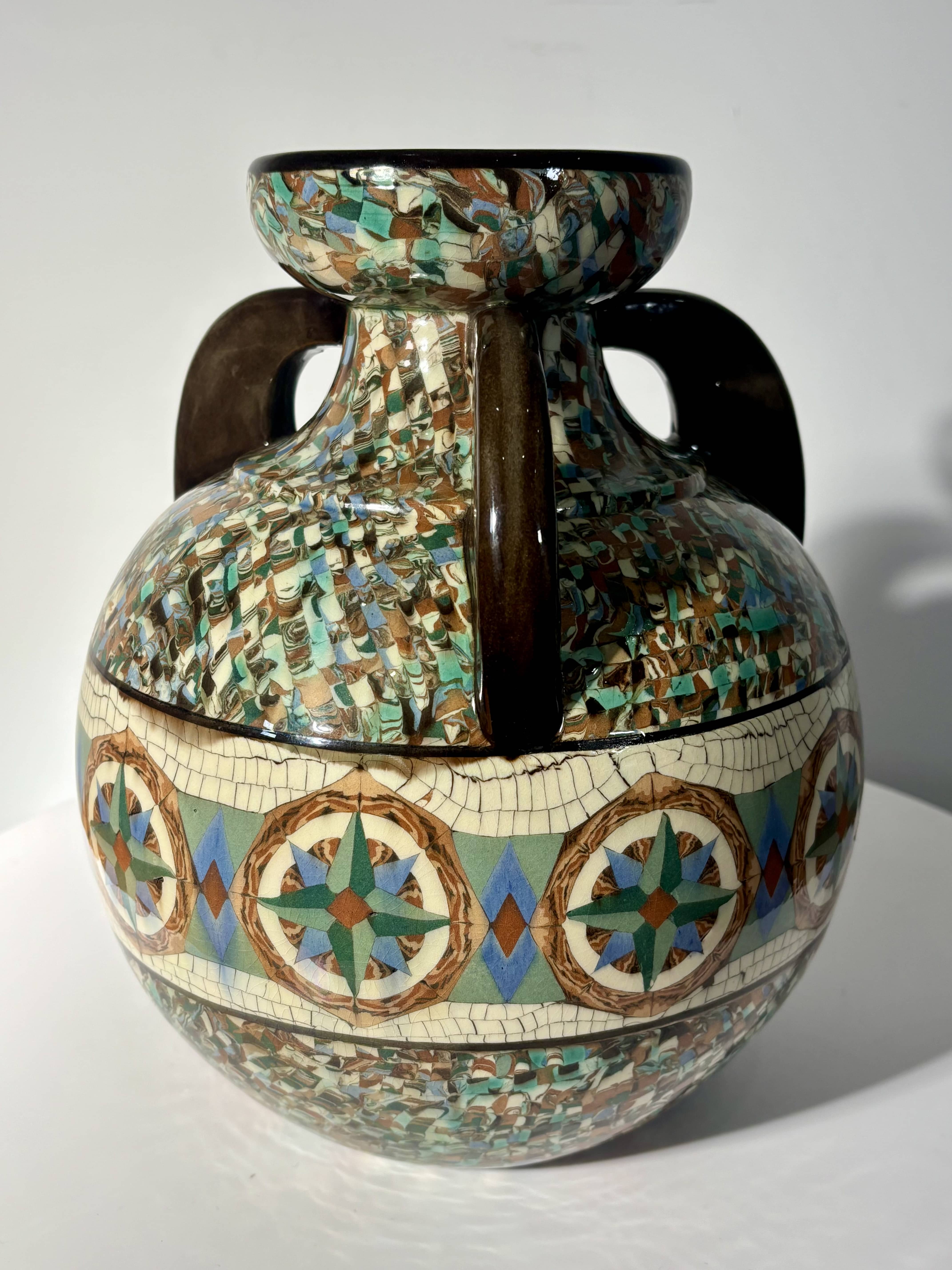
An exceptional and rare three-handled vase by the master ceramicist Jean Gerbino. This piece is a masterful testament to the savoir-faire of Vallauris during its ‘golden age’. The originality of this work lies in the technique of mosaic clays, a unique process developed by Gerbino after fifteen years of research. It is not a painted decoration, but a true marquetry of clays coloured throughout the mass, meticulously assembled prior to throwing. The decoration comprises a wide central frieze featuring polychrome Compass Roses (or Wind Roses), surrounded by intricate registers of chequerboards and organic motifs in turquoise, ochre and umber tones. An exceptional piece of rare dimensions, this vase stands apart from the workshop’s usual production. The precision of the mosaic joins and the refinement of the glaze attest to a very high quality of execution. The piece is in perfect condition, with no chips or hairline cracks. Signature: stamp beneath the base ‘Gerbino’ ‘Vallauris (AM)’. About the artist: Jean Gerbino (1876-1966) is one of the most prestigious names in twentieth-century French ceramics. Grand Prix of the Boulle Exhibition in 1931, he created a style instantly recognisable, blending the art of ancient mosaic with modernity of form. France, 20th century, circa 1950.
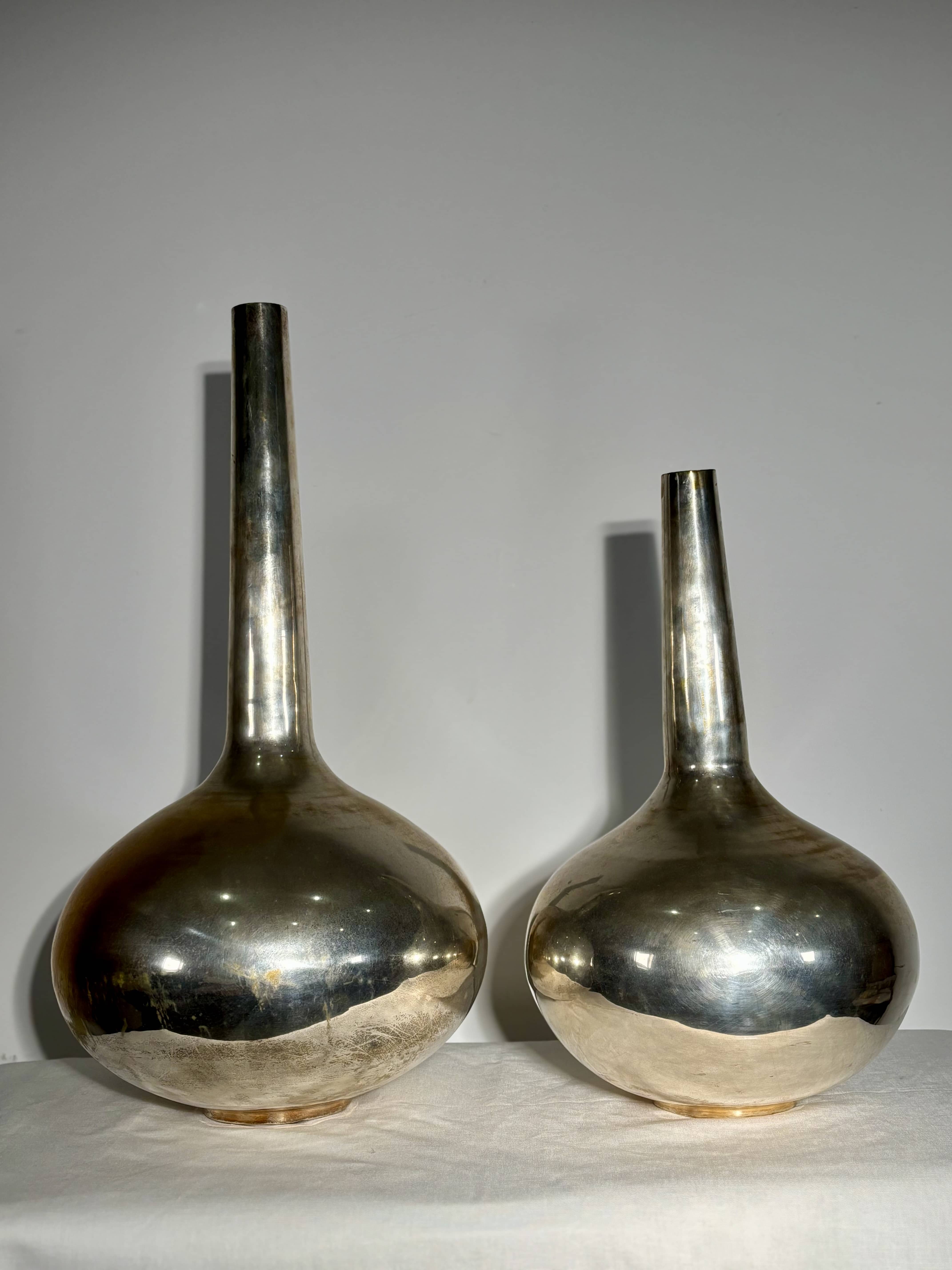
Spectacular pair of Mid-Century “gourd” or “bottle” shaped vases in silver plate, with pure and organic lines. These pieces are distinguished by their generous proportions, notably the larger model reaching 58 cm in height, making them striking decorative objects of the first order. Beneath the base, each vase bears the stamp of the prestigious Italian house “Jordan Sheffield Collection” — maison Jordan-Silverado, based near Rome. The name Jordan refers to the family of Italian designers Antonio Jordan. The mention of Sheffield does not indicate a British origin, but rather guarantees a high-quality silvering technique, inherited from traditional craftsmanship. These pieces reflect Italian design of the 1970s–80s, combining the classical elegance of silverware with highly modern minimalist forms. Very fine visual appearance. Traces of use, patina of use. Italy, 20th century
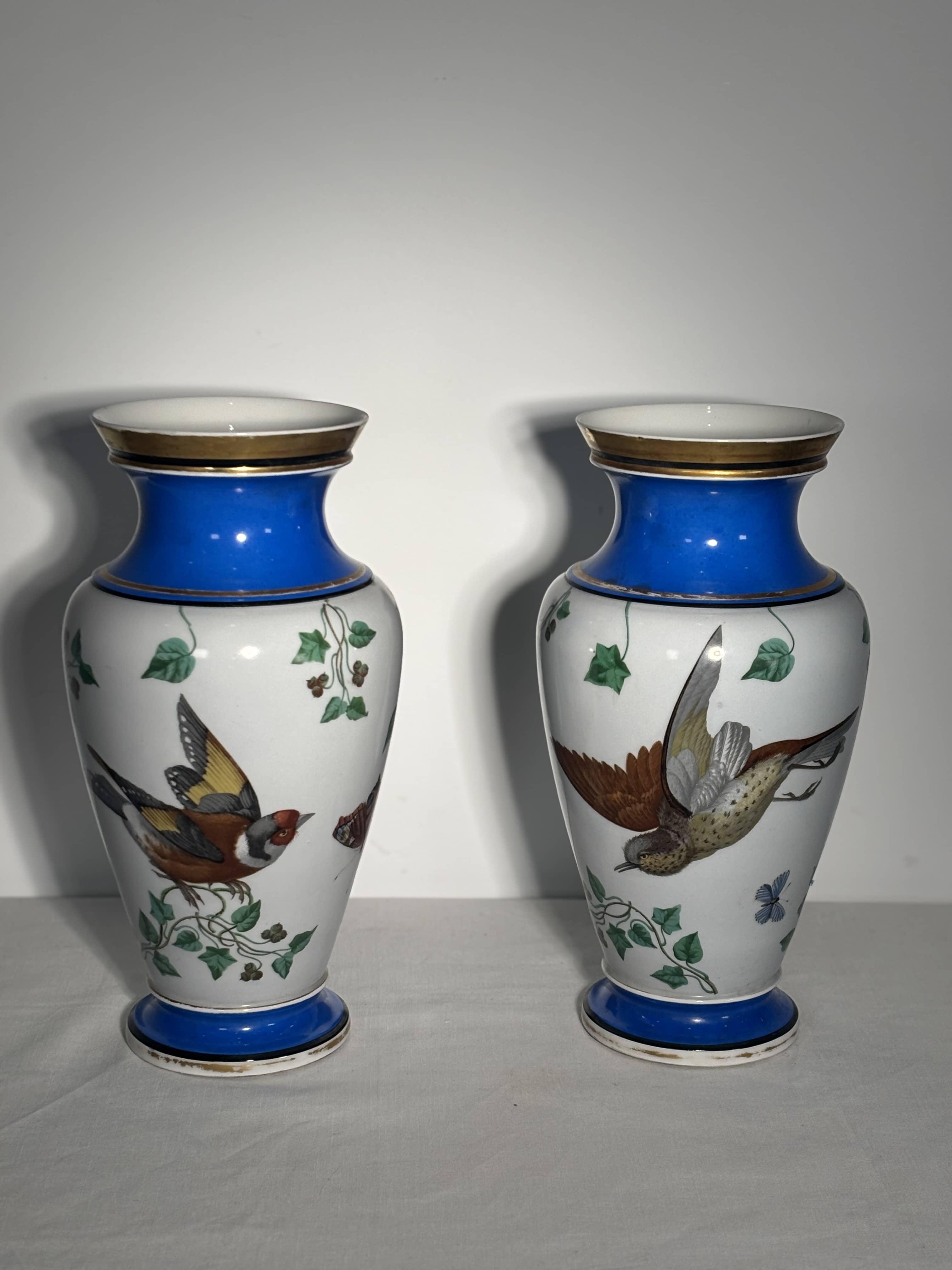
An important and charming pair of baluster vases in Paris porcelain, dating from the 19th century. These pieces are distinguished by the great quality of their polychrome decoration, treated in a naturalistic manner — a theme highly prized under the Second Empire. The body of each vase, set against an immaculate white ground, presents a rich composition of ornithological and entomological scenes. Each vase displays birds finely hand-painted in dynamic postures (a goldfinch, a blue tit and other passerines). The rendering of the plumage is of great precision, attesting to pictorial craftsmanship of the highest order. The decoration is completed by various butterflies and flying insects, scattered amongst scrolling sprays of climbing ivy laden with berries. The neck and the base are emphasised by a superb deep cobalt blue, heightened with gilt fillets. The upper lip features a broad band of fine gold. Good overall condition. Some wear from use to the gilding on the necks and bases.
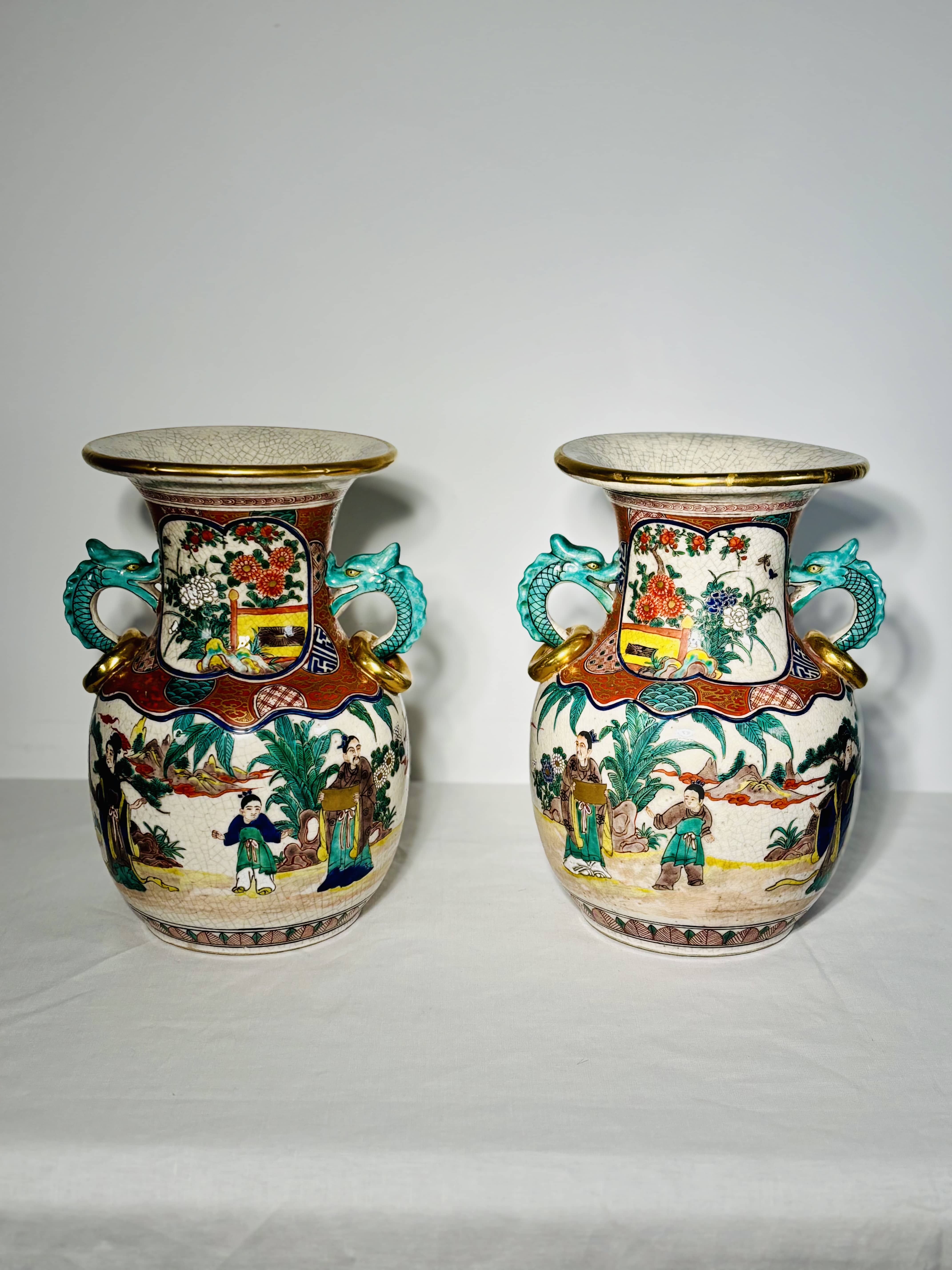
A pair of Satsuma vases with ovoid body and flared trumpet neck on a ring foot. Cream crackle-glazed stoneware, overglaze polychrome enamels and moriage, with gilt highlights.
Decoration organised in superimposed registers: principal faces animated with scenes of scholars and dignitaries in court robes within wooded gardens, the treatment of the faces of a quality superior to standard production. Associated symbolic motifs — peonies, chrysanthemums, pomegranates, pines — complemented by cartouches of lakeside landscapes on the shoulder and geometric brocade friezes as framing.
Handles in the round formed of dragons enamelled turquoise holding gilt rings.
Floral neck decoration in moriage enamels. Pair in perfect match.
Double red square cachet beneath both bases.
Very good display condition.
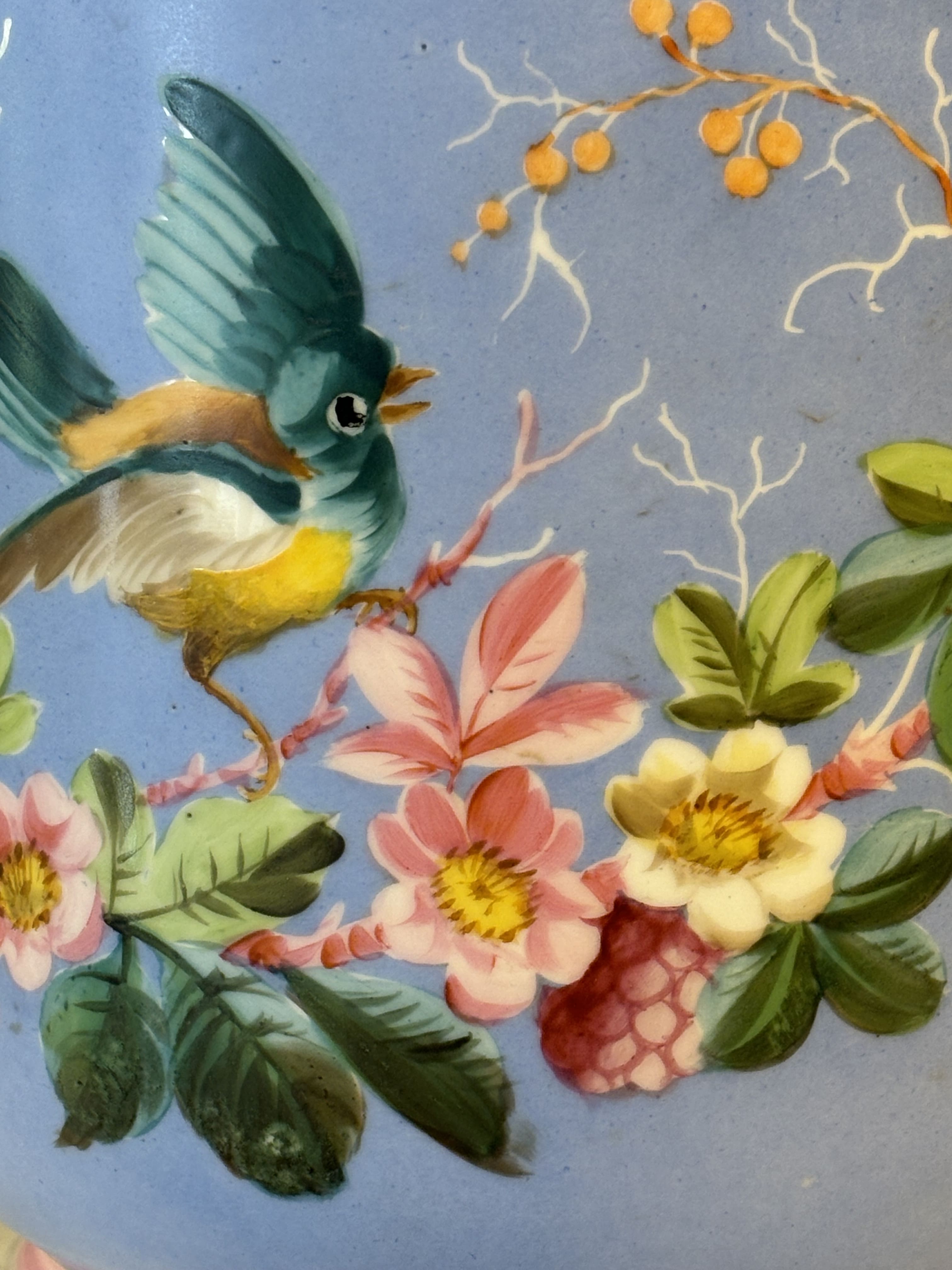
An important mantel garniture in Paris porcelain decorated with birds and flowers on a blue ground, comprising two cachepots and a jardinière. Wear to the gilding, a small chip at the base of the jardinière (see photo).
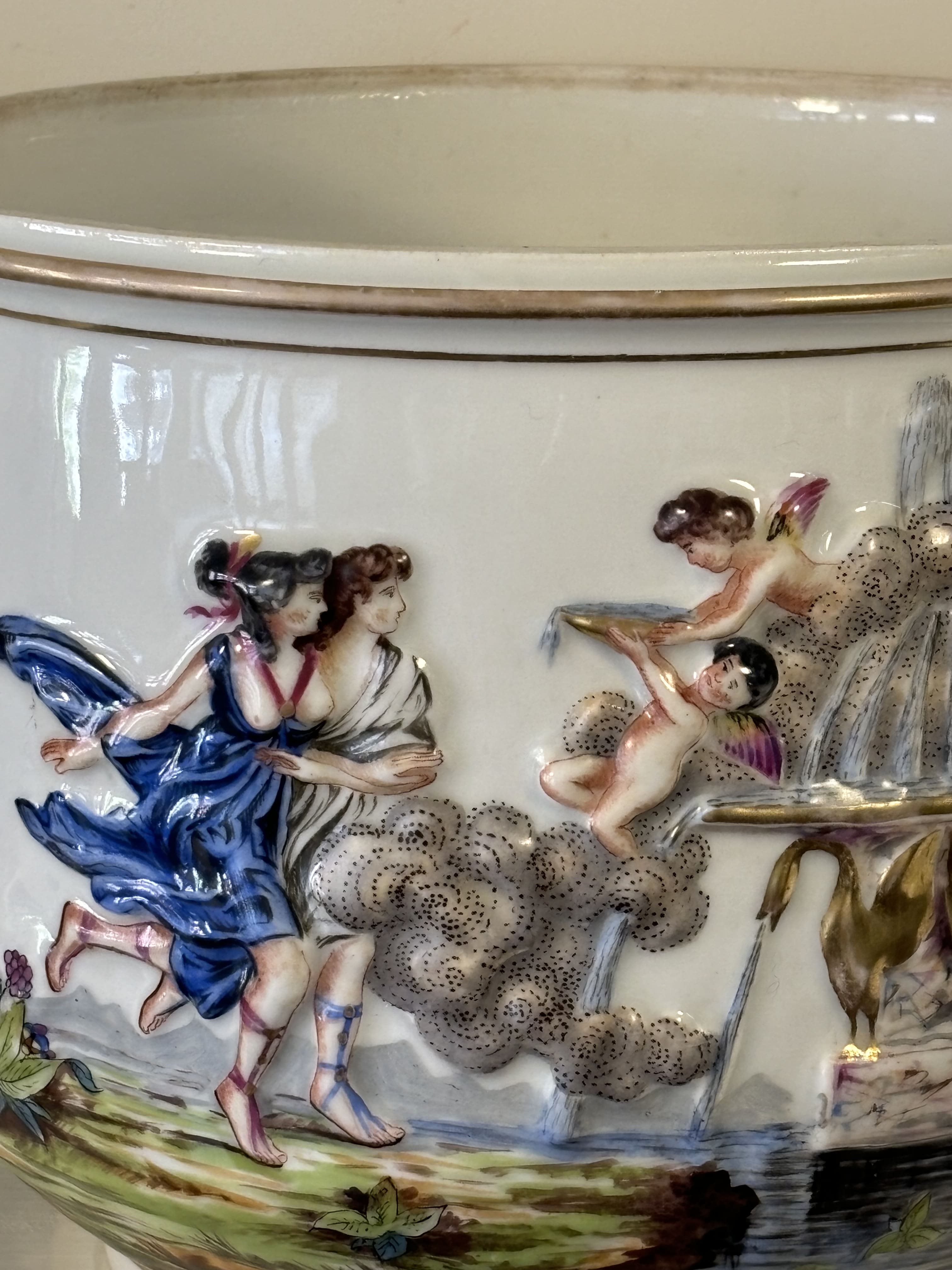
An exceptional pair of polychrome enamelled porcelain cachepots with continuous decoration in low relief of antique scenes, fountains, castles and rivers.
19th century. Manufacturer's mark beneath the base.
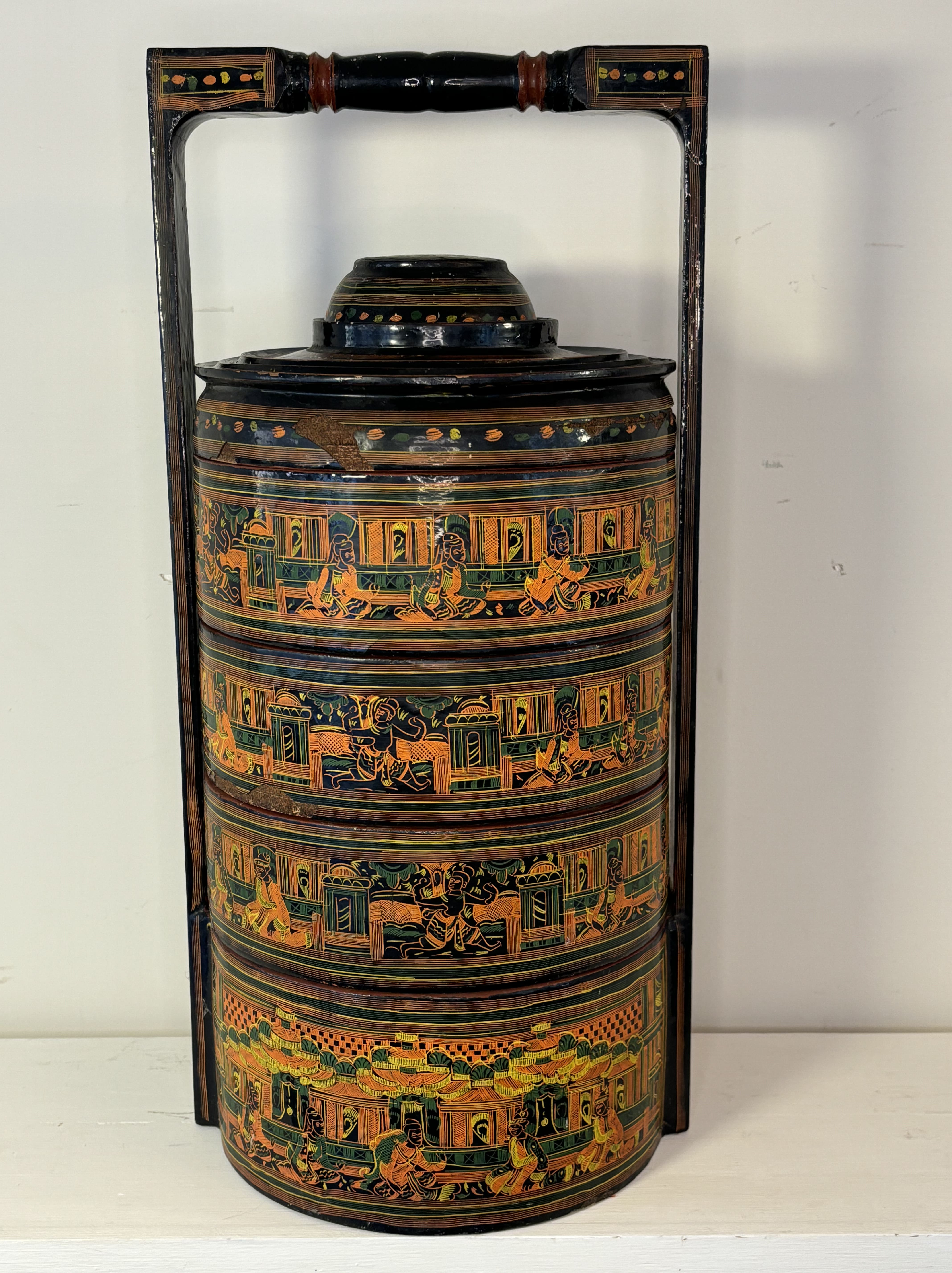
A very fine Far Eastern tiered food carrier in wood and pressed cardboard composed of four compartments, with figural decoration. Some minor losses to the marquetry that in no way diminish the beauty and poetry of the piece.