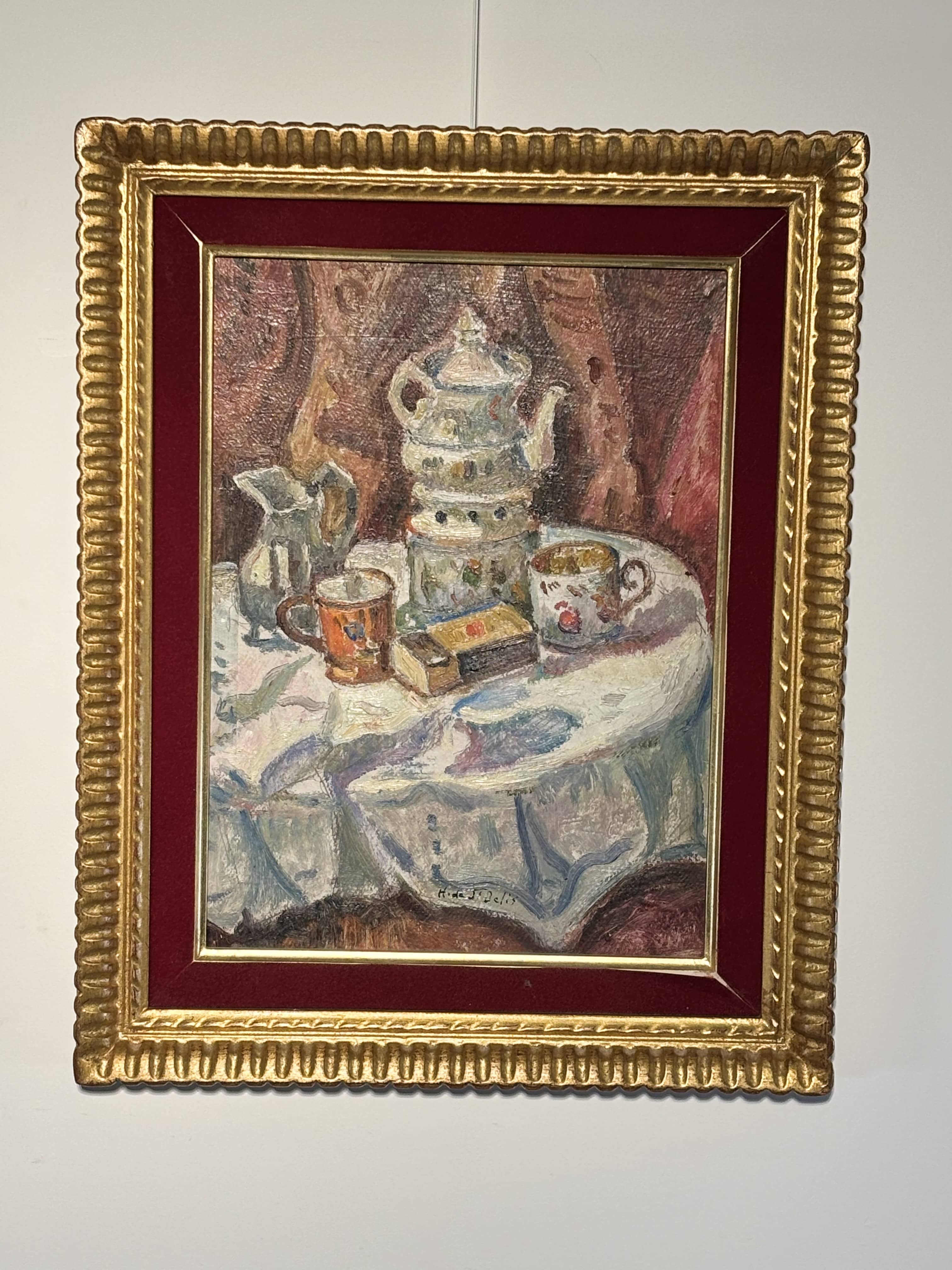
A luminous oil on heavy card (historic Canson & Montgolfier support) depicting an intimate studio scene: a table laid for tea with its samovar, ceramic cups and a box of matches.
The work bears witness to the superb technical mastery of Henri de Saint-Delis, an emblematic figure of the École de Rouen and of Honfleur. The artist deploys a modern touch, generous in impasto, inherited both from Norman Impressionism and from the chromatic freedom of Fauvism. The white cloth, sculpted by light, shimmers with bluish and mauve reflections characteristic of his finest manner. The impasted, vibrant brushwork and the chromatic range of ochres, blues and powdery pinks are typical of the artist’s style, having trained in Le Havre alongside Othon Friesz, Raoul Dufy and Georges Braque, before settling permanently in Honfleur where he would paint the greater part of his œuvre.
Signed lower.
Work authenticated by the Cabinet Marc Ottavi, Paris (approved C.V.V. expert, specialising in nineteenth- and twentieth-century paintings).
Support: The reverse bears its original label from the manufacturer Canson & Montgolfier (No. 347, moiré grain), a precious mark of the period.
Framing: Presented in a period-style moulded and gilded wooden frame, enhanced by an elegant burgundy velvet Marie-Louise which perfectly underscores the warm tones of the background.
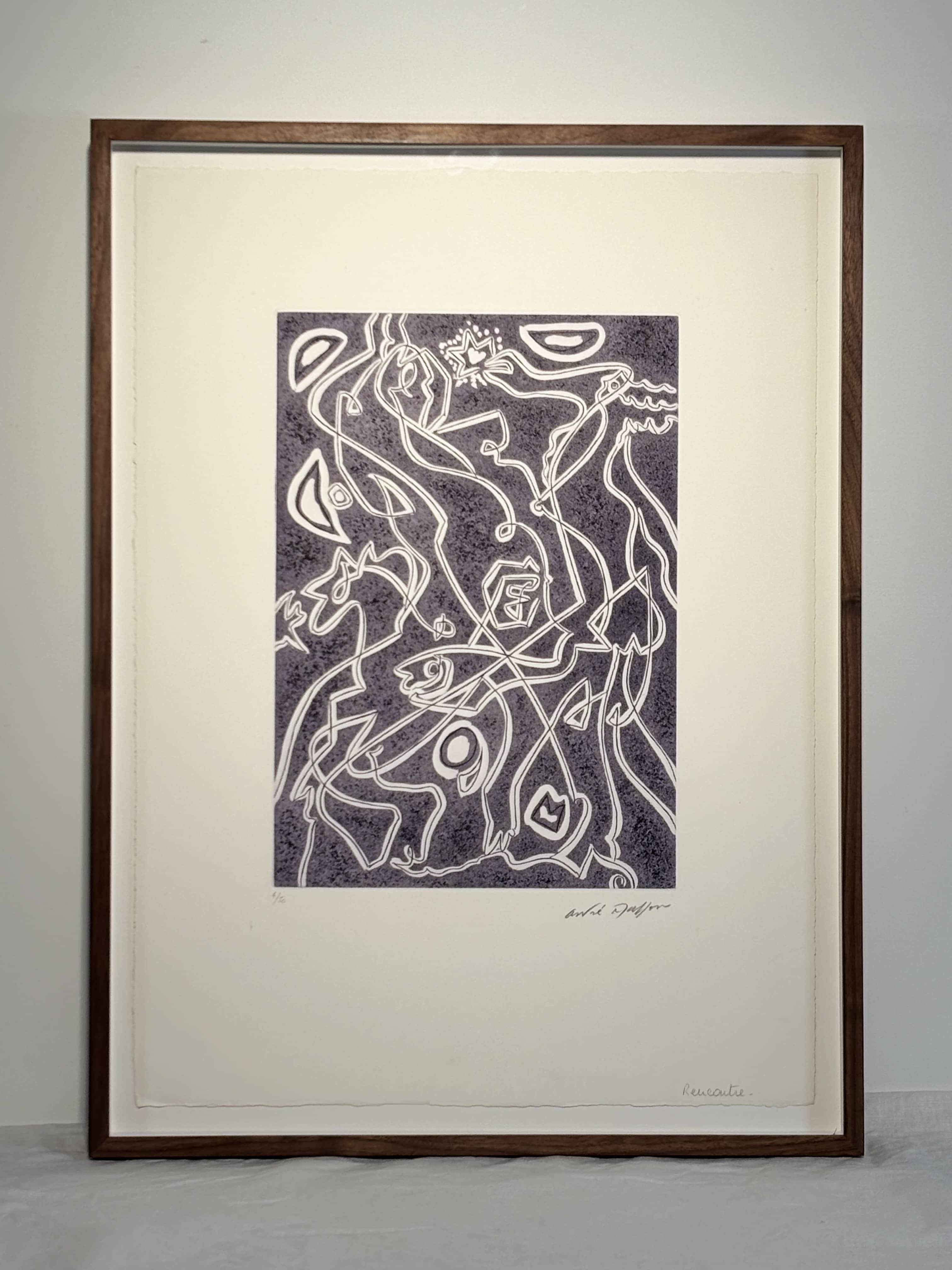
A central figure of Surrealism, André Masson was one of the inventors of automatic painting — a freedom of gesture that would directly influence Pollock and American Abstract Expressionism. His graphic œuvre, poised between myth, metamorphosis and vital energy, is today held in the world’s foremost collections.
“Rencontre” is a striking illustration of this: against a grainy violet-grey ground, fluid white lines conjure animal silhouettes, fragmented faces and archaic symbols in a swirling dance. Automatism in its purest state.
Original colour print, signed in pencil, numbered 4/50. Laid paper with deckle edges.
Image: 29.5 × 20.5 cm — Sheet: 47.8 × 35 cm.
Framed under glass by a leading Parisian atelier.
Walnut frame: 52 × 39 × 3 cm
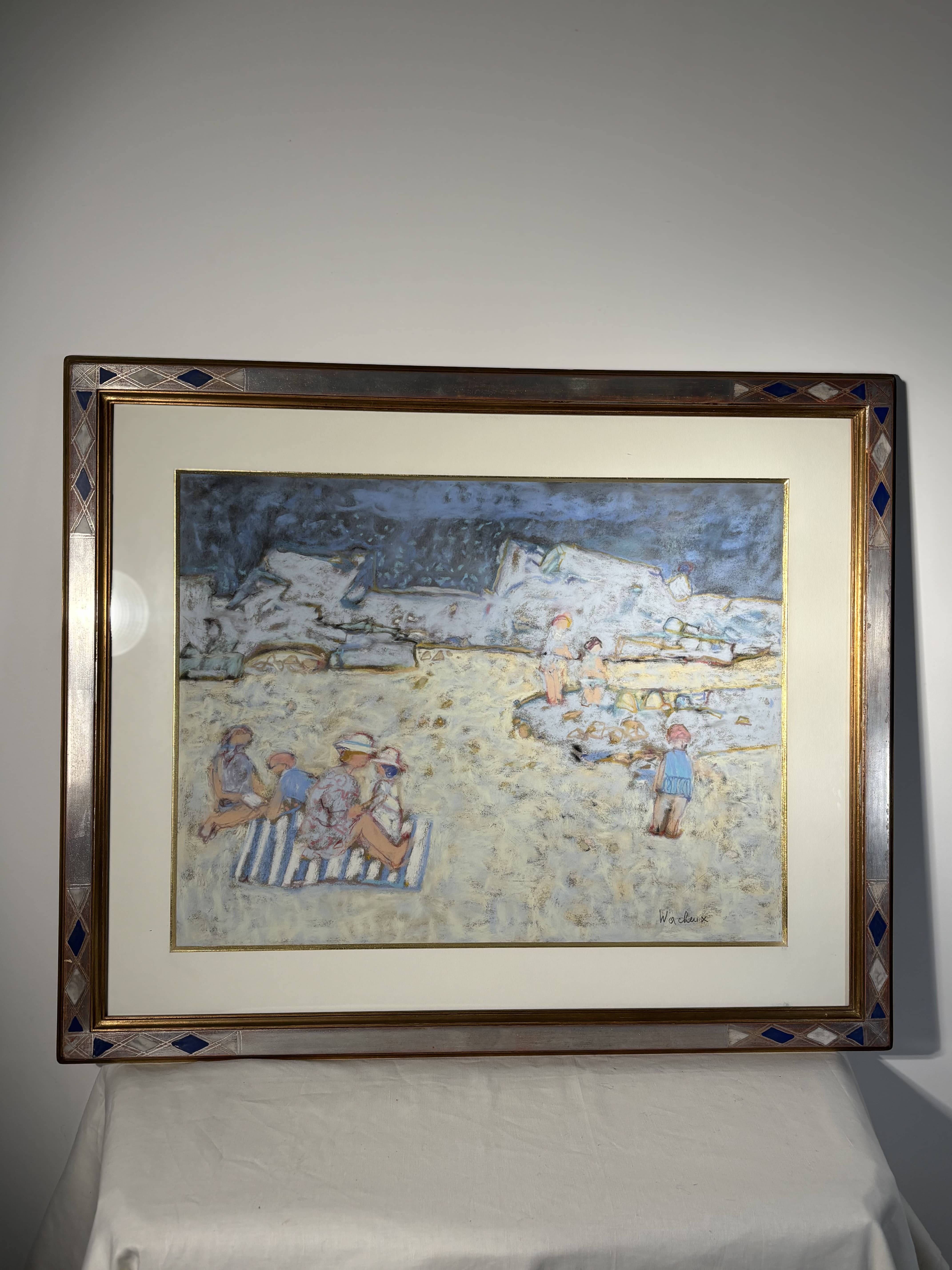
A very fine beach scene by Yves Wacheux, a 20th-century painter, depicting a group of figures on the sand facing the sea, in a soft and slightly veiled atmosphere. The artist captures a simple, silent moment of life, in which adults and children share the space between the sea and the dunes. The composition is built up through broad areas of colour, dominated by blues, beiges and whites, creating a diffuse, almost misty light that evokes an off-season beach or a late afternoon. The figures are rendered with softened contours, lending the scene great poetry and an impression of absolute calm. The particularly subtle handling of colour and light conveys the artist’s sensibility. Work signed lower right. Presented in a wooden frame with geometric decoration.
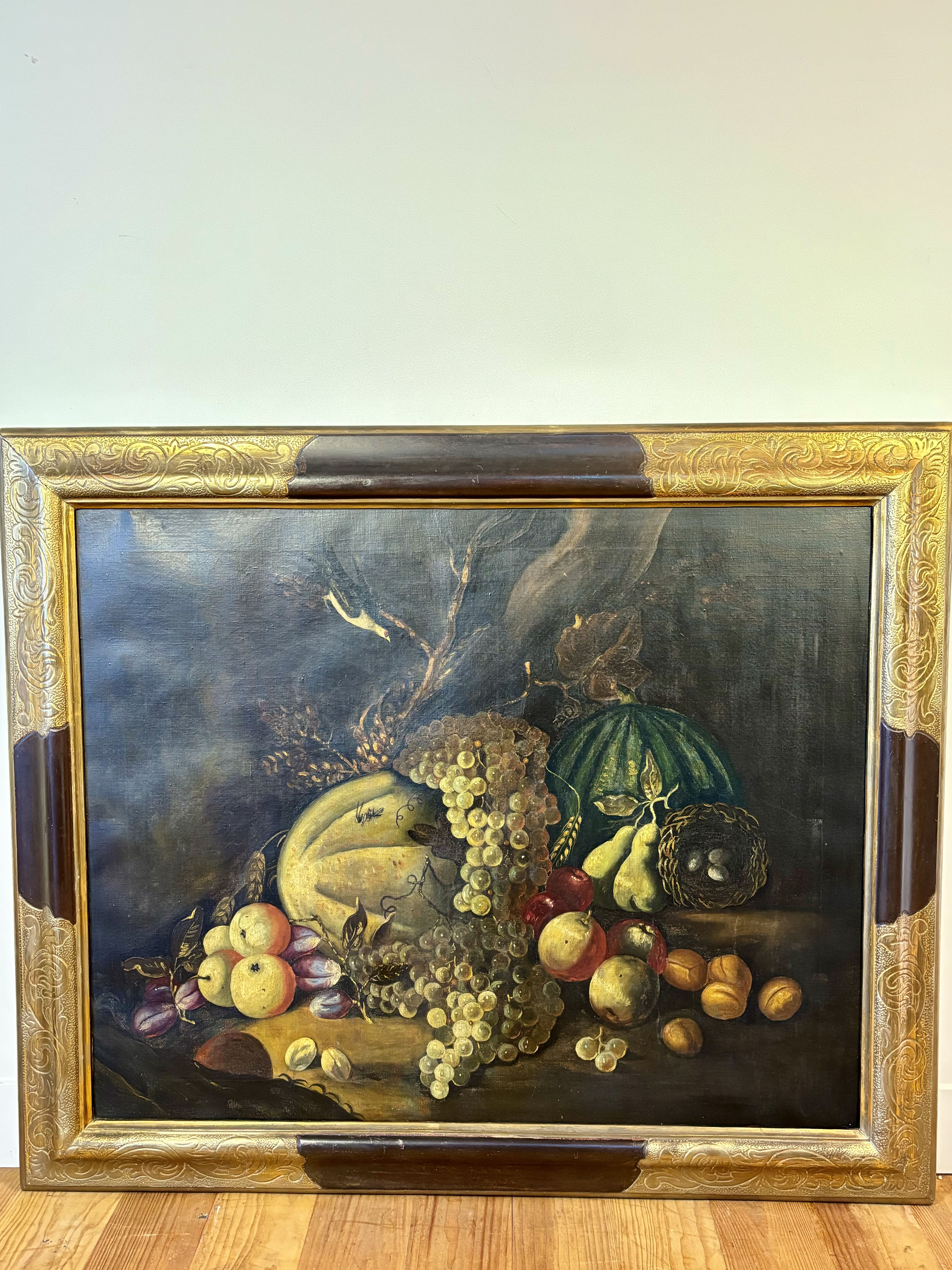
An imposing oil on canvas, Spanish school, dating from the 19th century. This still life painting depicts an abundance of fruit. A very fine frame alternating engraved giltwood and waxed stained wood.
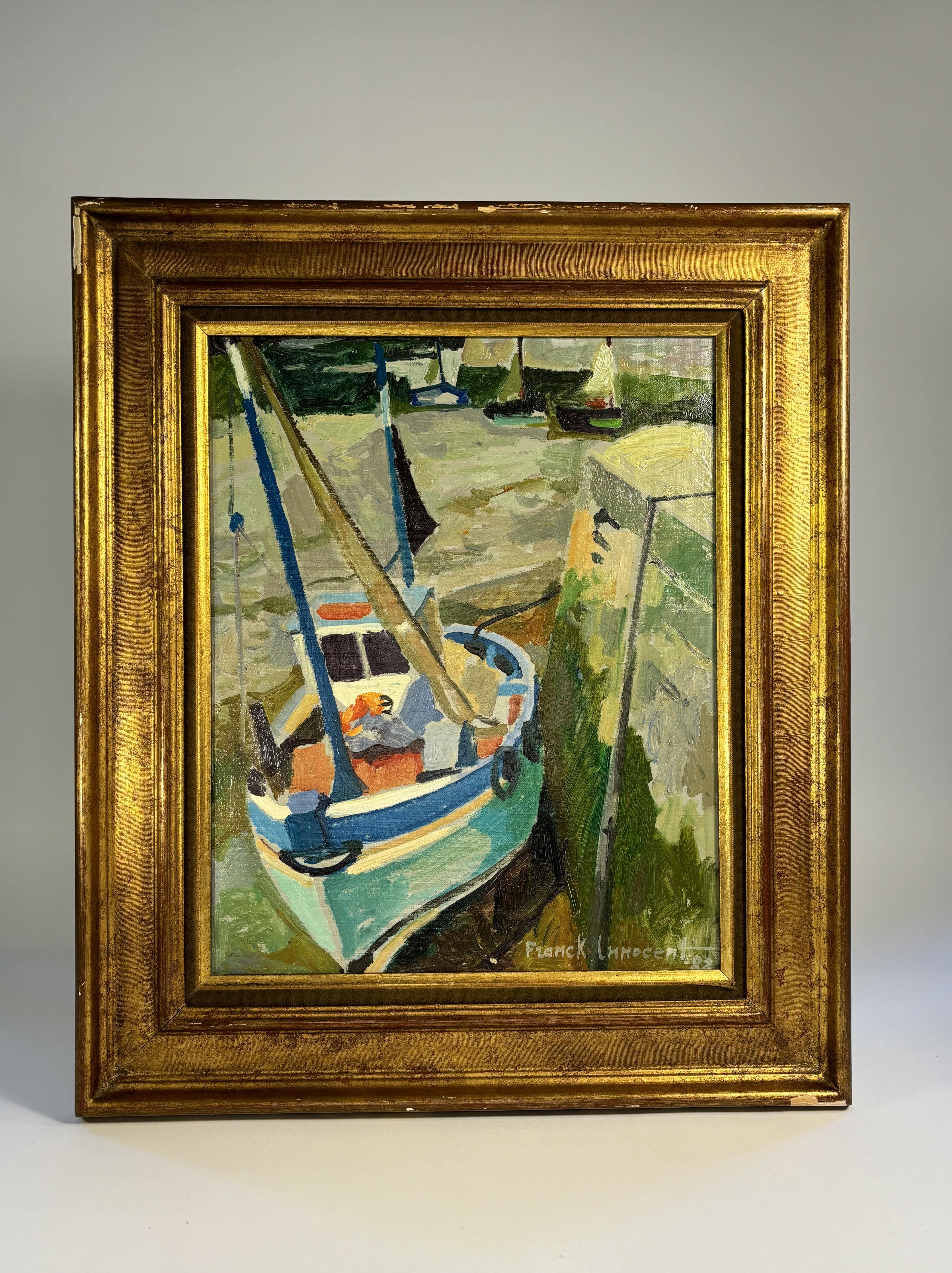
FRANCK INNOCENT (1912-1983). Oil on canvas, signed and dated lower right, countersigned, titled and dated on the reverse. Dedication on the reverse. A member of the École de Rouen, this talented artist offers a unique vision through this canvas imbued with maritime poetry.
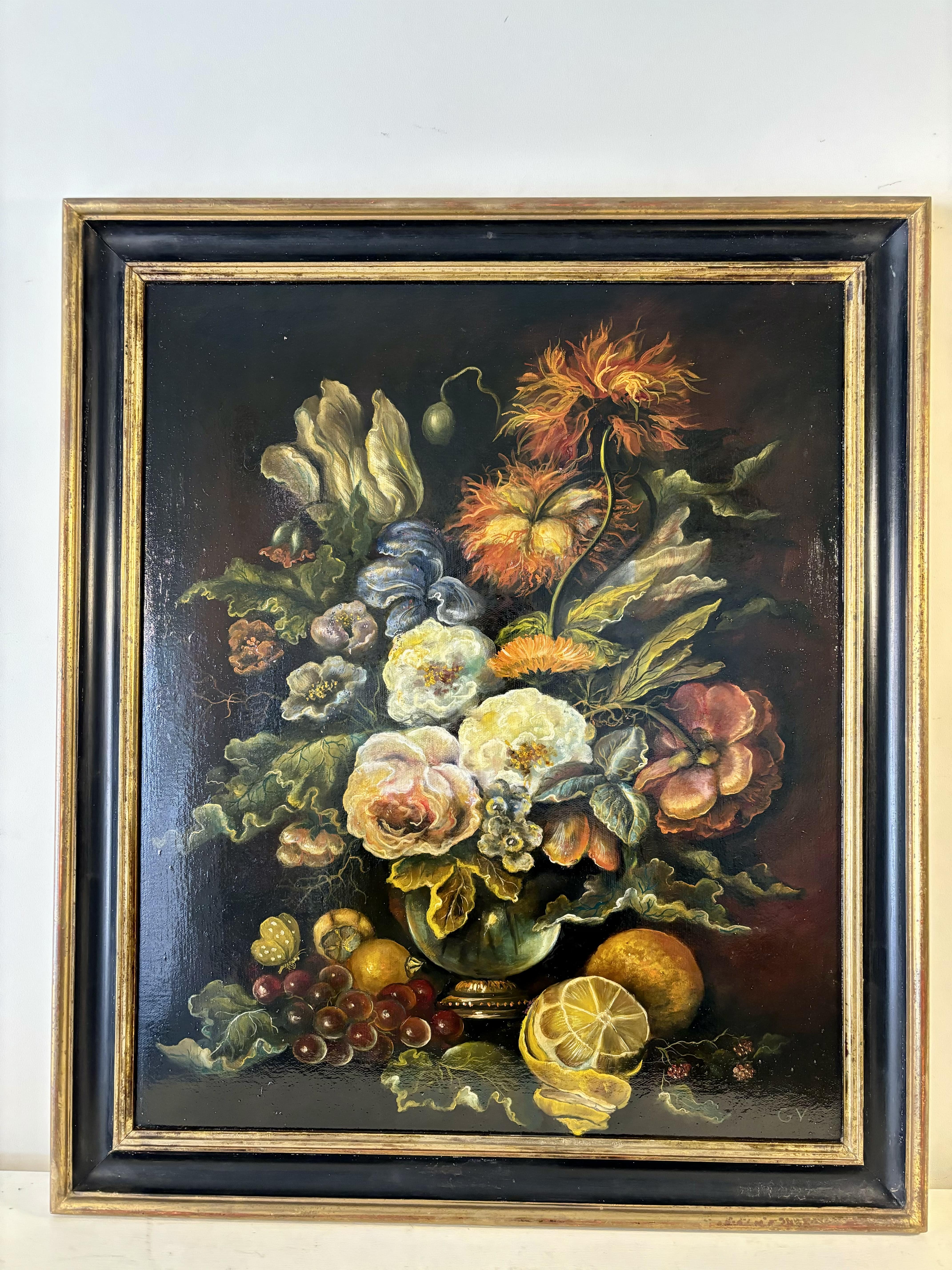
A superb oil on panel of a still life with flowers, fruit, a butterfly and a peeled lemon. Black and gilt lacquered wood frame.
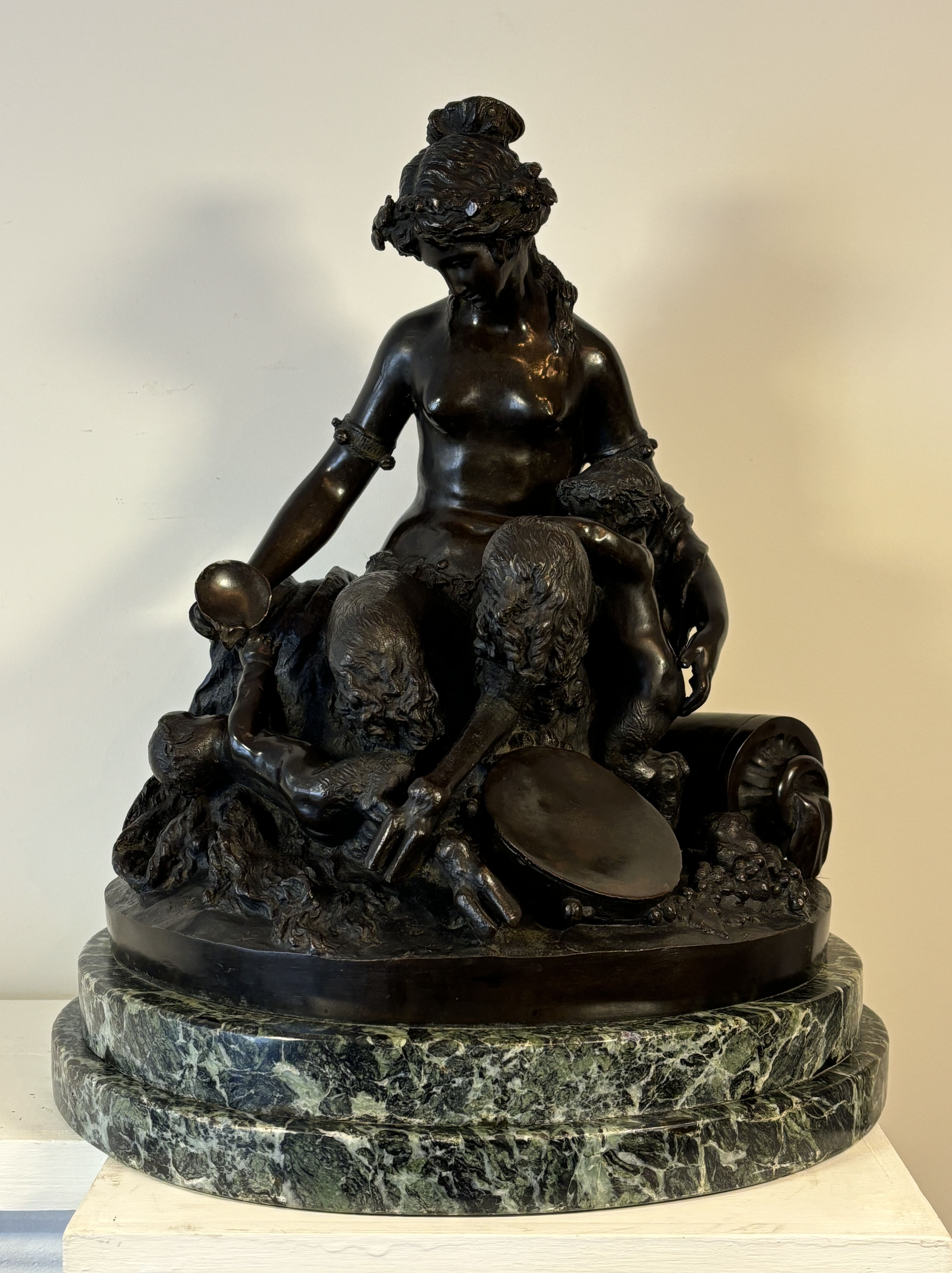
Large bronze group after Clodion dating from the 19th century, depicting a faunesse with her two children, one upon her lap and the other reclining, on the theme of Bacchus. The mother offers a cup of wine to the child, the wine flowing from a cask. Green marble plinth. Signed Clodion on the base of the bronze group. Plinth: 35 cm X 26.5 cm
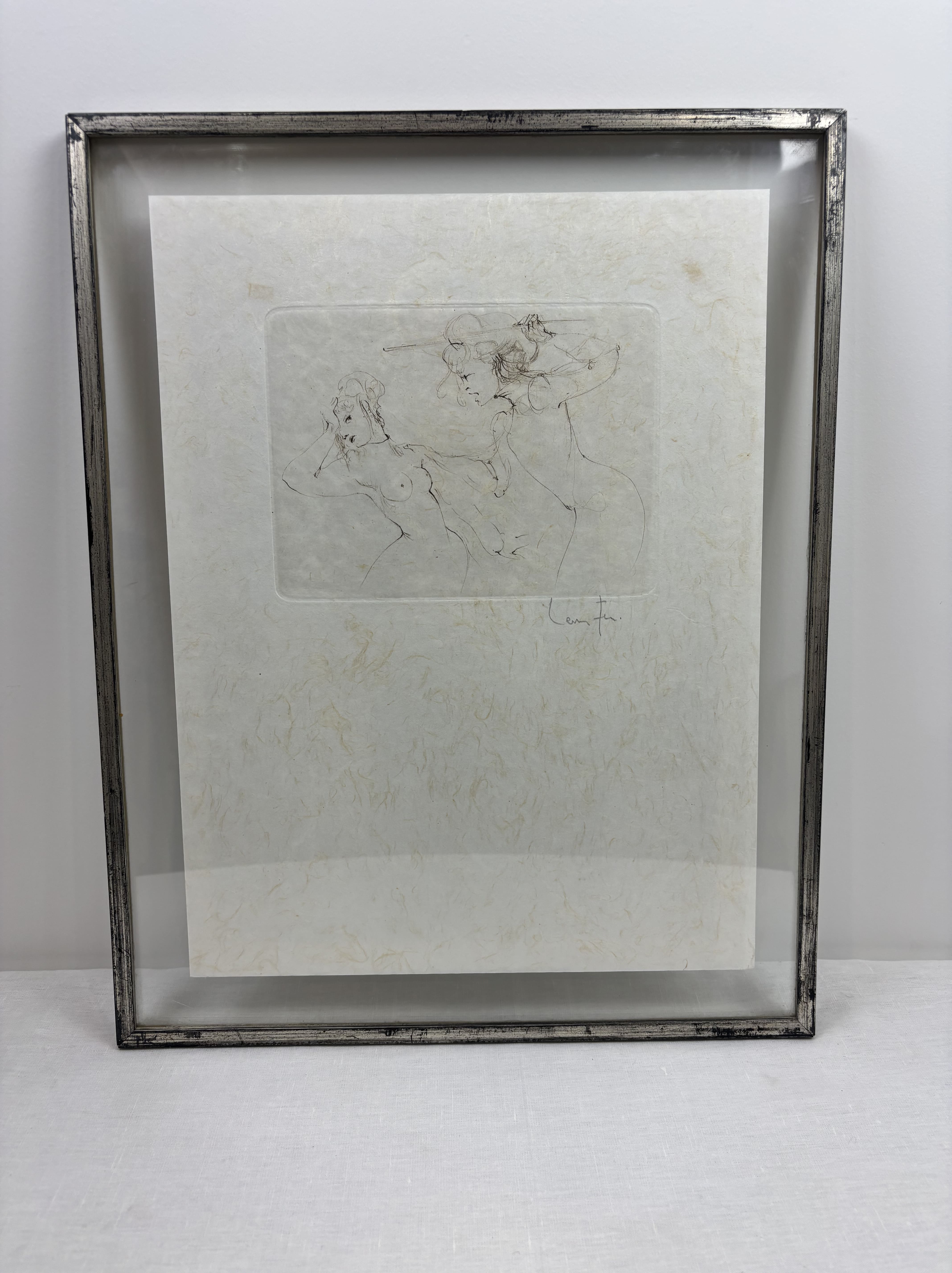
An original intaglio print by Leonor Fini, hand-signed in pencil by the artist, lower right. A sensual and theatrical scene depicting two nude women in an intimate composition, characteristic of Leonor Fini's dreamlike universe. Impression on fine-quality Japon paper, with a delicate moiré aspect. Well-marked platemark, clean impression, revealing a careful printing. Presented in a black and silvered wood frame, between two glass plates. Very good condition.
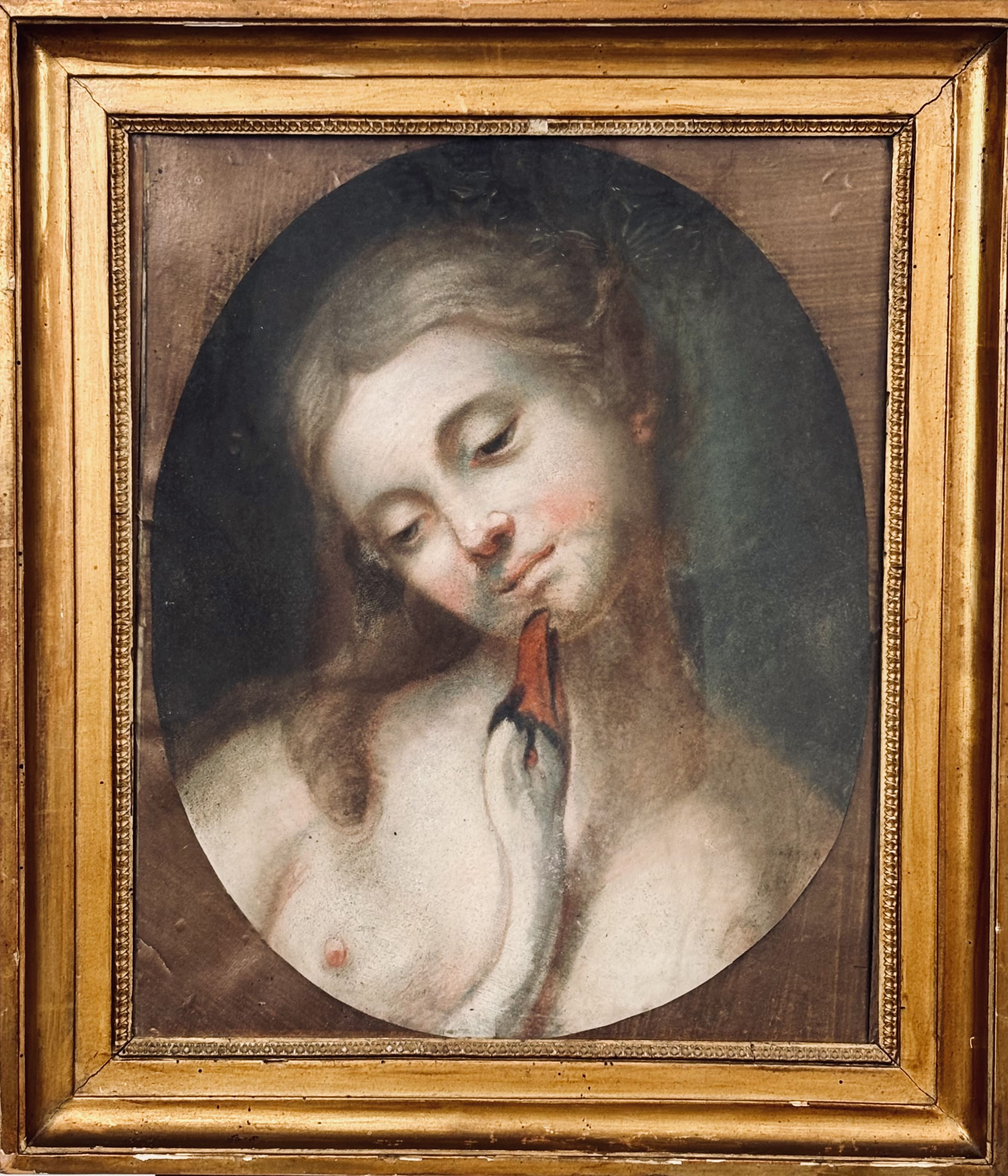
An elegant pastel on paper depicting Leda and the Swan, inspired by the antique myth in which Zeus takes the form of a swan to seduce Leda. The subject is treated here with great gentleness and a Romantic sensibility typical of the early decades of the 19th century. The delicate modelling of the face, the subtle palette and the oval format lend this composition an intimate and refined atmosphere. Period 19th-century gilt frame with its original blue paper backing.
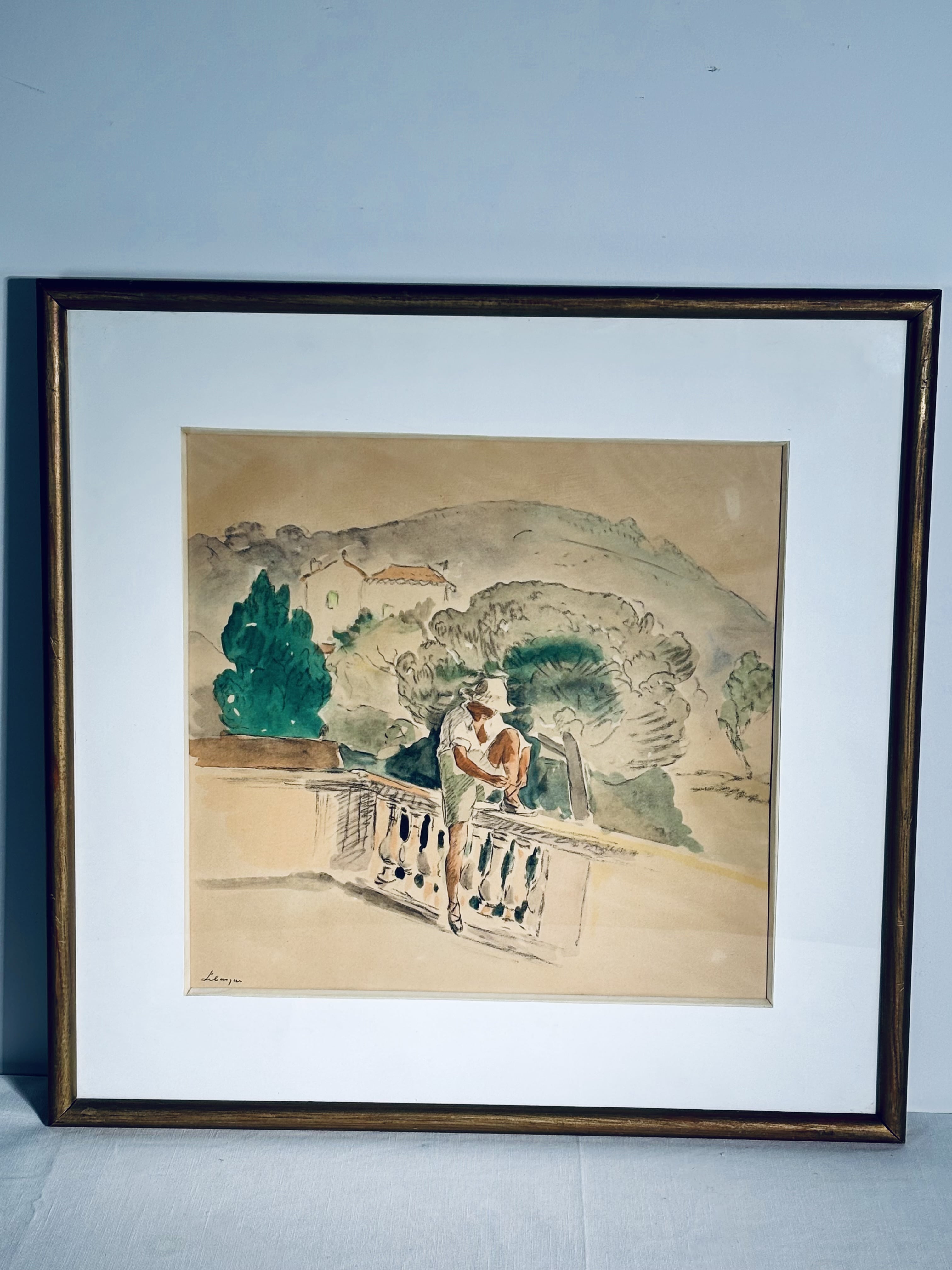
An elegant watercolour-heightened print on vellum paper, after Henri Lebasque (1865-1937), depicting a young woman seated in a garden. The supple and luminous line evokes the sensibility of the Post-Impressionist master, known for his intimate and sun-drenched painting. The hand-applied watercolour highlight lends this proof a unique gentleness: the delicate touches of colour animate the composition, conveying the poetry of suspended moments dear to Lebasque. Signed in the plate, in good general condition. 20th century. Framed under glass.
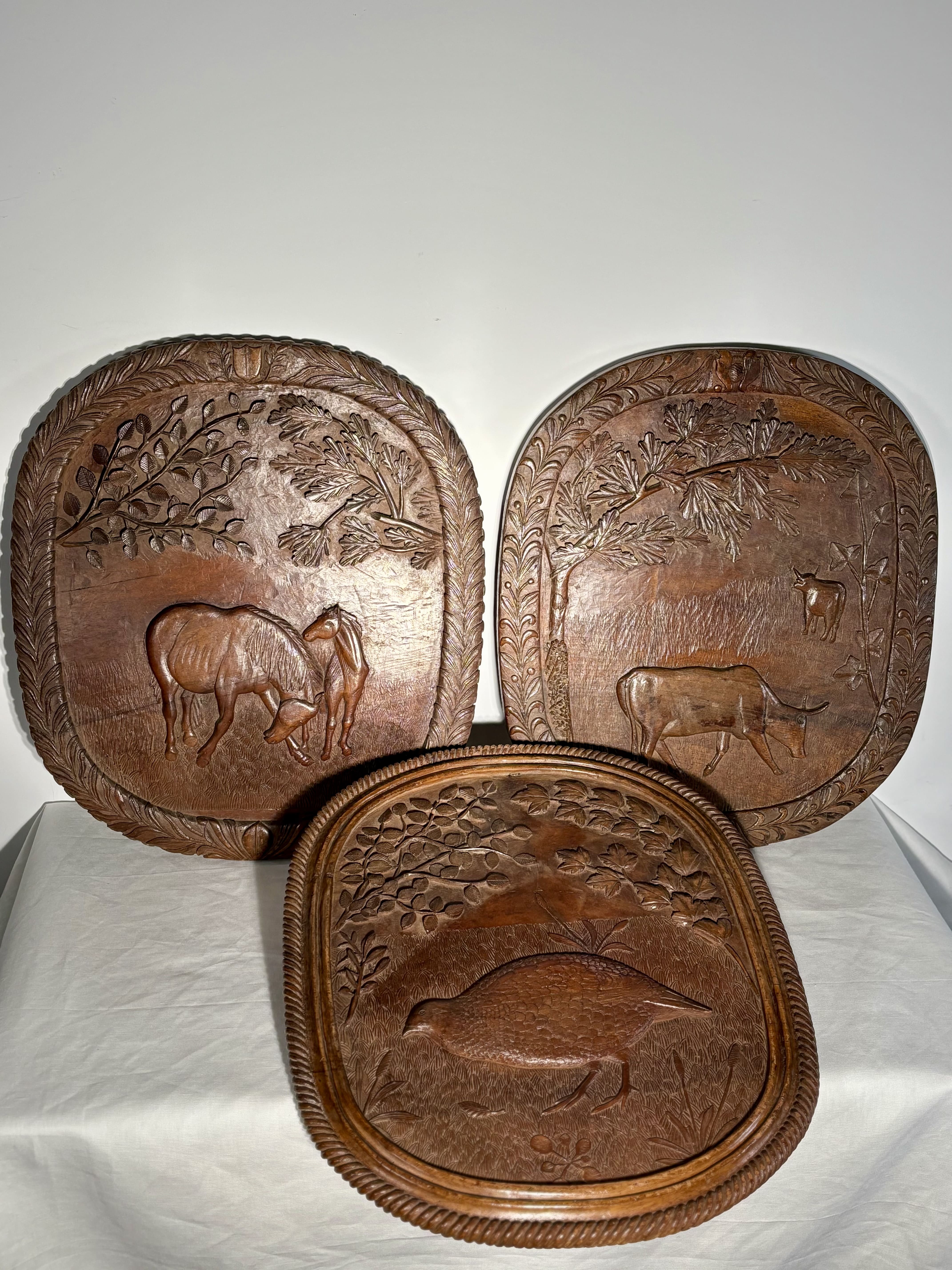
A set of three carved wood panels, executed in a single block, depicting animal scenes. Each panel is carved from a single piece of wood and presents a deep relief, a clean line, together with a handsome group of foliate motifs, leaves and framings entirely carved by hand. The scenes depict a mare and her foal, cattle at pasture and a partridge in a rural setting, typical of the pastoral repertoire of the late 19th and early 20th centuries. The reverse, left raw, shows tool marks and confirms a traditional and authentic artisanal work. A very fine early patina.
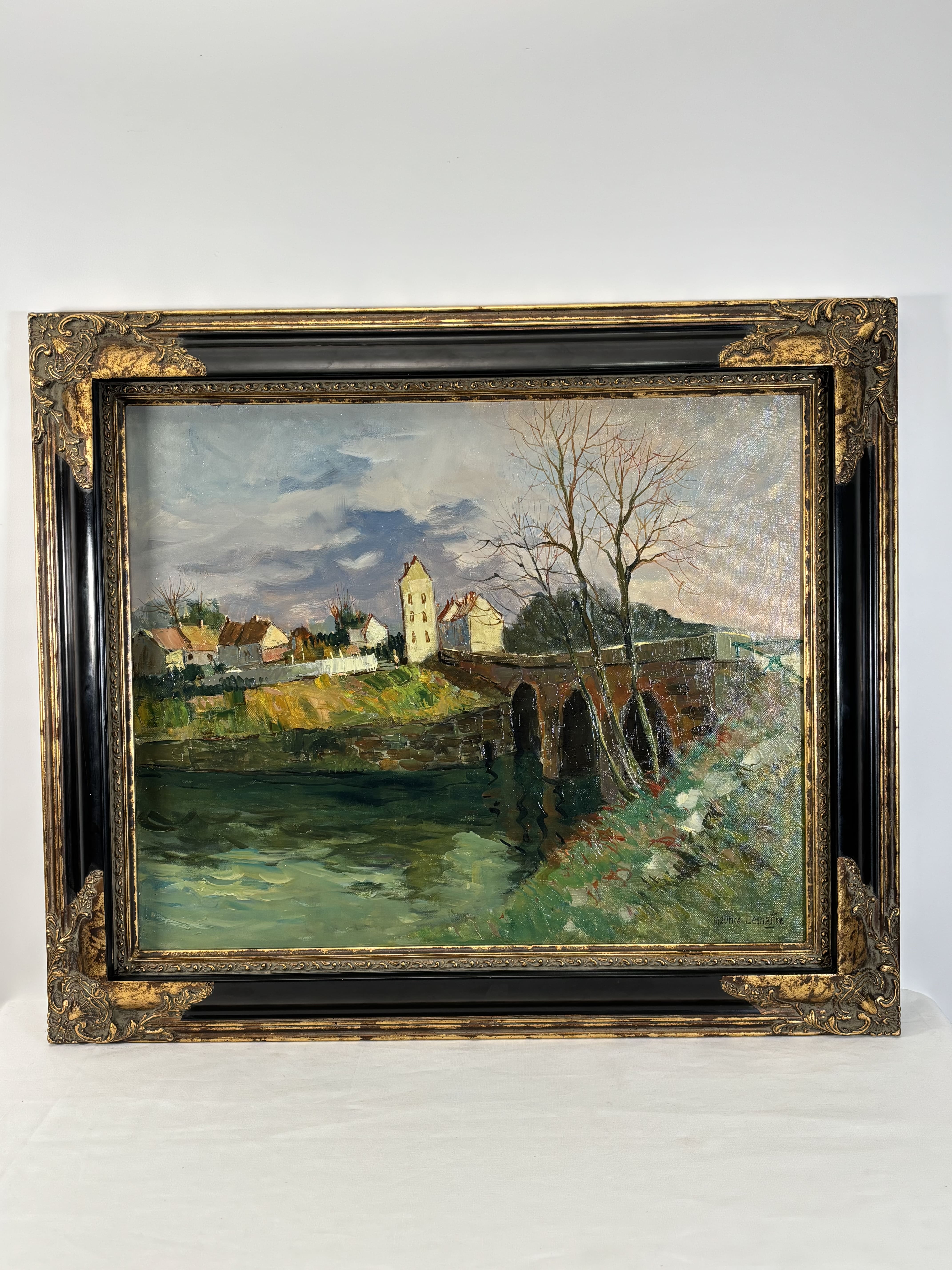
An oil on canvas depicting a landscape animated by a stone bridge spanning a river, attributable to the French Post-Impressionist vein of the 20th century. The brushwork is free, thick and highly expressive, worked with knife and brush, with a generous material particularly visible in the vegetation and masonry areas. The palette, dominated by deep greens, warm ochres and nuanced blues, conveys with accuracy a luminous and vibrant atmosphere. The work is signed lower right "Maurice Lemaire", a 20th-century French artist known for his sensitive and constructed landscapes, inscribed in the modernised tradition of plein air painting. The painting is presented in an important carved, painted and gilt wood frame.