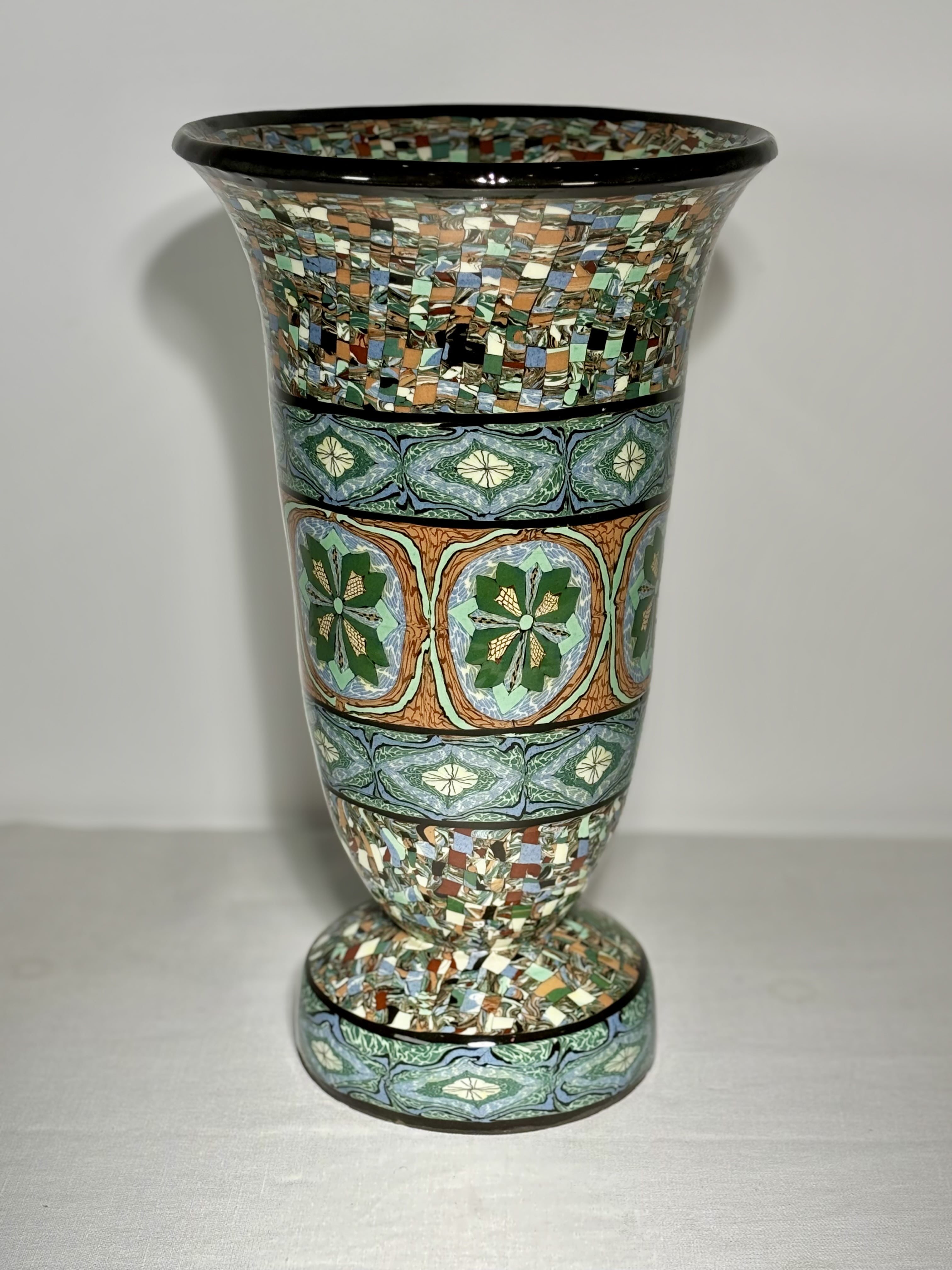
A large tulip vase in mixed-clay with polychrome decoration of stylised geometric floral motif friezes. Characteristic work of Jean Gerbino, the master ceramicist established in Vallauris, inventor of this striking technique consisting of composing decorations by assembling coloured clays within the mass. Each unique piece reveals the virtuosity of Gerbino's craftsmanship in Vallauris in the 1940s-1960s. Signed "Gerbino Vallauris" beneath the base.

An elegant pair of vases of architectural form, executed in stoneware and enhanced with an ash glaze. Each piece is adorned with a decorative frieze incised with a stylus that emphasises the verticality of the lines. 20th century.
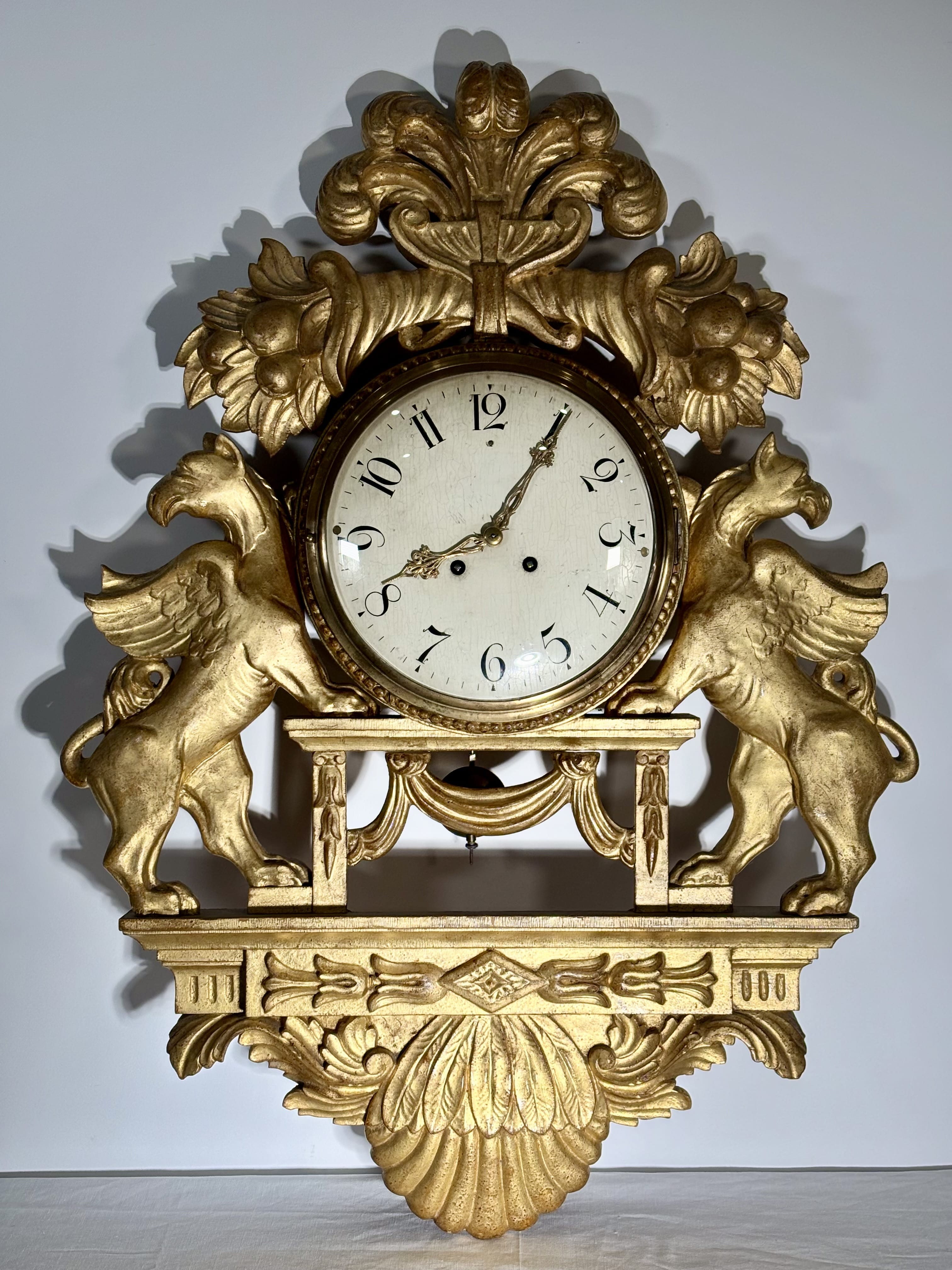
A striking 19th-century wall clock combining ornamental richness and horological precision. The finely carved and gold-leaf gilded case displays an exceptional decoration: two winged griffins flanking an enamelled dial, a stylised palmette at the top, columnettes, floral garlands and a Rocaille shell in the lower section. The whole evokes the Neoclassical aesthetic. Functional mechanical pendulum movement, signed Lenzkirch AG (Germany), numbered 92833. Wall mount signed AUG Stenman — Eskilstuna (Sweden), renowned late 19th-century ironwork. Late 19th century.
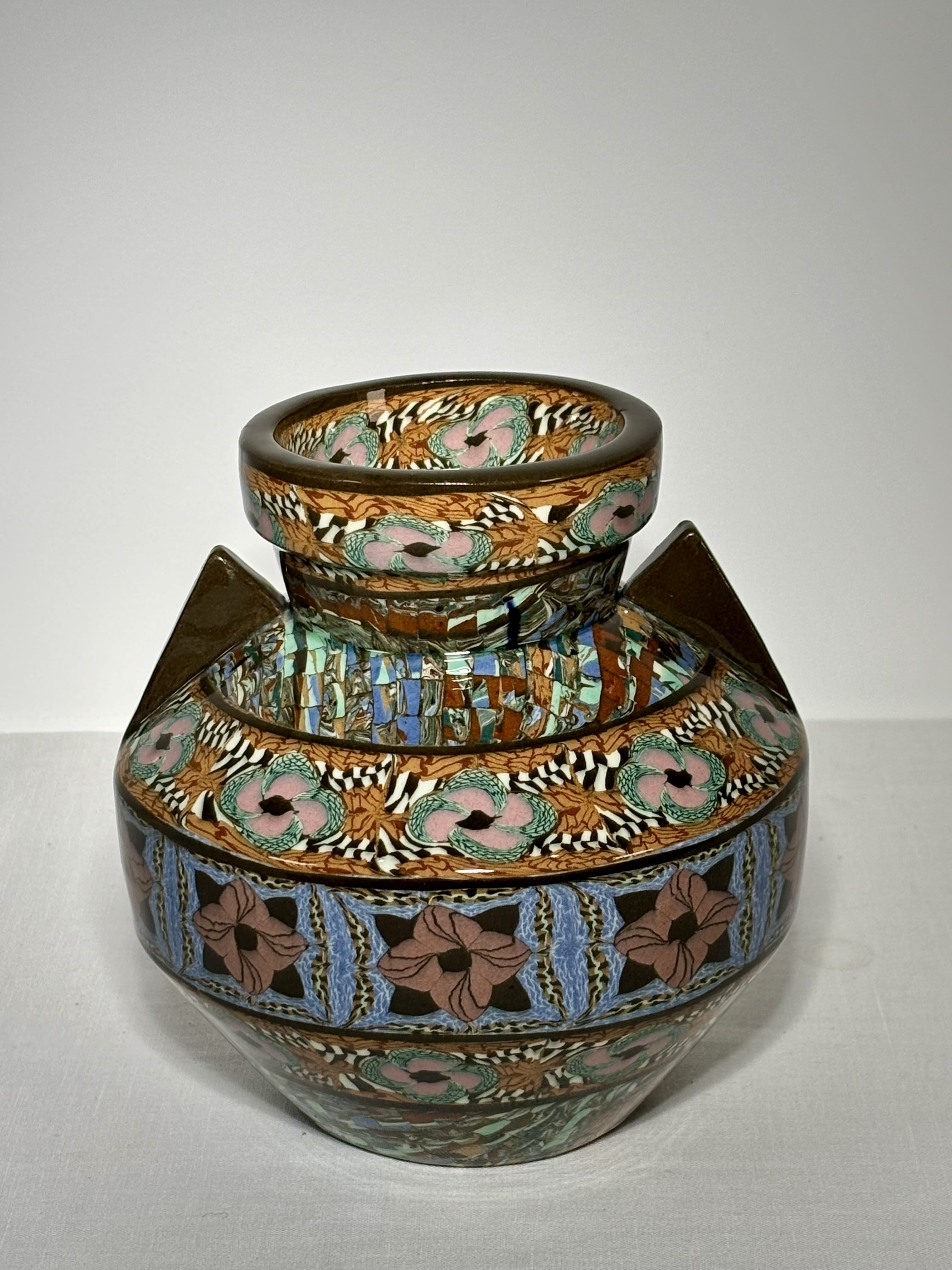
A baluster-form vase in polychrome mixed-clay with two triangular handles, signed Gerbino Vallauris beneath the base. It displays the mosaic decoration distinctive of Jean Gerbino's workshop, the master ceramicist established in Vallauris (France), known for his original "mosaic of coloured clays" technique, developed in the 1930s. The piece offers a fine harmony of warm and cool tones, alternating stylised floral motifs, geometric scrolls and interlacings of coloured clays. The contrasts between blue, green, powder pink and browns bring a decorative richness characteristic of the Gerbino savoir-faire. The vase adopts a bellied form with constricted everted neck, flanked by two rectangular handles giving it a both traditional and Modernist appearance.
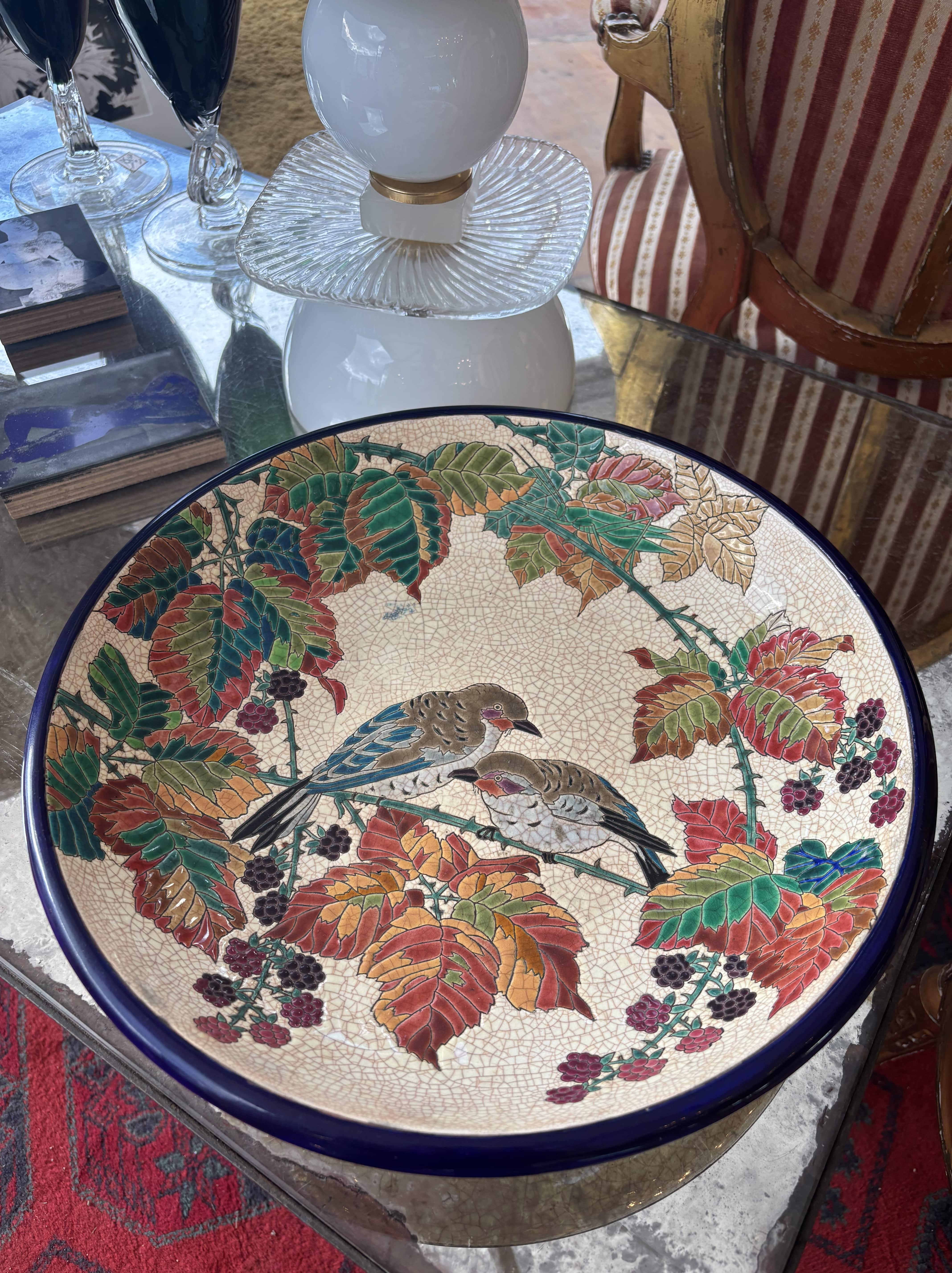
A large circular plate in cloisonné Longwy enamels, decorated by hand. The polychrome composition depicts two birds perched on a bramble branch laden with blackberries, surrounded by broad foliage in autumnal colours. The ivory ground with a characteristic network of crackles enhances the vivacity of the enamels, underlined by a deep blue line on the rim. On the reverse, stamp "Emaux de Longwy - Décoré à la main - France", used between 1950 and 1955. Numbered.
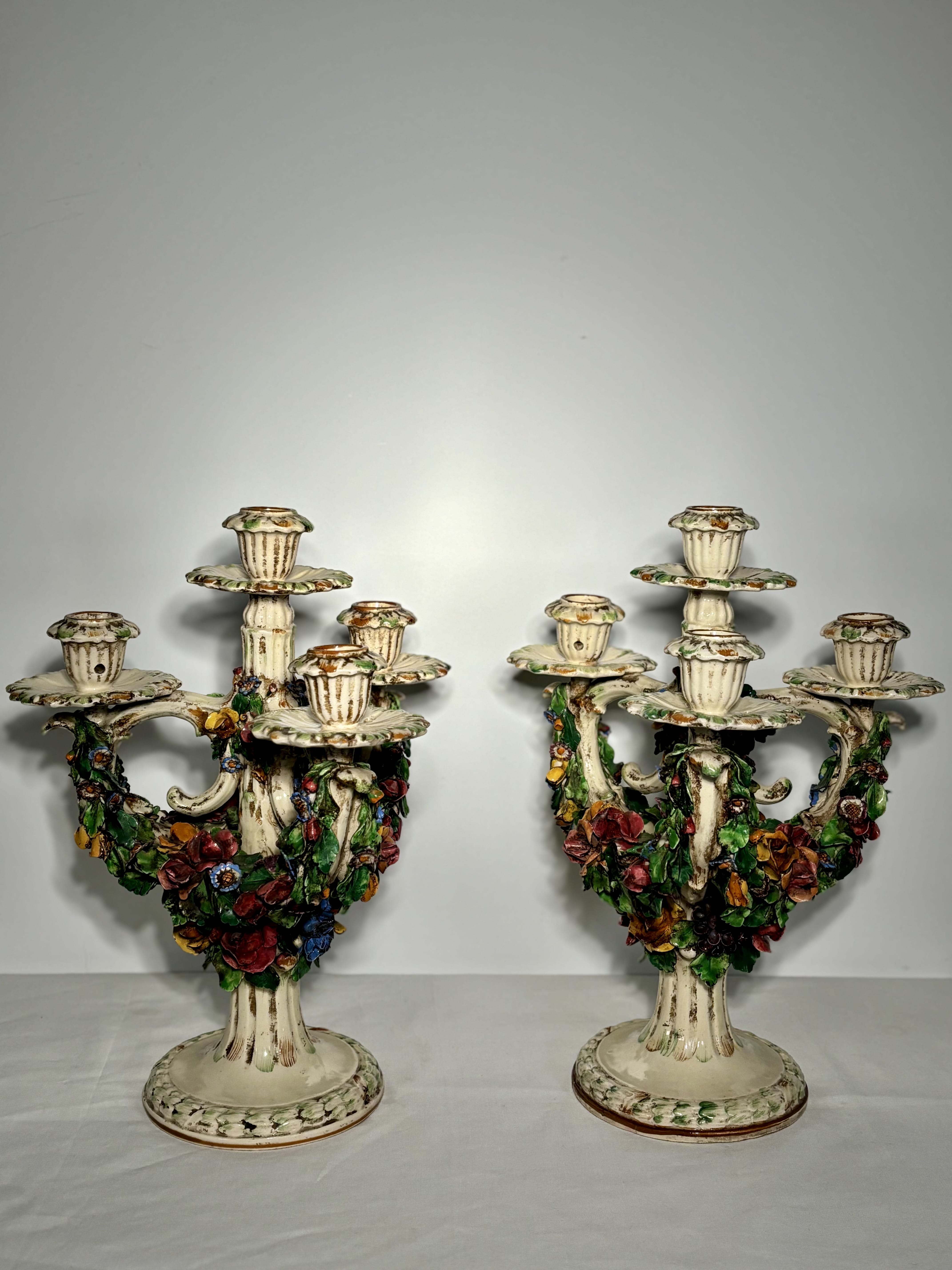
Italian ceramic, fiori applicati technique. Very fine condition. A superb pair of Italian ceramic candelabra, work of Bassano del Grappa, executed between the 1920s and 1940s. These pieces perfectly illustrate the Venetian decorative tradition of fiori applicati, in which each flower, petal and leaf is hand-modelled then applied one by one to the structure. This savoir-faire, of great finesse, constitutes one of the historic signatures of the Bassano ateliers. The highly floral composition reprises the decorative codes of Venetian Baroque: twisted garlands, rosettes, deep colours and ivory glaze, typical of early 20th-century production. Fine state of preservation. Soft and even patina. Italy, 20th century.
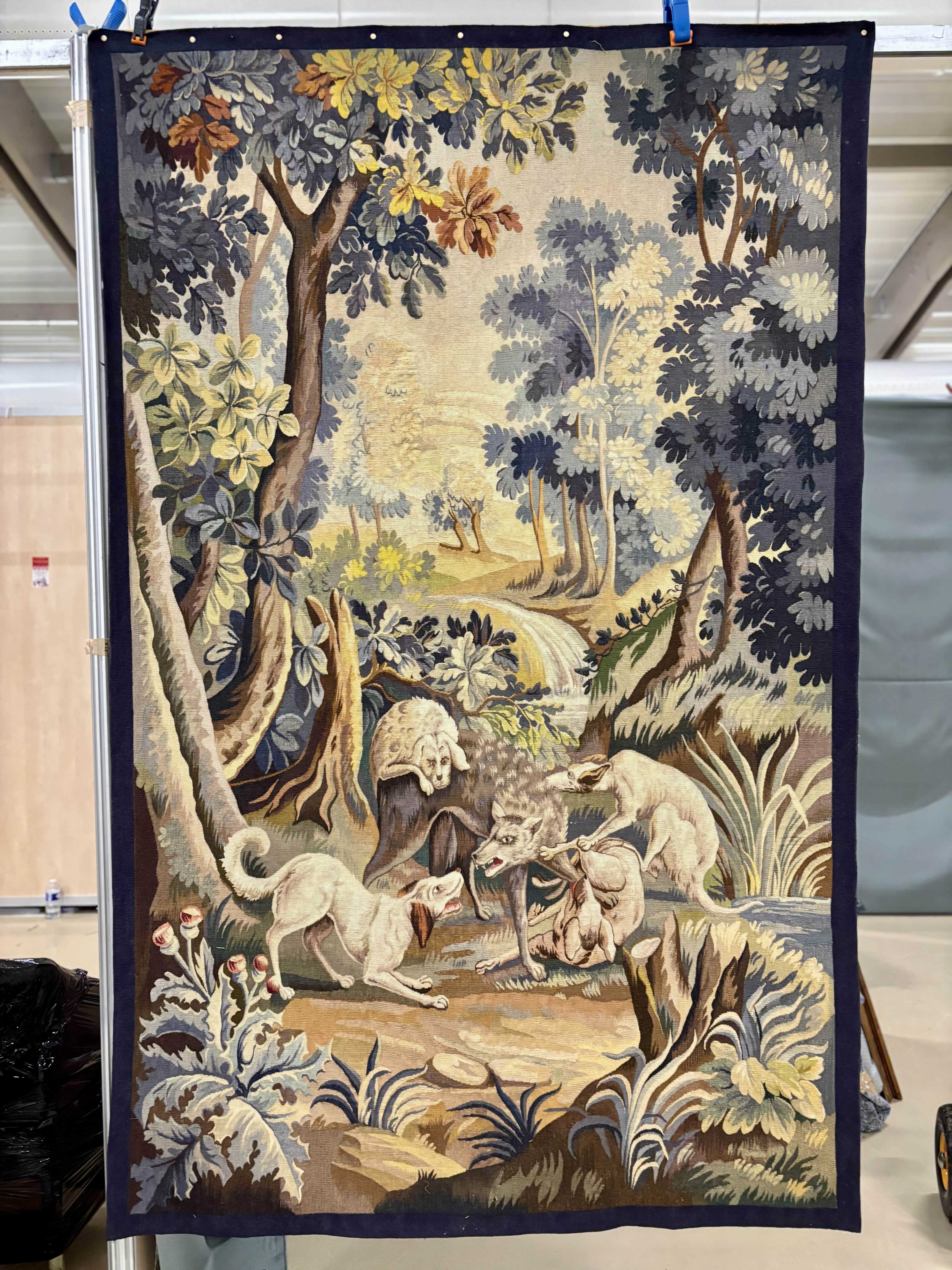
A superb tapestry hand-woven at Aubusson, from the Atelier Jean Picaud, presenting a wolf-hunt decoration in a wooded landscape in the manner of the classic verdures. The scene depicts a wolf surrounded by a pack of hounds, treated with a remarkable sense of movement and drama. The whole is rhythmed by an interplay of blue, green, ochre and beige foliage, a palette characteristic of 20th-century Aubusson production. The work stands out for the quality of its weaving visible on the reverse: regular density, diversity of wools, finesse of the gradients. The cartoon reprises the decorative vocabulary of the great 18th-century hunting tapestries, reinterpreted with sensibility by the Aubusson ateliers. Very fine general condition. Ready to hang. France, mid-20th century.
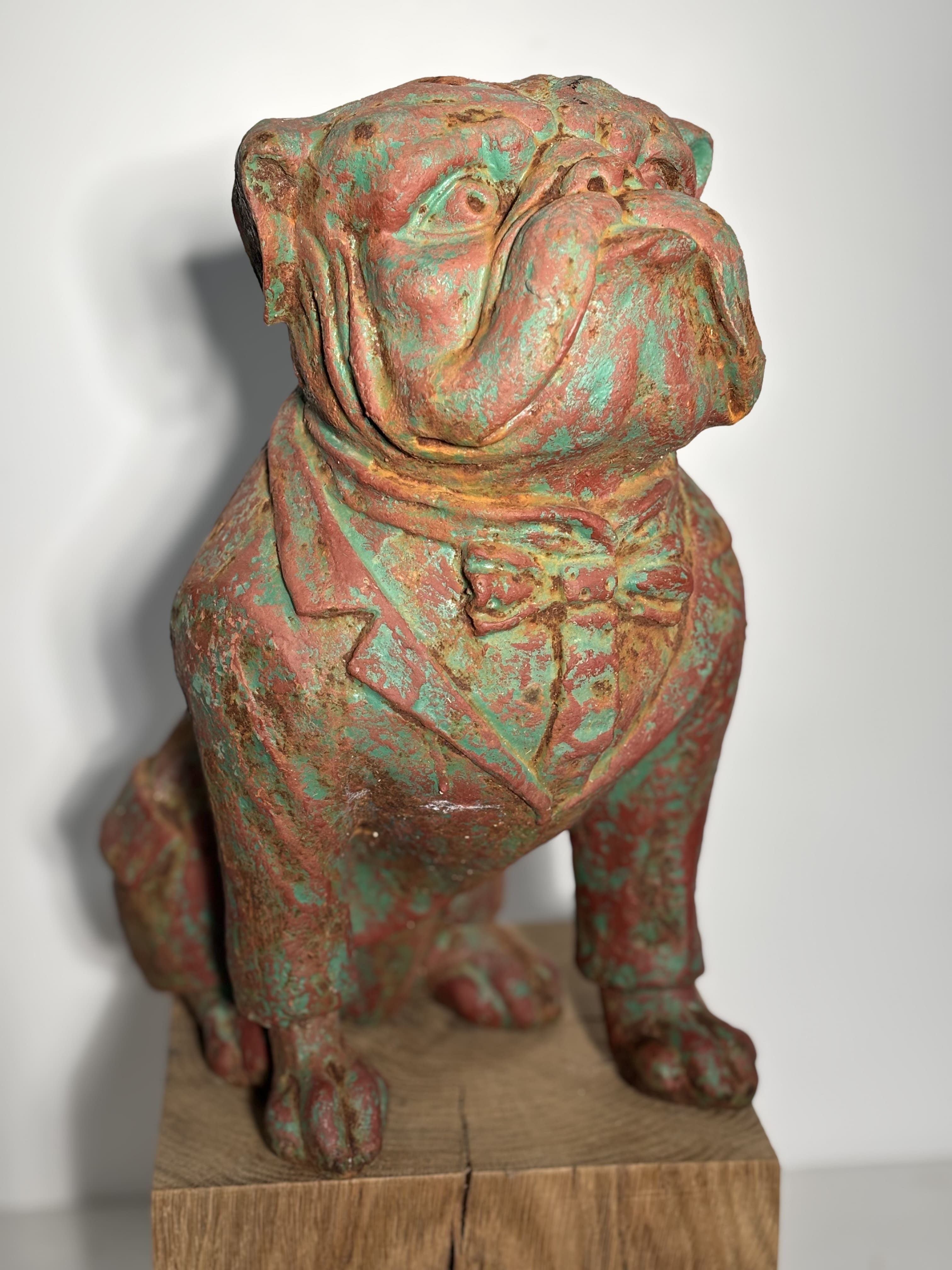
A decorative sculpture depicting a seated bulldog, figured anthropomorphically, dressed in a dinner jacket with bow tie. This cast-iron piece stands out for the quality of its modelling, the force of its expression and its resolutely decorative character. Datable to the late 19th to early 20th century, this type of humorous and elegant subject was particularly appreciated for the ornament of house entrances, winter gardens, hallways or bourgeois interiors. The surface presents a fine early patina, in nuances of red-brown and green, resulting from natural oxidation and probably from early finishing layers now altered. This unrestored early patina lends the sculpture a very lively aspect. Weight: 8 kg. The wooden base visible in the photographs is a presentation element and is not included in the sale.
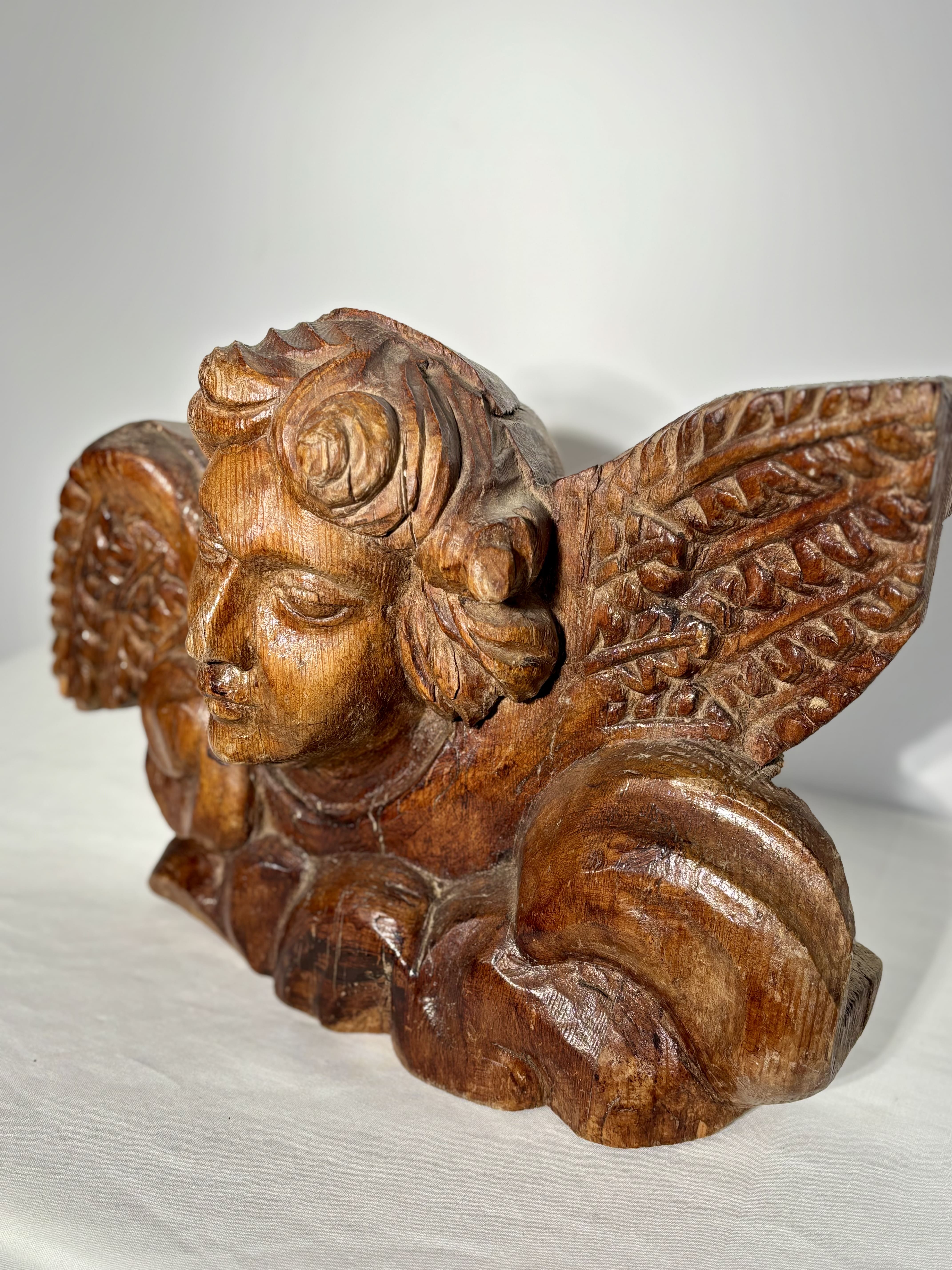
A rare carved wood sculpture depicting a winged angel head, treated in high relief. This fragment probably originates from an architectural element or religious woodwork (altarpiece, church decoration, conventual ensemble). The face, full and serene, presents an interiorised expression typical of provincial French Baroque sculpture: half-closed eyelids, fine mouth, soft yet deeply expressive modelling. The hair is animated by generous and deeply carved curls, lending rhythm and presence to the whole. The deployed wings, stylised and graphic, accentuate the composition and reinforce the monumentality of the piece. The reverse, left raw, reveals tool marks, early assemblies and reworkings, attesting to a dismantling and architectural use. The warm and nuanced patina, in honey and brown tones, is authentic, marked by time. A highly sought-after decorative presence.
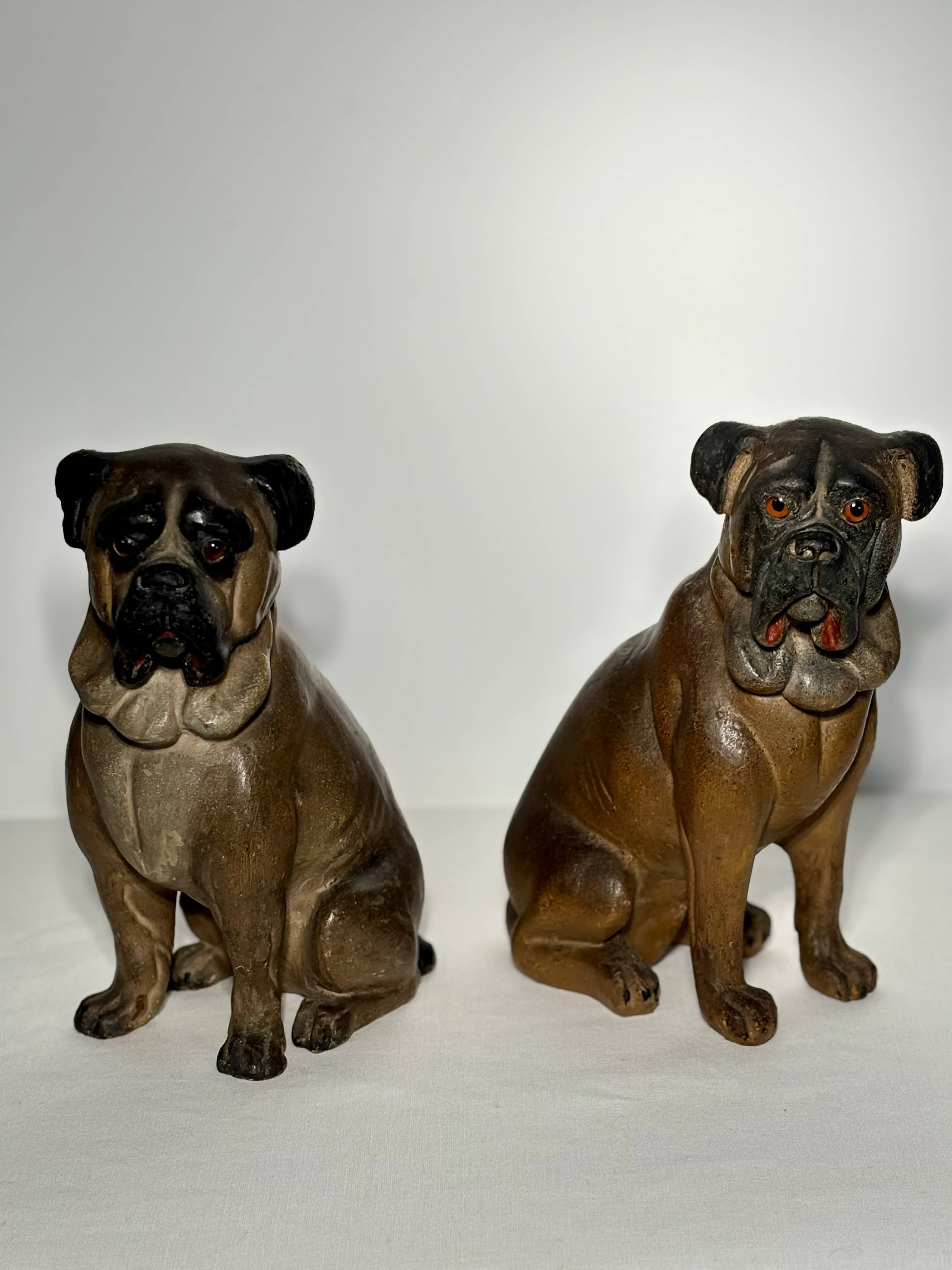
A rare and expressive pair of English bulldogs in polychrome terracotta, depicting two seated dogs, with powerful modelling and a typically Victorian character. The sculptures display excellent modelling quality, with a very naturalistic treatment of the heads, heavy jowls, skin folds and stocky bodies, characteristic of the depiction of the Victorian Bulldog, symbol of strength and fidelity in 19th-century England. The eyes are in sulphide glass, mounted and set in the material, bringing remarkable depth of gaze and lively presence — a distinctive detail of quality English productions of this period. England, 19th century.
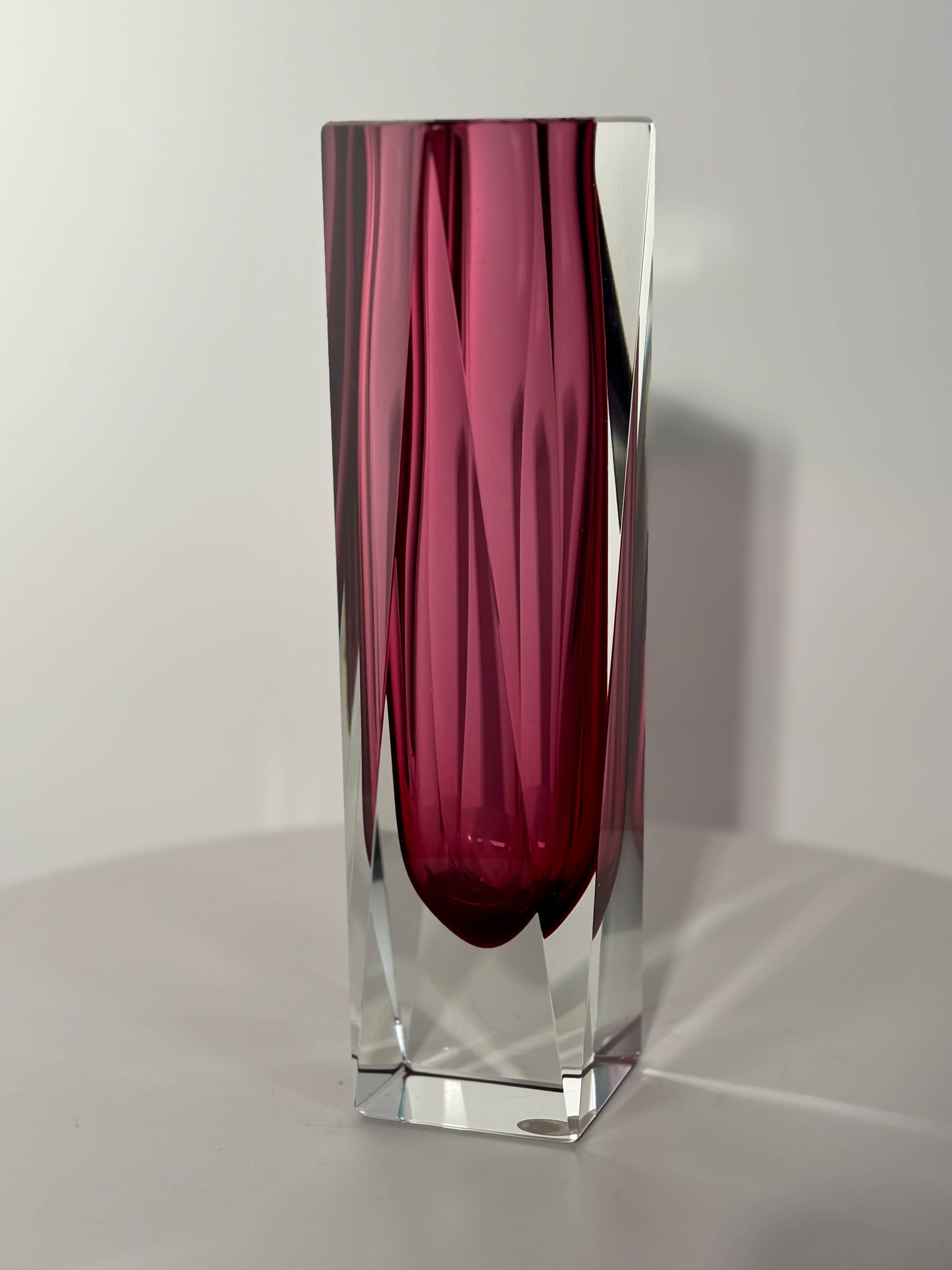
A soliflore vase of square section in Murano crystal (cristallo), a remarkable example of Italian design of the 1960s. An architectural piece combining the rigour of geometric cutting with the fluidity of colour.
Highlights:
. Technique: sommerso work (superposed glass) presenting a fuchsia-amaranth core in suspension within a thick mass of translucent crystal.
. Finish: entirely facet-cut and cold-polished. The edges are sharp, creating spectacular refraction effects in the light.
. Authenticity: original "Made in Murano Italy" label present beneath the base.
. Attribution: model characteristic of Mandruzzato or Flavio Poli productions.
. Perfect state of preservation. No chips, no nicks on the edges. Limpid crystal.
Why choose this piece: this is a large format (26 cm) with a strong visual presence. Its vivid colour and minimalist design make it a sought-after collector's piece.
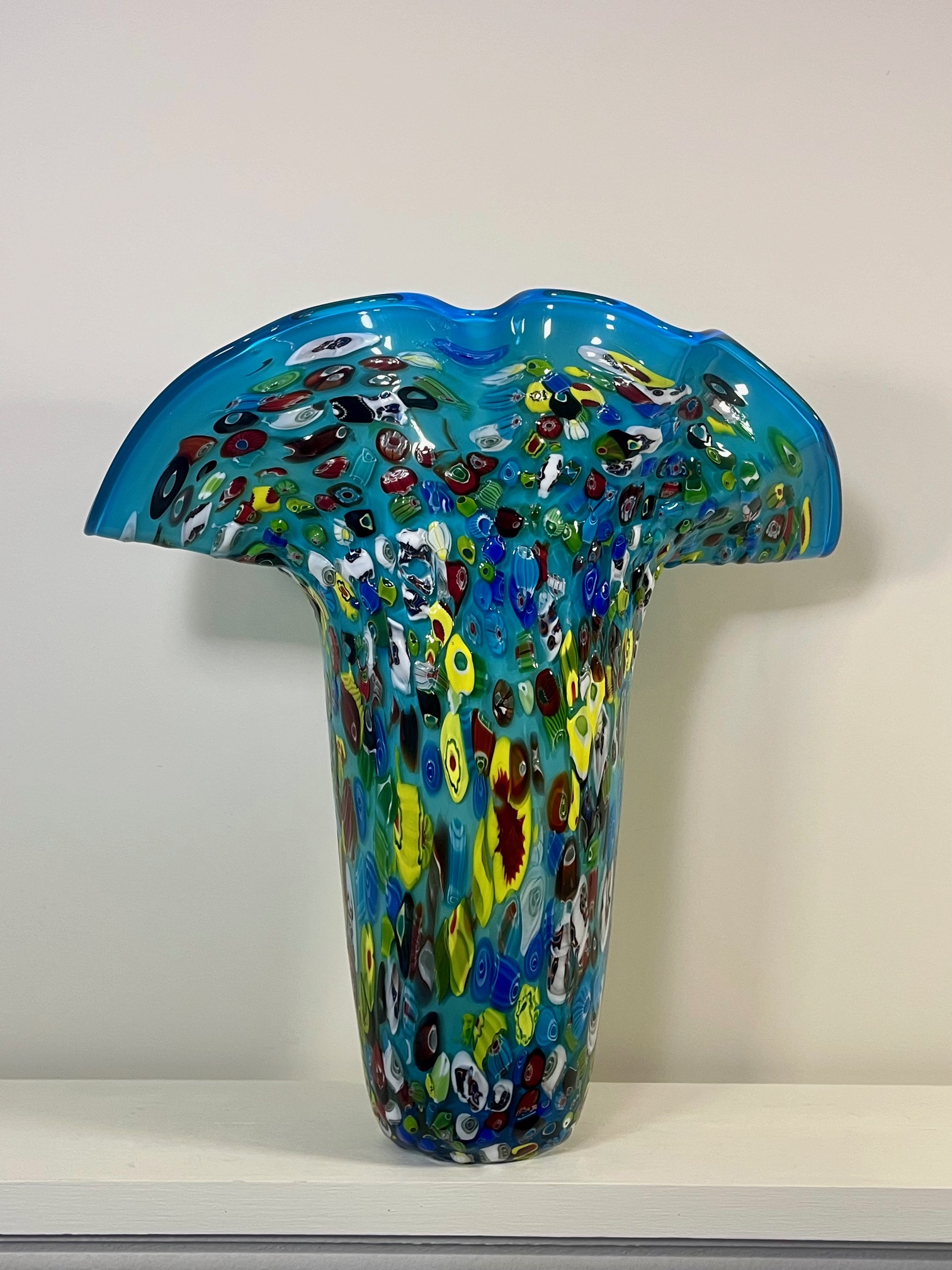
A very large Murano glass vase dating from 1960, blue glass with rich millefiori glass inclusions inside, curved yellow rim. Italy. A very fine quality piece in perfect condition.