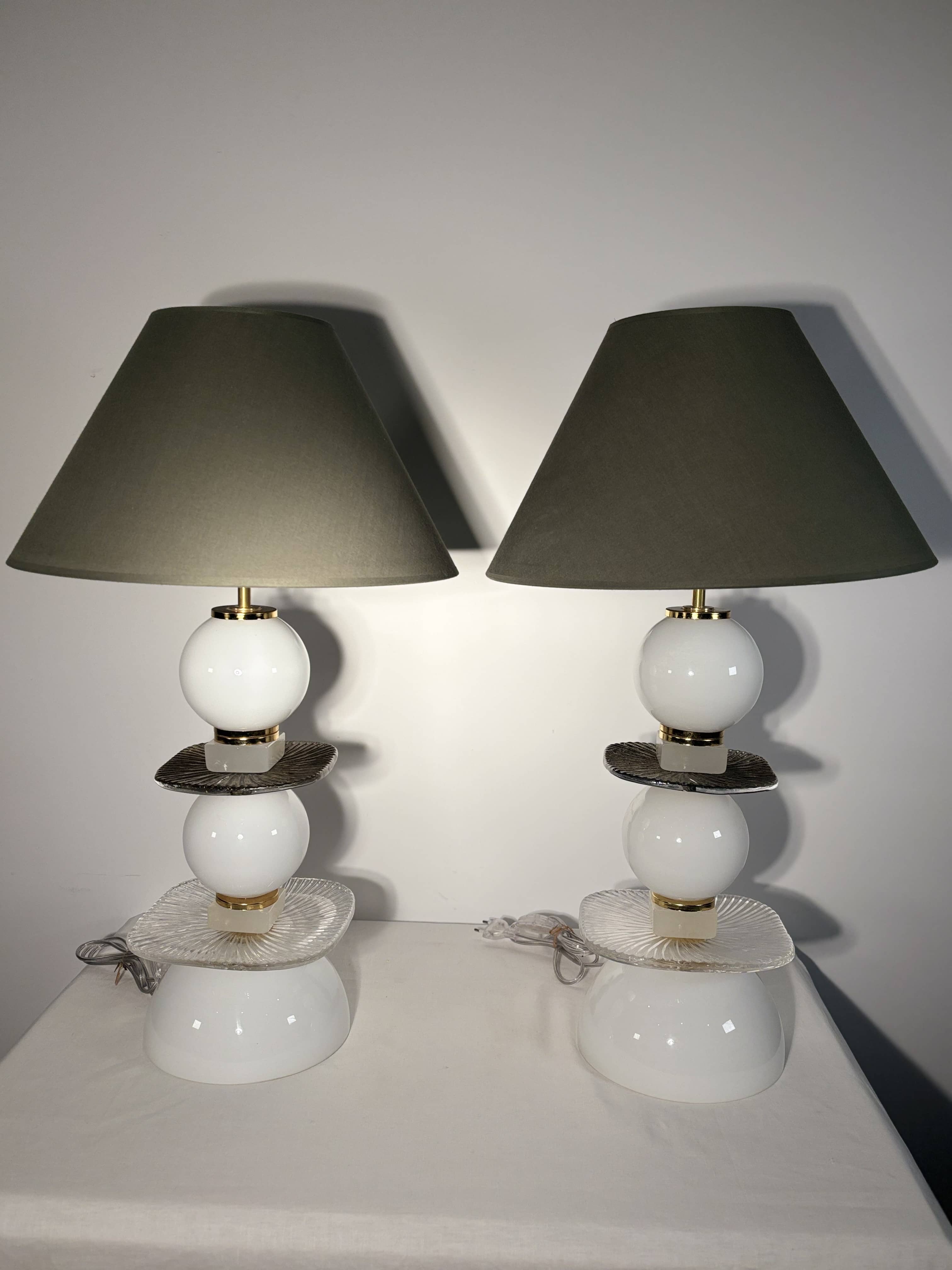
An elegant pair of postmodern/Hollywood Regency style table lamps, crafted in 1980s Murano glass and brass.
These light fittings are distinguished by a “totem” structure composed of a stack of various hand-blown glass elements, offering an interplay of textures and contrasts:
* White opaline glass: globes and a domed base in satin opaline glass
* Gold-leaf textured glass: intermediate discs in solid moulded blown glass, one translucent with radiating ribs, the other enriched with gold dust inclusions according to the traditional Murano technique.
* Geometric elements: Murano glass cubes that structure the architectural silhouette of the whole. The mount and separating rings are in gilt brass, accentuating the elegance of the materials.
The design is characteristic of the high-end Murano production of this period, in the spirit of houses such as Barovier & Toso or Mazzega.
Excellent state of preservation.
Electrics fully overhauled and refurbished.
Presented here with conical grey/green shades.
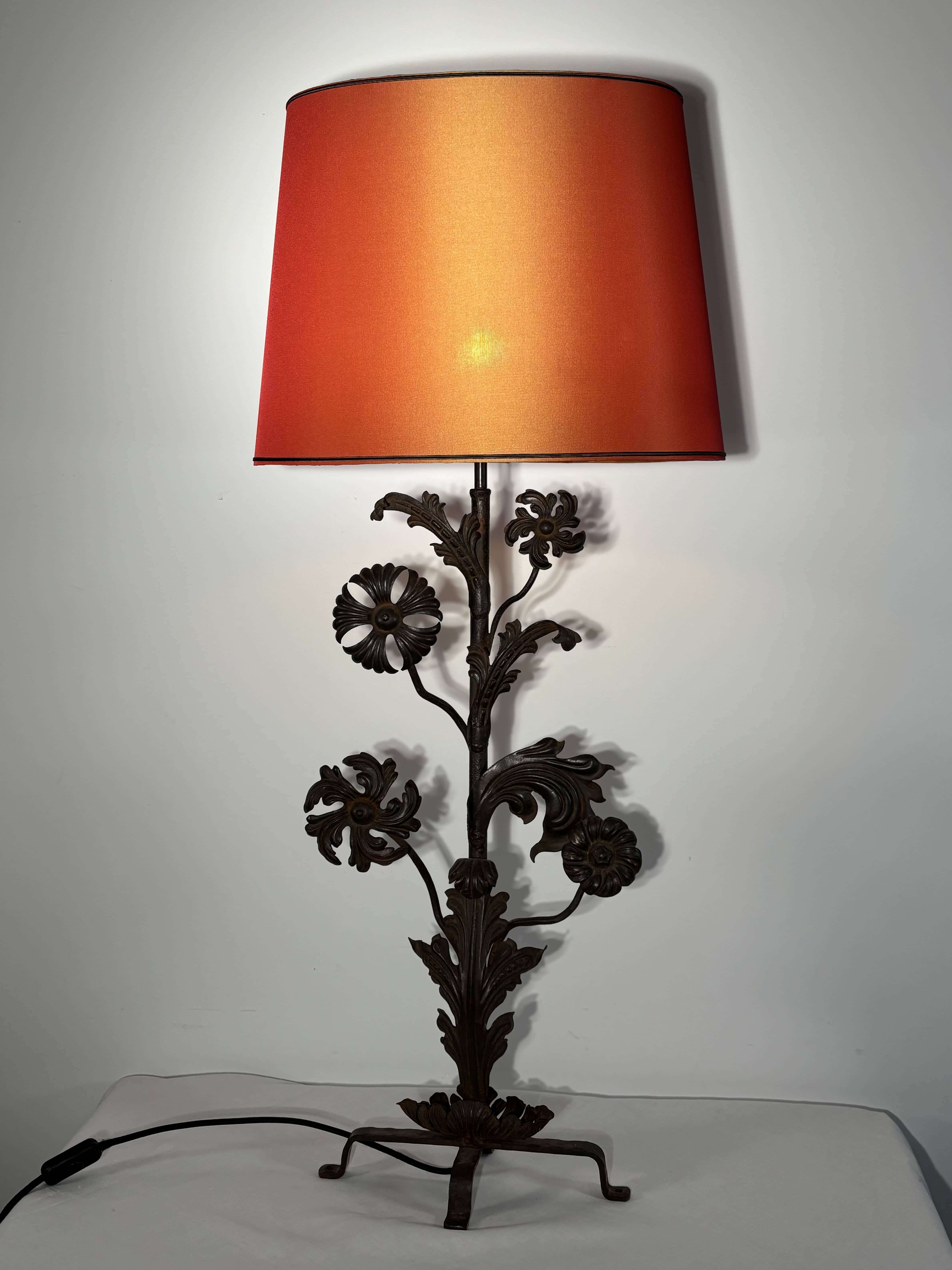
A remarkable lamp in hammered and patinated wrought iron, in the Neo-Baroque floral style, Dutch production of the first half of the 20th century (circa 1930-1940).
This piece of wrought-iron art testifies to a rare technical mastery, combining two distinct skills: a central shaft in hand-worked wrought iron, and decorative elements in cast iron of great executional finesse.
The richly developed decoration composes an ascending vegetal bouquet articulated around acanthus leaves and naturalistic flowers — daisies and anemones — whose ribbed centres reveal a care for detail characteristic of bespoke workshops.
The trapezoidal fabric lampshade rests on its original iron mount. The damaged period parchment has been replaced with a copper/amber fabric in keeping with Dutch interiors of this period. Electrical system overhauled and functional.
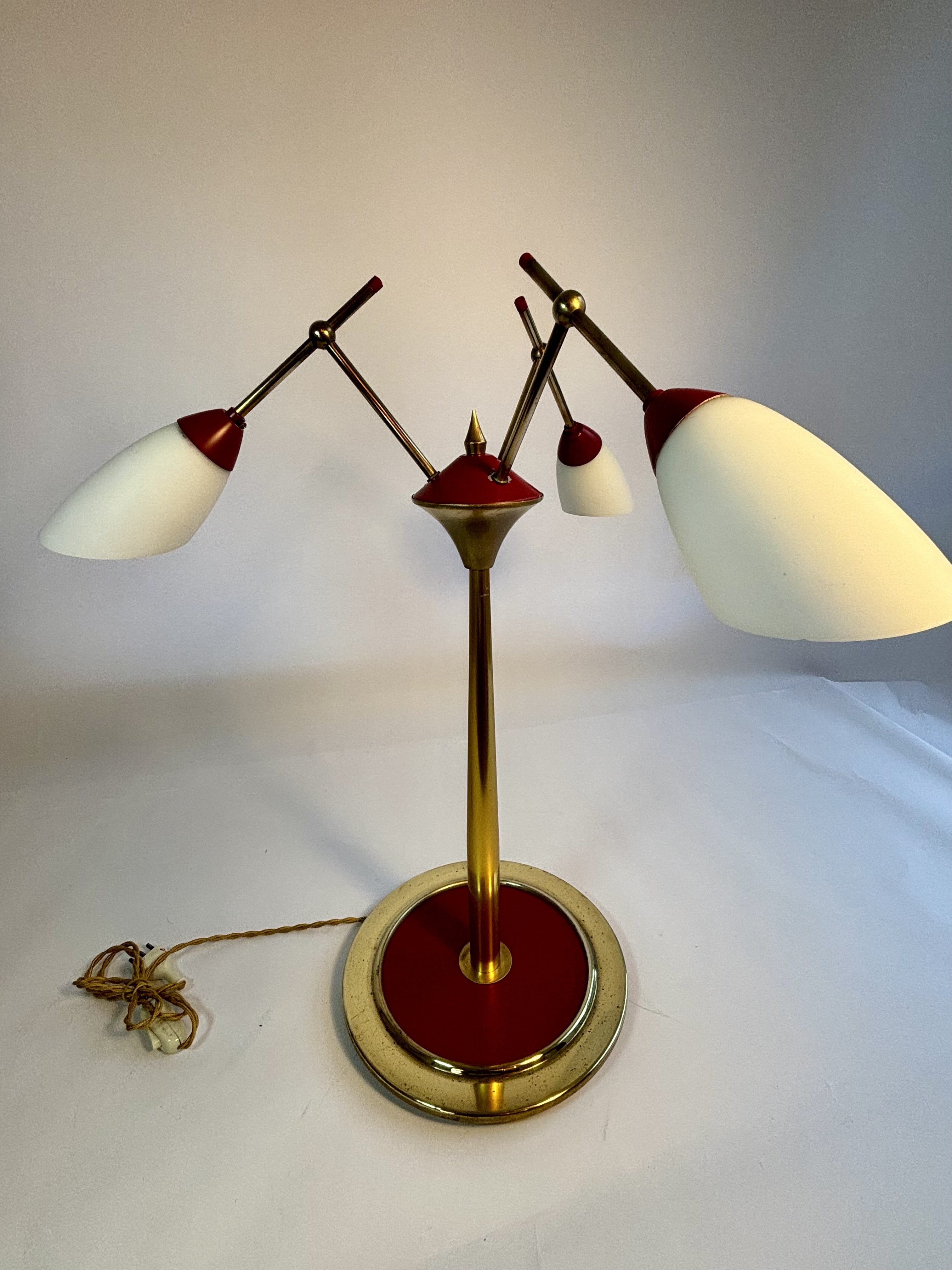
A three-light table lamp by Stilnovo. Structure in brass and red lacquer. Opaline glass lampshades.
Italy, mid-20th century.
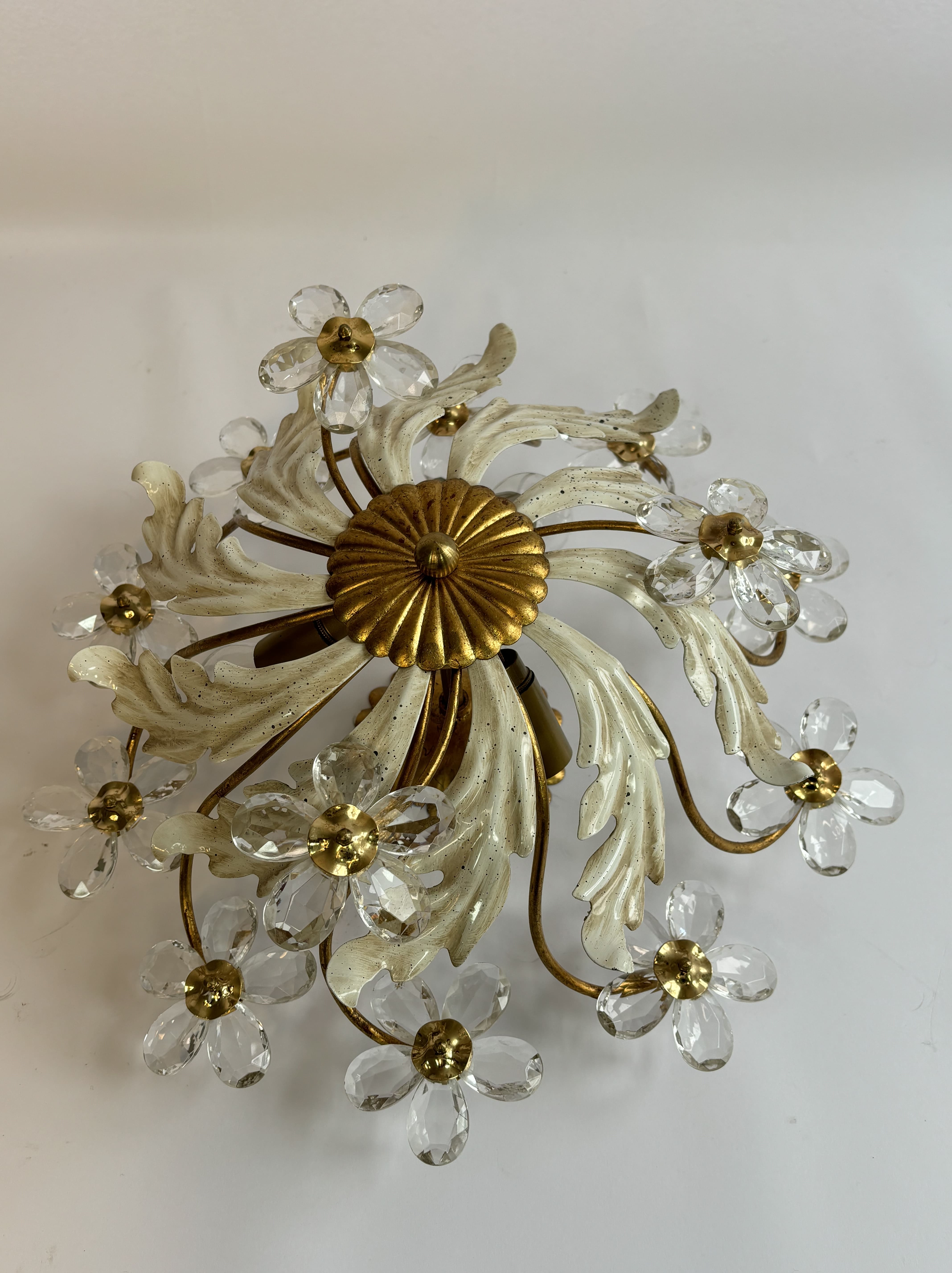
A superb Hollywood Regency-style ceiling light in painted and gilt metal, adorned with crystal flowers. 1970s.
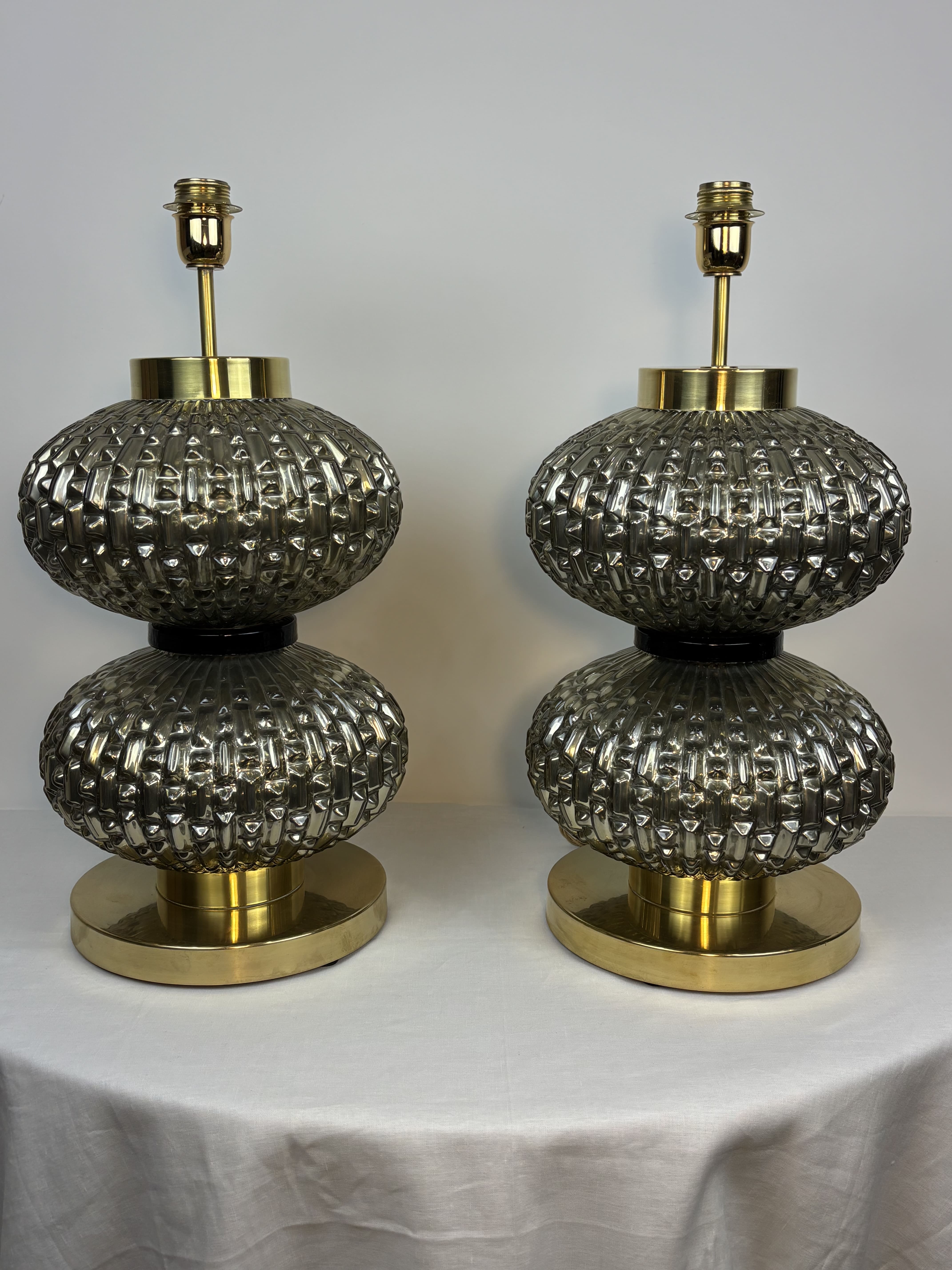
A pair of Italian lamps in blown Murano glass dating from the 1980s and brass. The lamp assembly was carried out at a later date. Each lamp is composed of two identical spheres in smoked gilt Murano glass, mouth-blown in a structured mould, revealing a deep and regular geometric relief. The two elements are separated by a darker-coloured Murano glass disc, which underlines the architecture of the whole. The base and structure are in gilt brass. New electrical assembly.
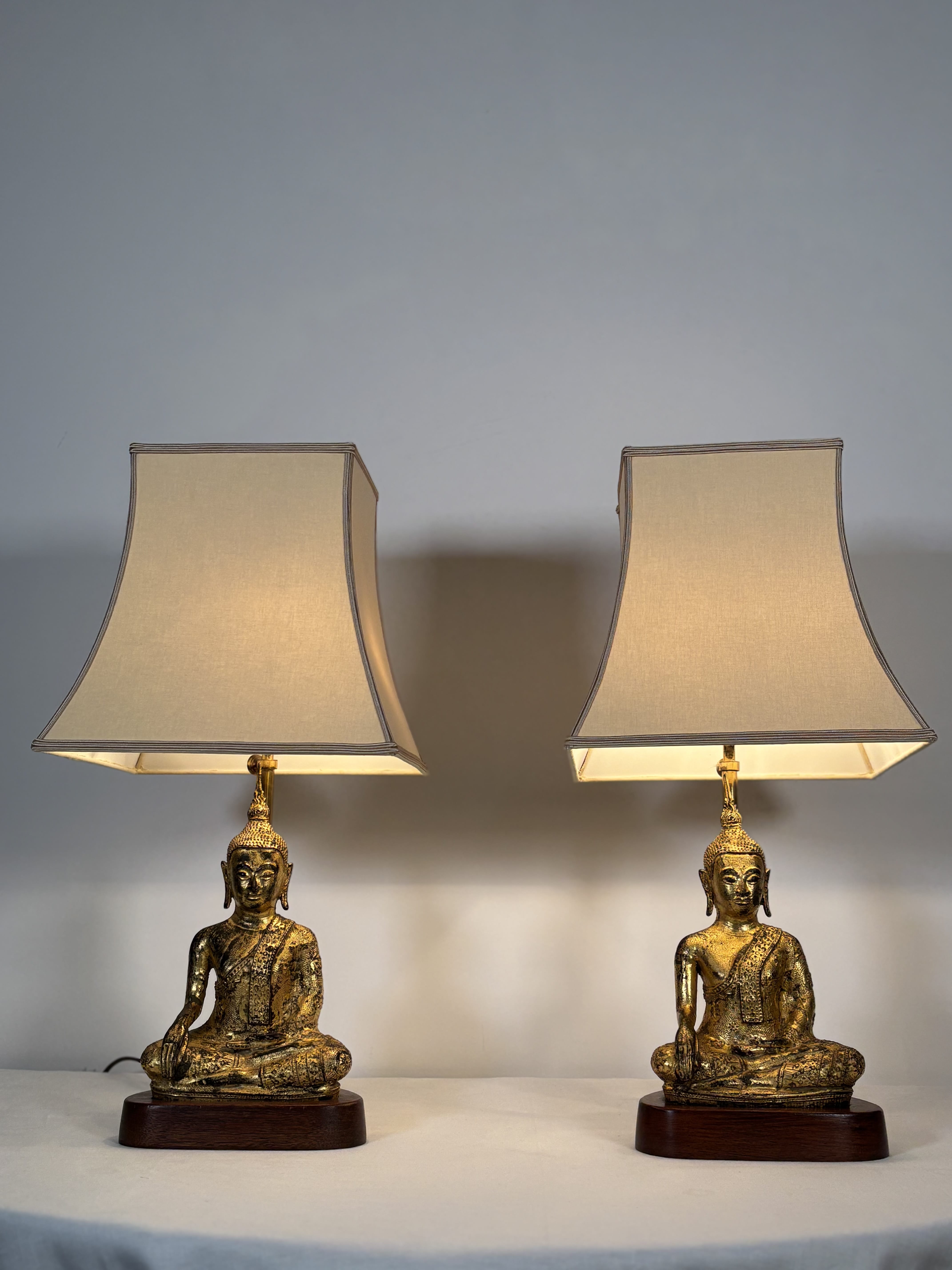
An elegant pair of lamps composed of seated Buddha sculptures in meditation, executed in finely moulded gilt cast iron. The figures display rich decoration with stylised floral motifs and retain a fine early patina. Each statue is mounted on a varnished wooden plinth on which rests an adjustable brass rod, supporting a double light, surmounted by a pagoda-shaped lampshade. The shades are original, their fabric having been restored to recover their full brilliance. The whole combines traditional art with contemporary functionality. Probable origin: Thailand. 20th century.
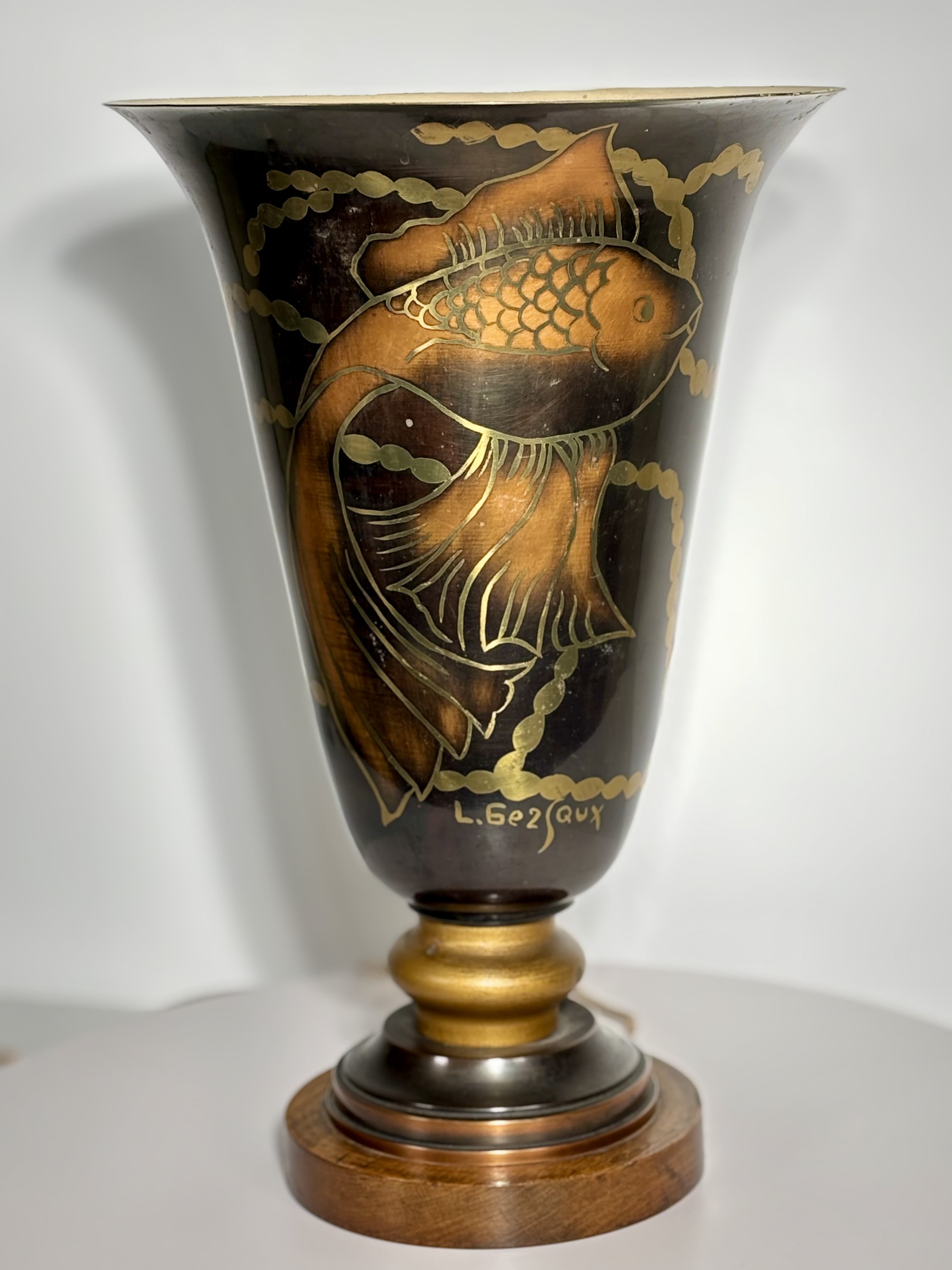
A luminous bowl in dinanderie of copper and brass with a decoration of fish on a marine ground, the interior lacquered white. Wooden disc at the base. The piece is signed within the decoration Lucien Gerfaux, a French artist active in the 20th century who produced decorative objects, notably vases and lamps in dinanderie (repoussé or inlaid metal, often copper or brass) with motifs often animal or naturalistic. Work representative of the Art Deco style. Circa 1940. Recent electrical work.
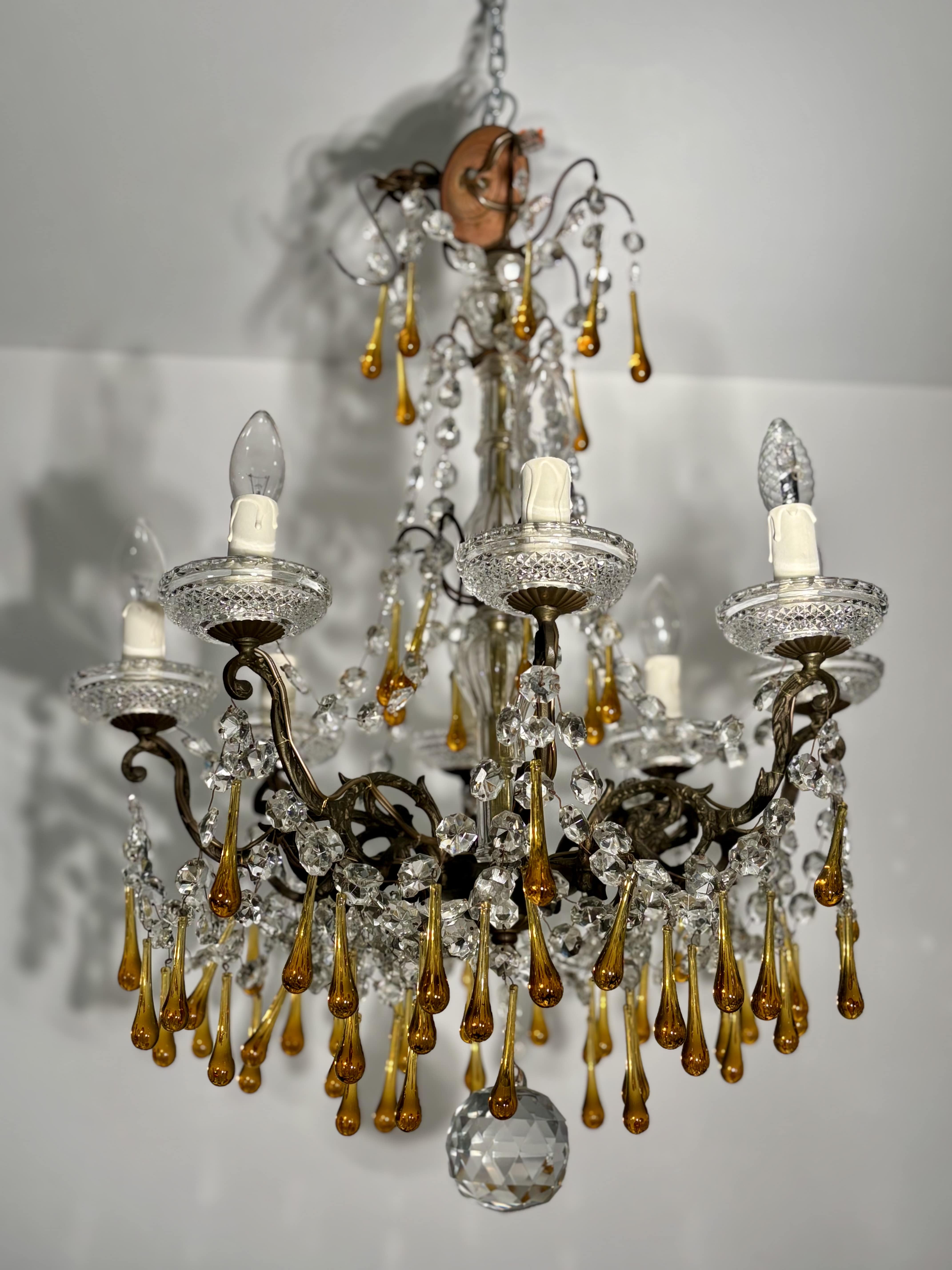
A superb 8-light chandelier in bronze and crystal, animated by a shower of large drops in blown amber glass, bringing warm presence and brilliance. The central shaft is composed of cut-crystal elements typical of late 19th to early 20th-century French production. The bronze mount displays fine Rocaille movements, without excess, evoking the transition between Louis XV style and 1900s productions. The chandelier is hung with fine-quality cut-crystal pendants and terminates in a faceted ball. Electrical work entirely redone to CE standards. French work, circa 1900.
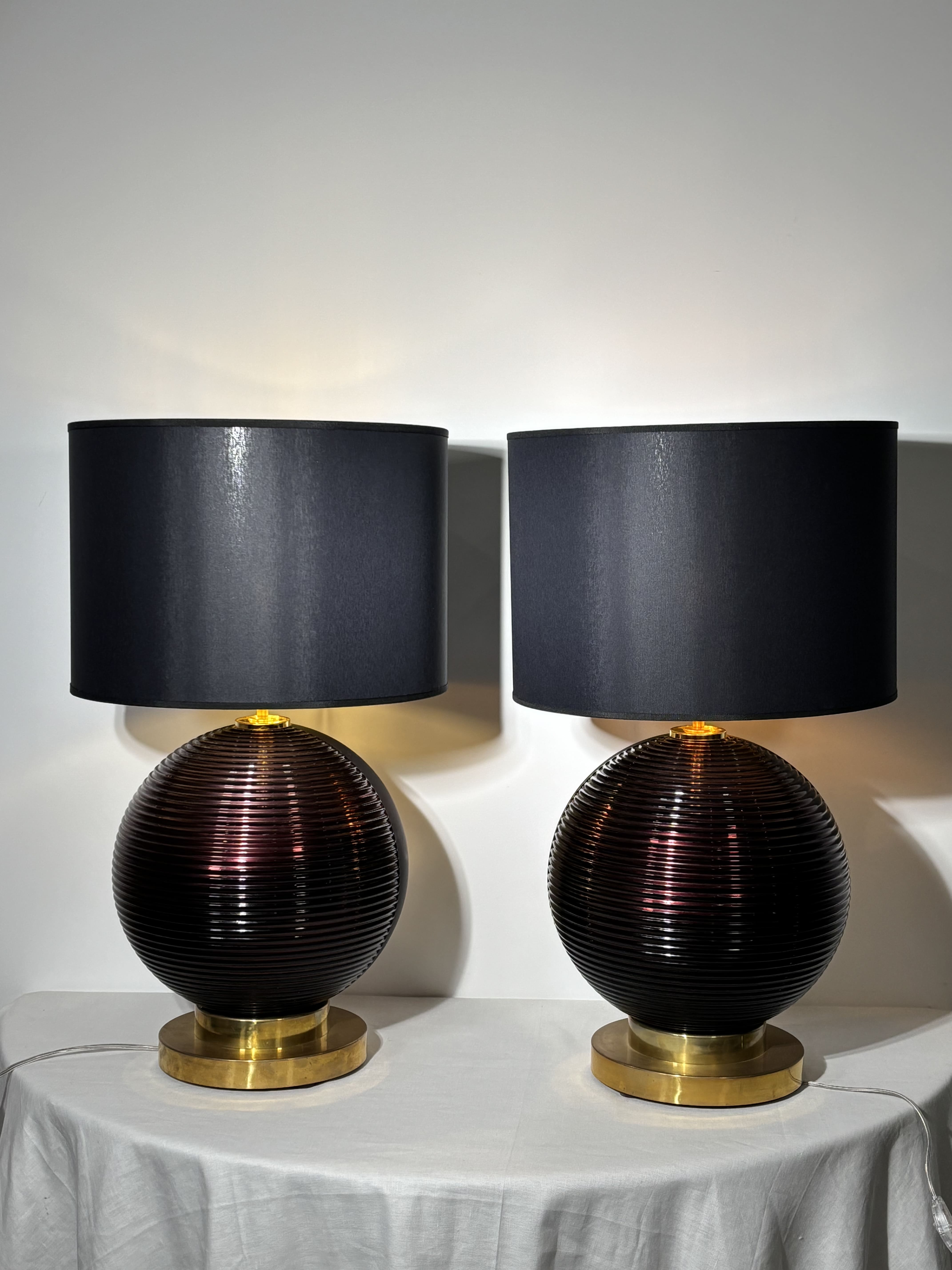
A spectacular pair of Italian lamps in blown moulded Murano glass from the 1980s. The spheres display a deep plum hue, satin-finished on one half of the sphere and glossy and striated on the other. Circular brass bases. Cylindrical black and gold lampshades. Striking, graphic decorative pieces. May be sold individually at 950 euros per lamp.
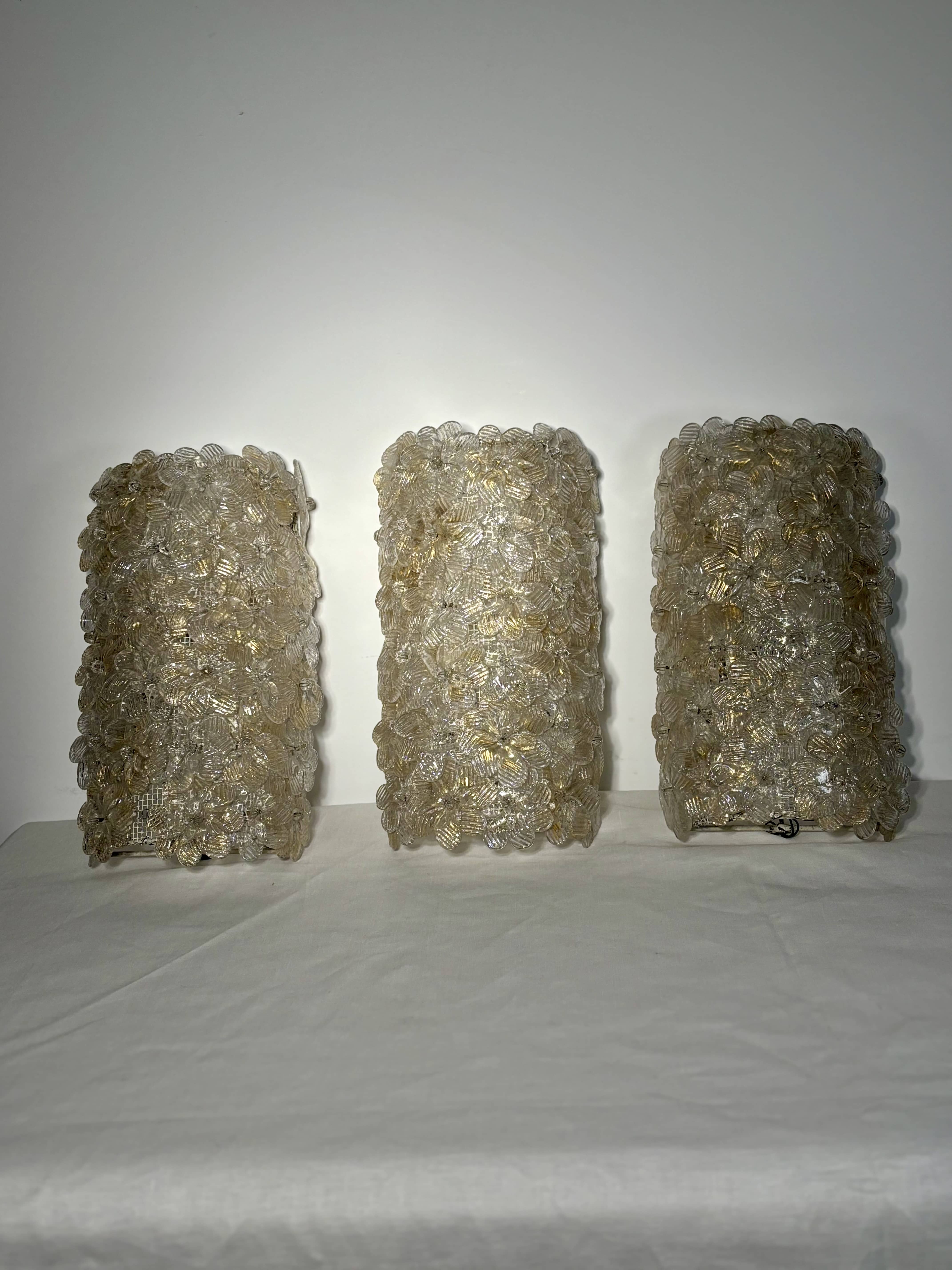
A rare set of three wall sconces in blown Murano glass attributed to Seguso, Murano.
Each sconce is composed of glass flowers with gold powder inclusions, assembled one by one on a metal frame, creating a dense and luminous textured effect with golden highlights.
Venetian work, circa 1960-1970.
Condition: very good overall condition. One flower missing on one of the sconces, barely noticeable. The other two in perfect condition.
Sold as a set of 3 pieces — not separable.
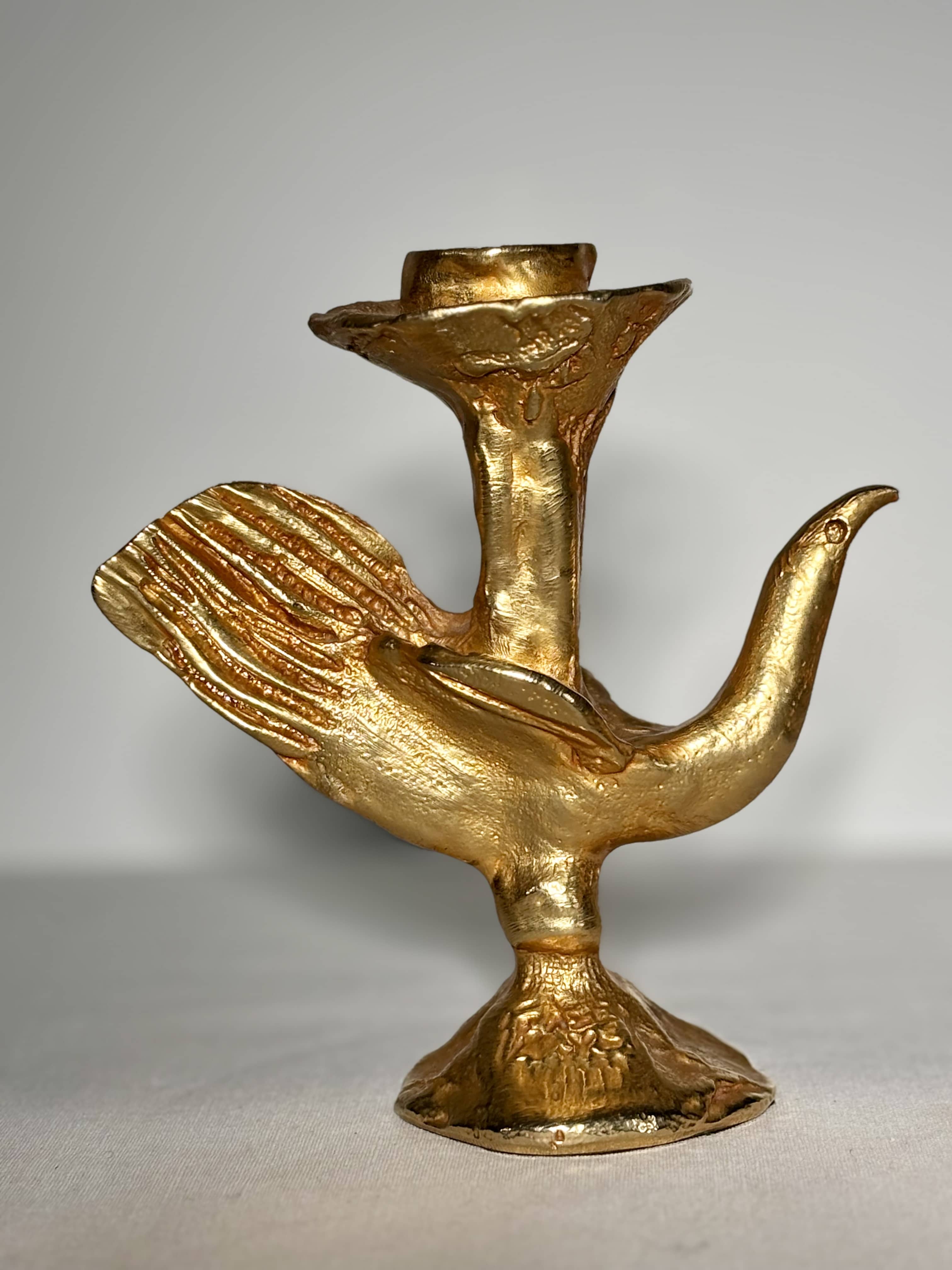
An elegant sculpted bronze candlestick with gilt patina, created by the artist and designer Pierre Casenove. This emblematic piece, characteristic of the artist’s poetic brutalist style, depicts a stylised bird with organic lines, its body soaring upward. The textured treatment is typical of Casenove: an animated surface that catches the light. The work bears witness to the aesthetic of the 1980s–1990s, fusing utilitarian object and animal sculpture. Signed on the base. France, 20th century

Five-branch stoneware candelabrum, an emblematic example of the Brutalist movement of the 1960s-70s. This piece is distinguished by its organic, sculptural appearance, evoking arborescent forms or primitive anthropomorphic figures.
The treatment of the material is remarkable: an earthy-toned glaze, ochre-brown, displaying a rough, scarified texture that catches the light. The circular base, pierced with almond-shaped openings, anchors the visual balance whilst reinforcing the architectural quality.
This work sits perfectly within the lineage of La Borne ceramics or the œuvre of artists such as Robert Deblander or the Accolay workshop in its most raw productions. It bears witness to the return to origins and to the hand of man typical of the second half of the twentieth century.
The base bears two felt-tip marks covering a signature “Calsat”.