Our Collection
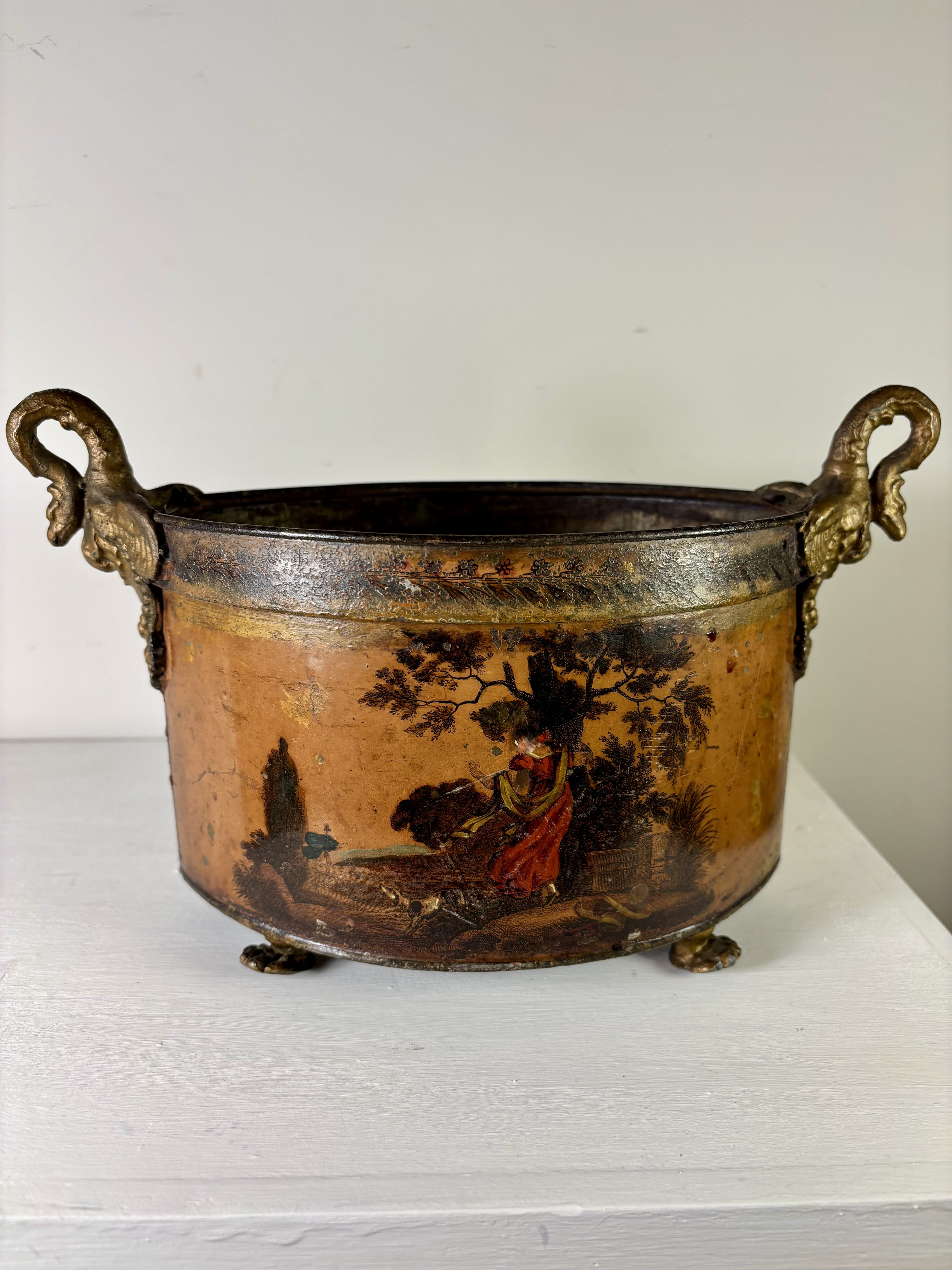
A fine painted tole jardinière dating from the 19th century, adorned with a hand-painted romantic scene depicting a female figure in a bucolic landscape, characteristic of early 19th-century taste. The whole enriched with refined details such as zoomorphic handles and paw-form feet, typical of Neoclassical and Romantic influences.
The jardinière is lined with a fixed zinc liner.
The piece shows wear and patina consistent with age.
Good general condition.
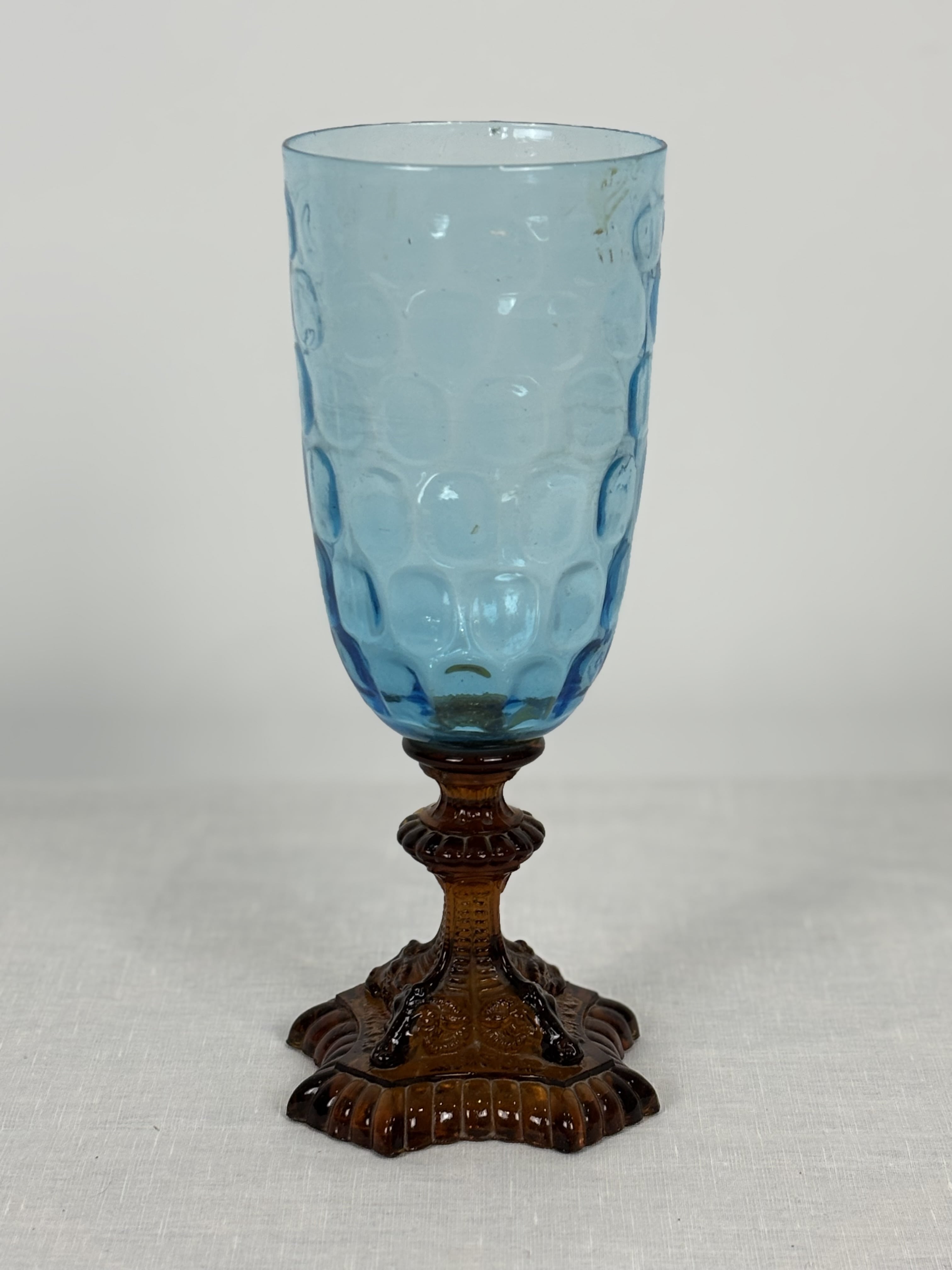
An elegant and large antique pressed-glass vase from the Portieux crystalworks (1705-2012), George Sand model, with a turquoise blue bowl and amber base with ram's-head supports. The George Sand model signed Portieux was pressed around 1900. Founded in 1705, the crystalworks worked over the centuries for the most prestigious tables, for Tsar Nicholas II of Russia, the writer George Sand, and the Ritz.
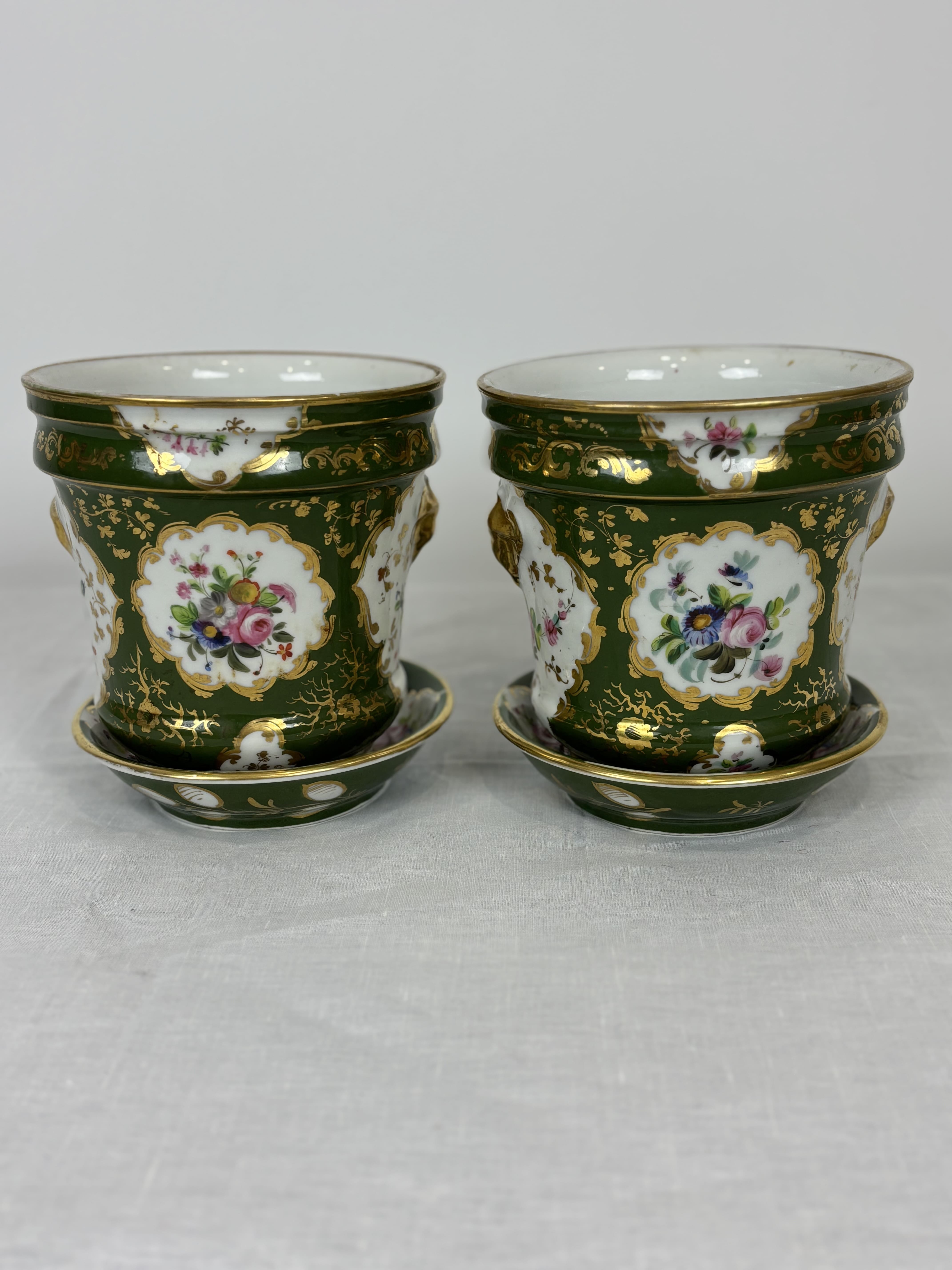
A fine pair of 19th-century cachepots in Paris porcelain on a deep green ground, richly adorned with gilt and polychrome floral motifs.
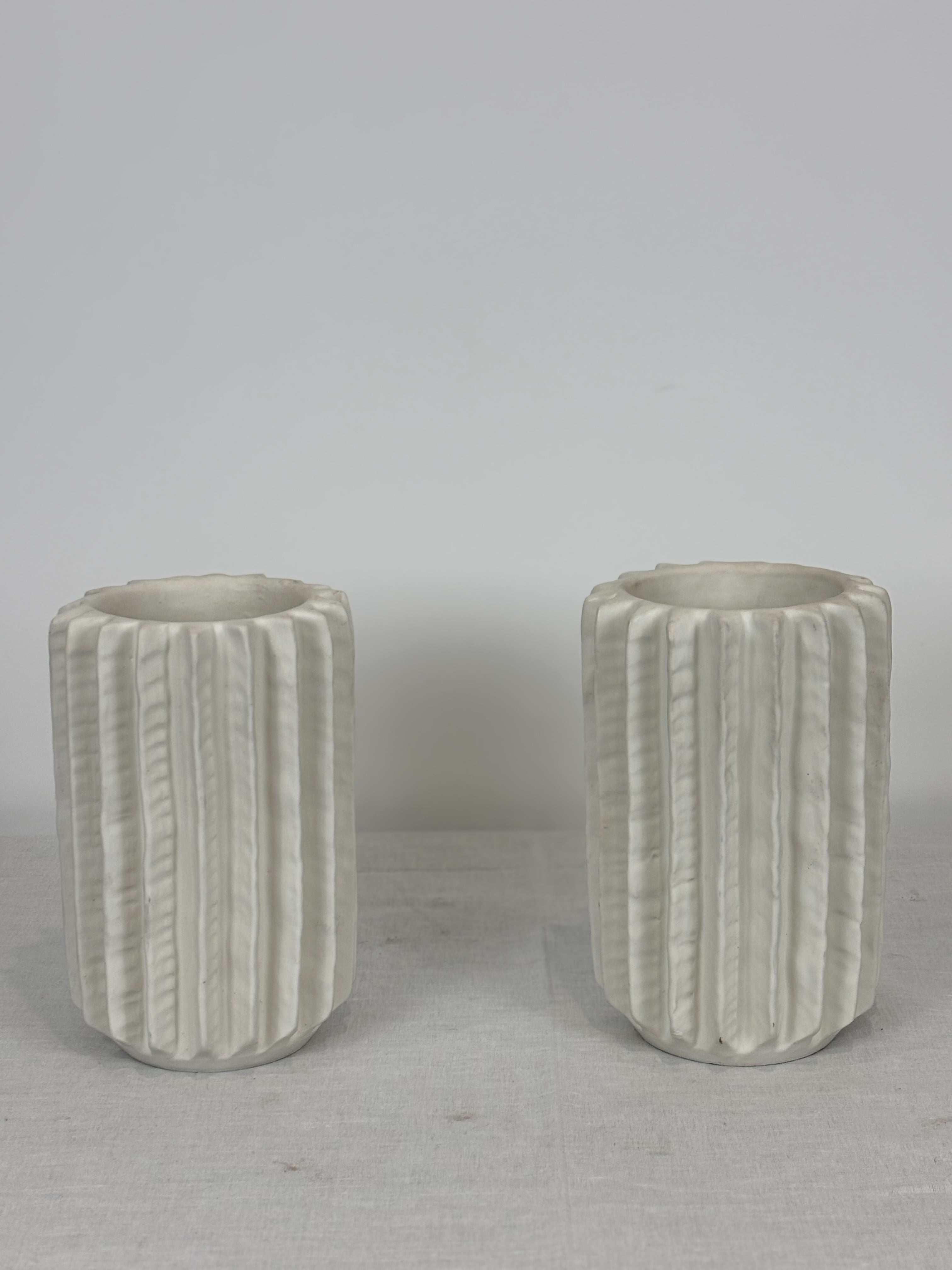
Executed in white ceramic with a matte finish, these two cylindrical vases are animated by a relief decoration evoking irregular, almost organic vertical undulations recalling leaf venation. The work of the material, deliberately irregular and raw, lends the whole a strong decorative character, between craftsmanship and modernity. Italian work of the 1980s.
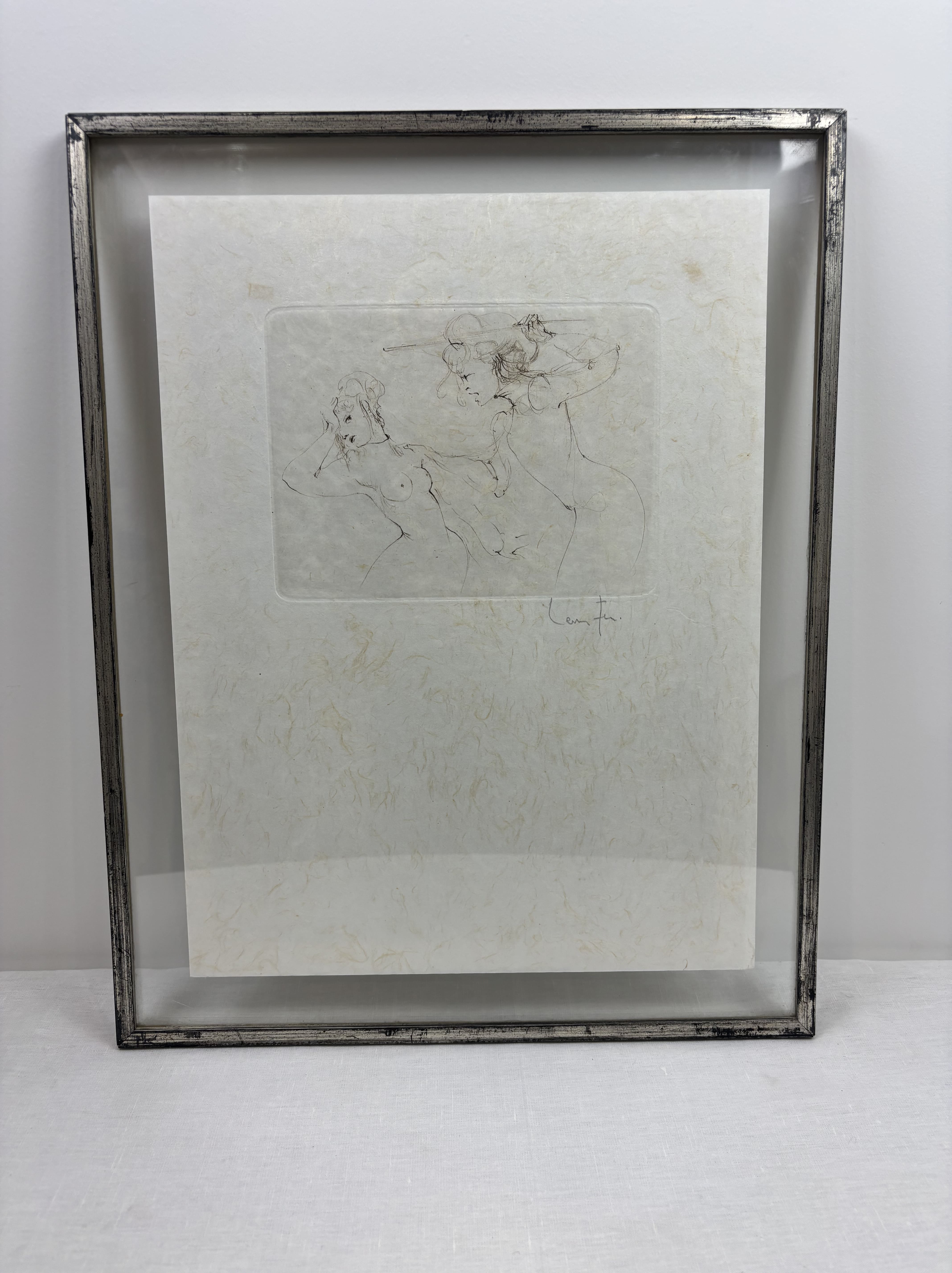
An original intaglio print by Leonor Fini, hand-signed in pencil by the artist, lower right. A sensual and theatrical scene depicting two nude women in an intimate composition, characteristic of Leonor Fini's dreamlike universe. Impression on fine-quality Japon paper, with a delicate moiré aspect. Well-marked platemark, clean impression, revealing a careful printing. Presented in a black and silvered wood frame, between two glass plates. Very good condition.
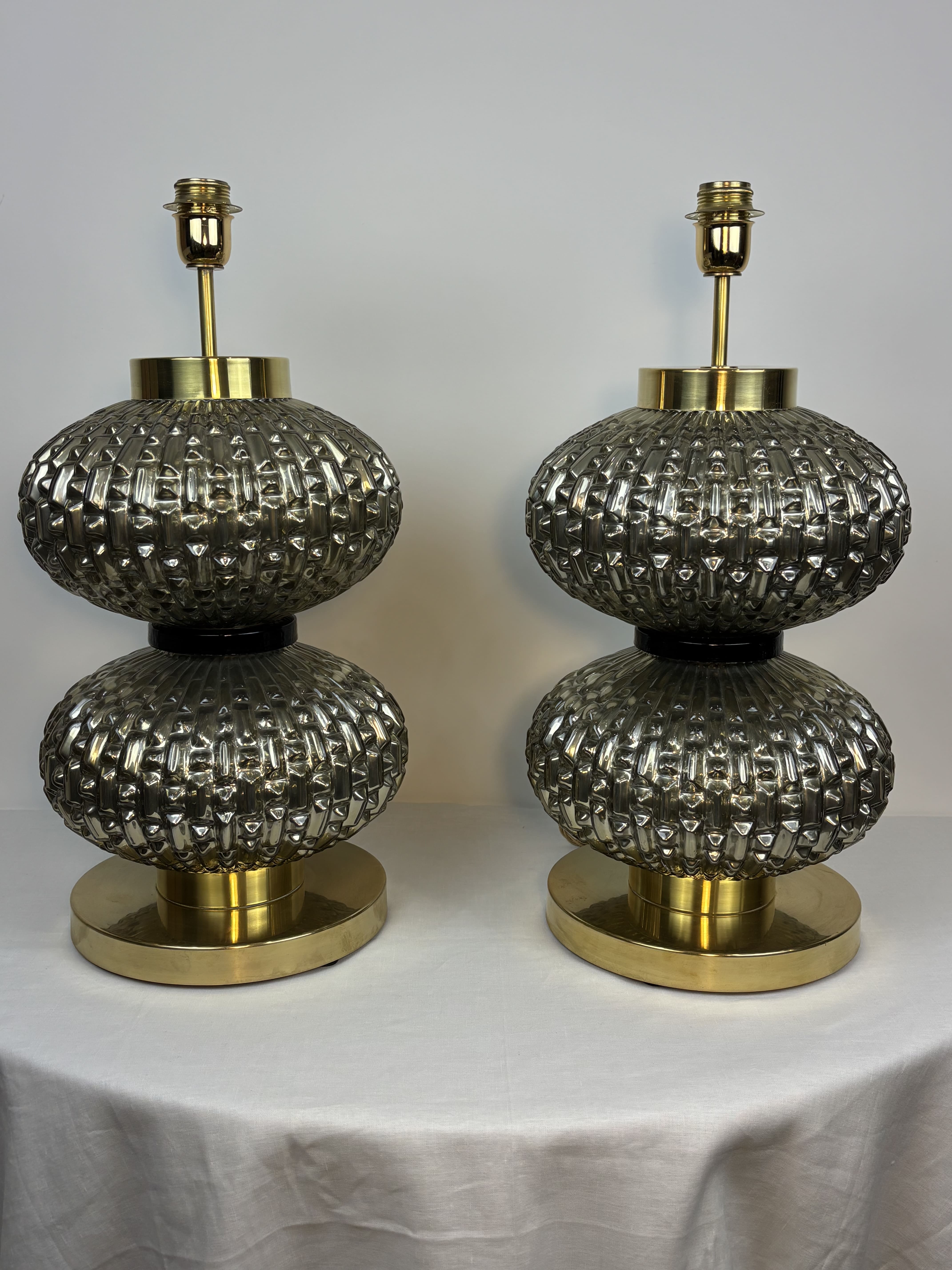
A pair of Italian lamps in blown Murano glass dating from the 1980s and brass. The lamp assembly was carried out at a later date. Each lamp is composed of two identical spheres in smoked gilt Murano glass, mouth-blown in a structured mould, revealing a deep and regular geometric relief. The two elements are separated by a darker-coloured Murano glass disc, which underlines the architecture of the whole. The base and structure are in gilt brass. New electrical assembly.
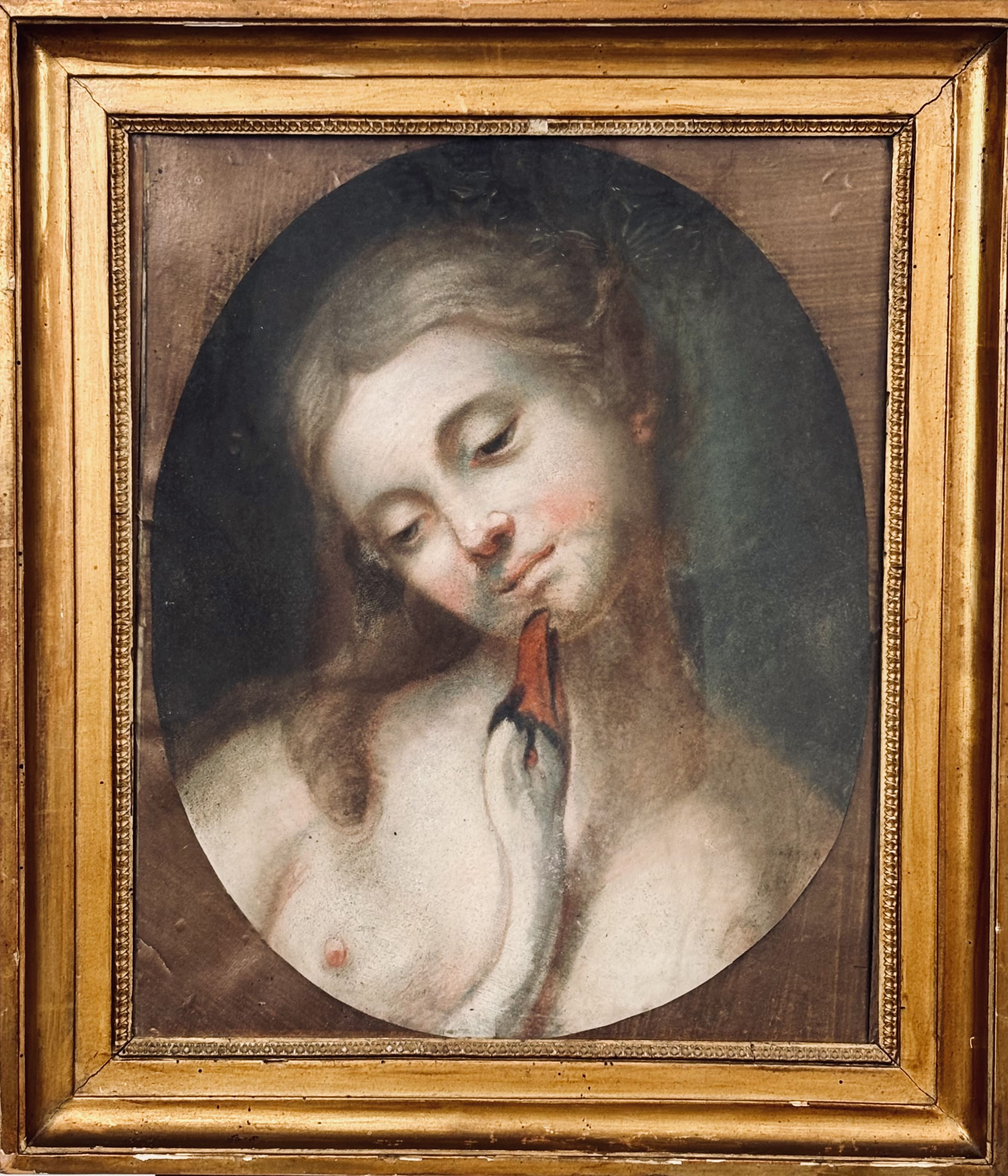
An elegant pastel on paper depicting Leda and the Swan, inspired by the antique myth in which Zeus takes the form of a swan to seduce Leda. The subject is treated here with great gentleness and a Romantic sensibility typical of the early decades of the 19th century. The delicate modelling of the face, the subtle palette and the oval format lend this composition an intimate and refined atmosphere. Period 19th-century gilt frame with its original blue paper backing.
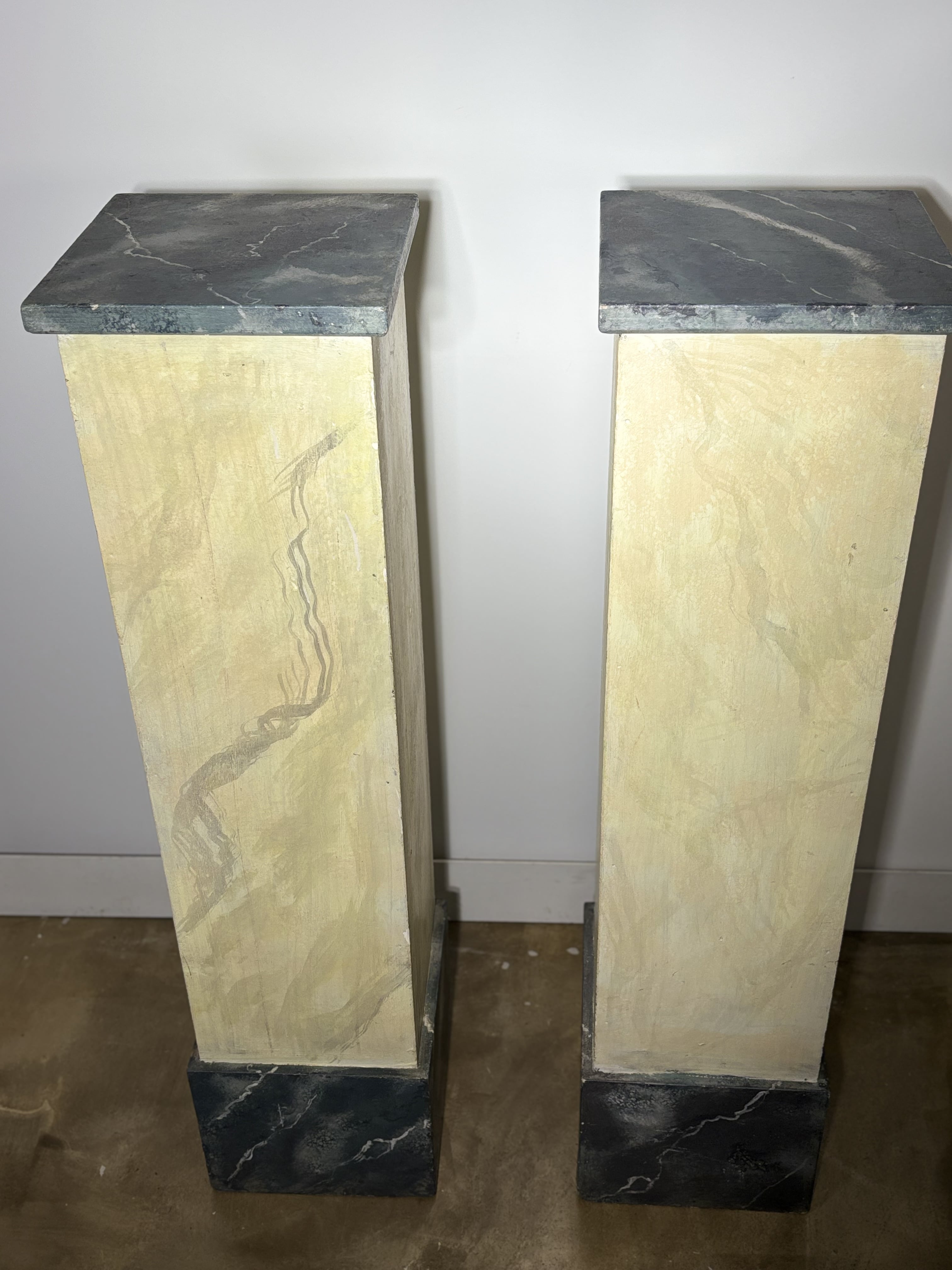
An elegant pair of pedestal columns in wood, with painted decoration in faux-marble trompe-l'œil. The central shaft imitates a beige-yellow marble with fluid veining, while the bases and upper tops evoke a black marble veined with white. Decorative work executed by hand in the 1970s in the spirit of revisited classical interiors. Perfectly stable and solid. Very good general condition. Weight: 11.500 kg each.
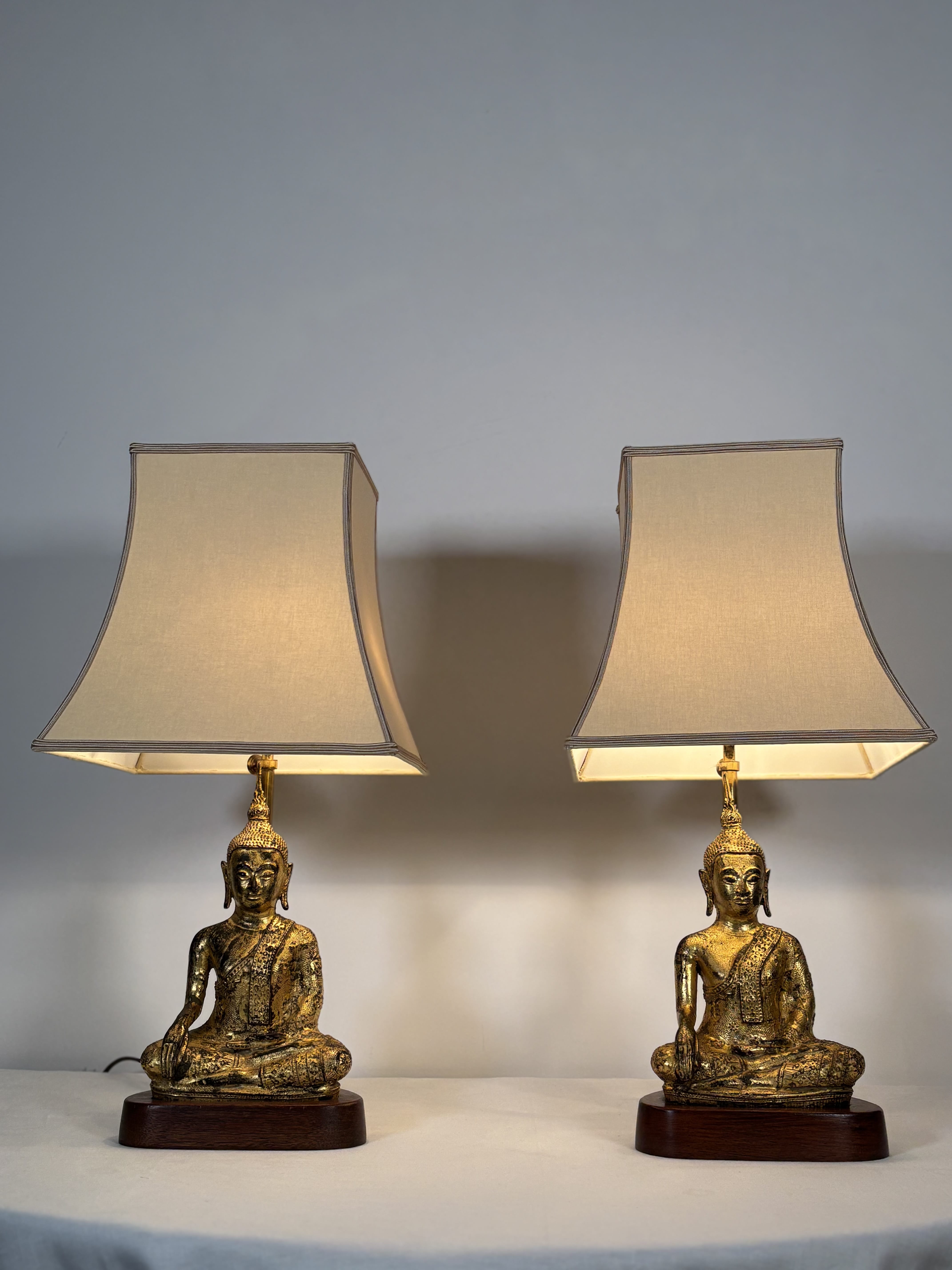
An elegant pair of lamps composed of seated Buddha sculptures in meditation, executed in finely moulded gilt cast iron. The figures display rich decoration with stylised floral motifs and retain a fine early patina. Each statue is mounted on a varnished wooden plinth on which rests an adjustable brass rod, supporting a double light, surmounted by a pagoda-shaped lampshade. The shades are original, their fabric having been restored to recover their full brilliance. The whole combines traditional art with contemporary functionality. Probable origin: Thailand. 20th century.
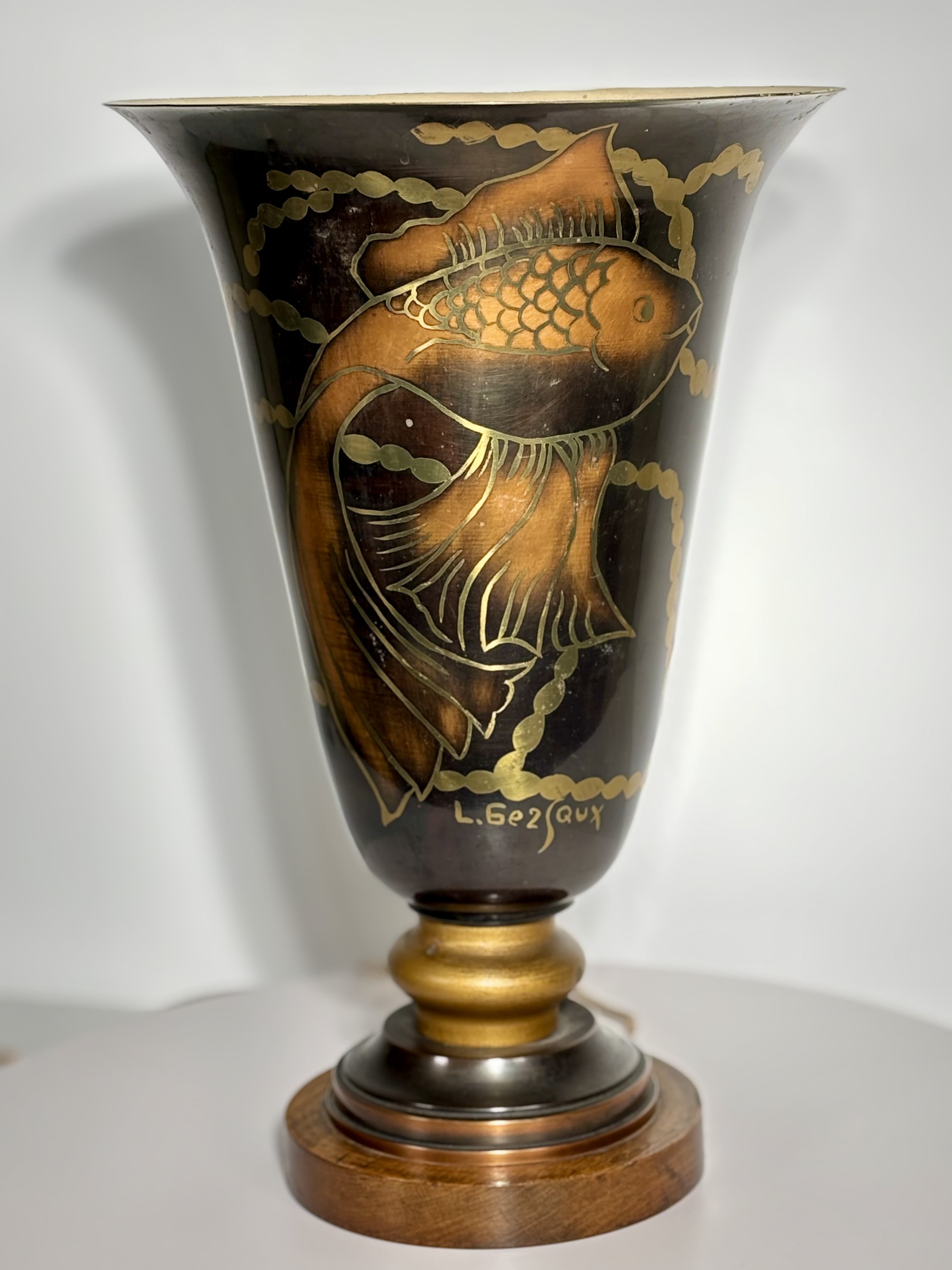
A luminous bowl in dinanderie of copper and brass with a decoration of fish on a marine ground, the interior lacquered white. Wooden disc at the base. The piece is signed within the decoration Lucien Gerfaux, a French artist active in the 20th century who produced decorative objects, notably vases and lamps in dinanderie (repoussé or inlaid metal, often copper or brass) with motifs often animal or naturalistic. Work representative of the Art Deco style. Circa 1940. Recent electrical work.
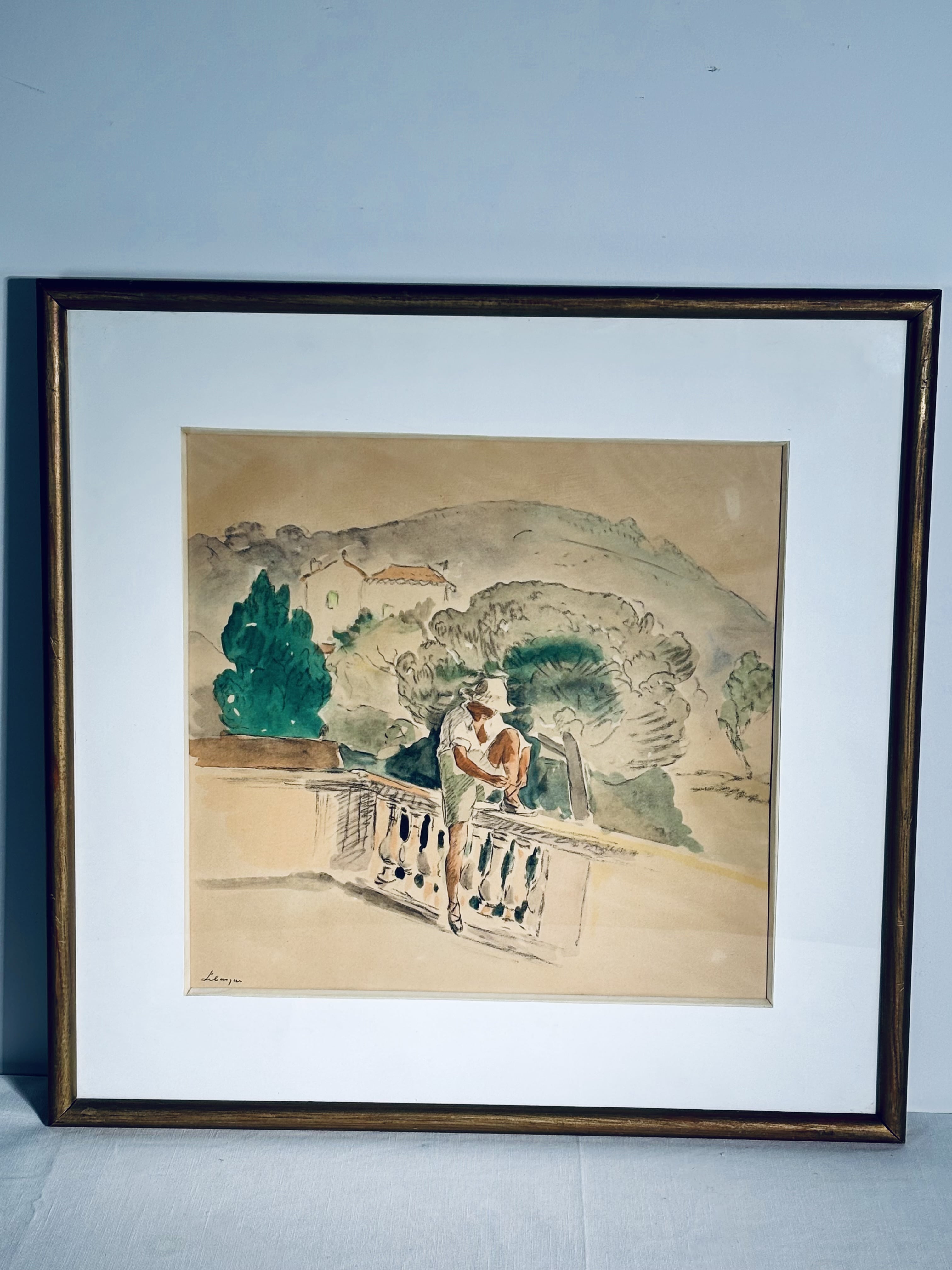
An elegant watercolour-heightened print on vellum paper, after Henri Lebasque (1865-1937), depicting a young woman seated in a garden. The supple and luminous line evokes the sensibility of the Post-Impressionist master, known for his intimate and sun-drenched painting. The hand-applied watercolour highlight lends this proof a unique gentleness: the delicate touches of colour animate the composition, conveying the poetry of suspended moments dear to Lebasque. Signed in the plate, in good general condition. 20th century. Framed under glass.
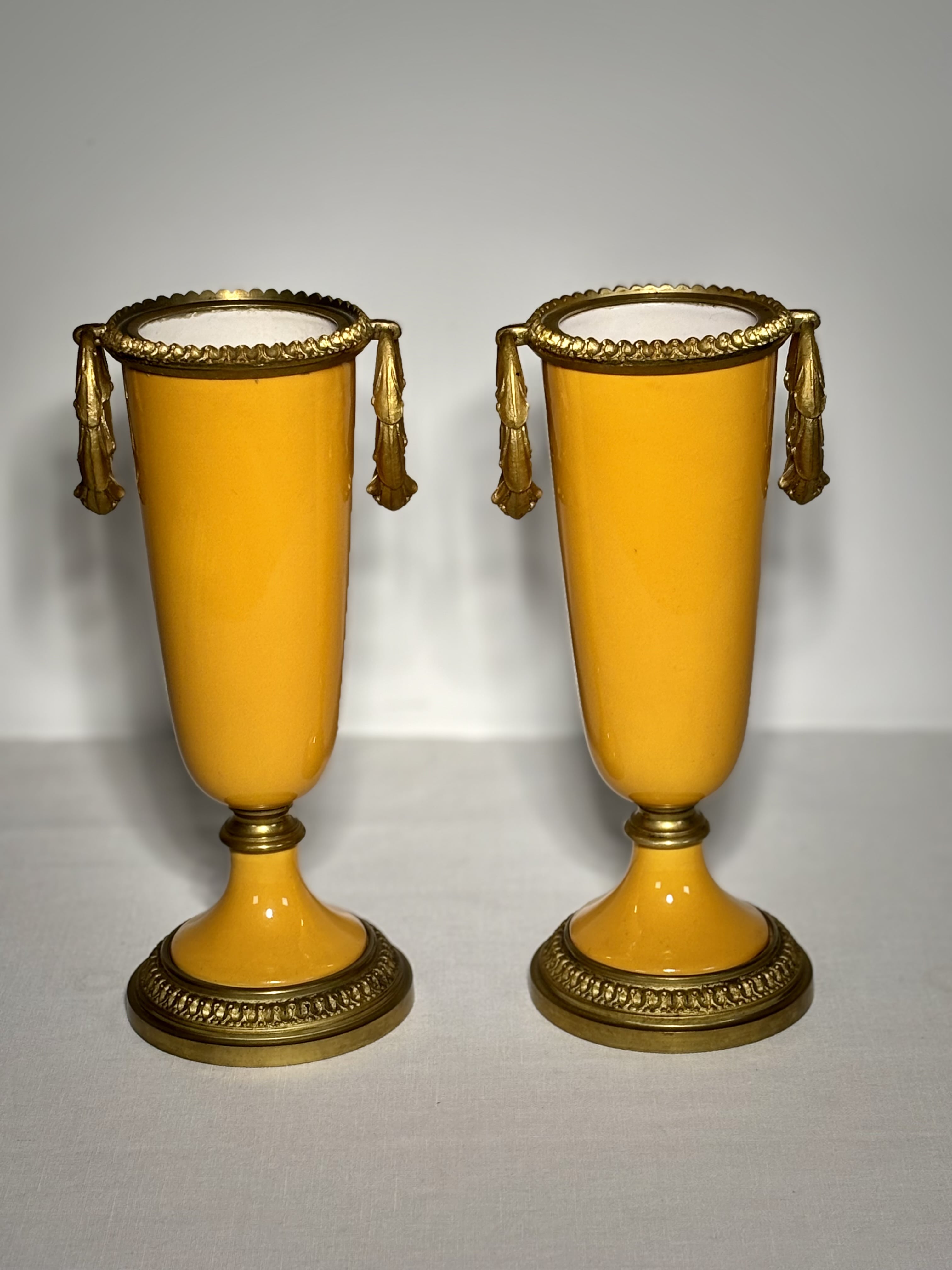
A pair of vases on stemmed foot in deep, intense yellow porcelain, adorned with finely chased gilt bronze mounts. Frieze decoration, handles in laurel garlands, typical of the Empire vocabulary revisited in the 19th century. French work. Late 19th to early 20th century.
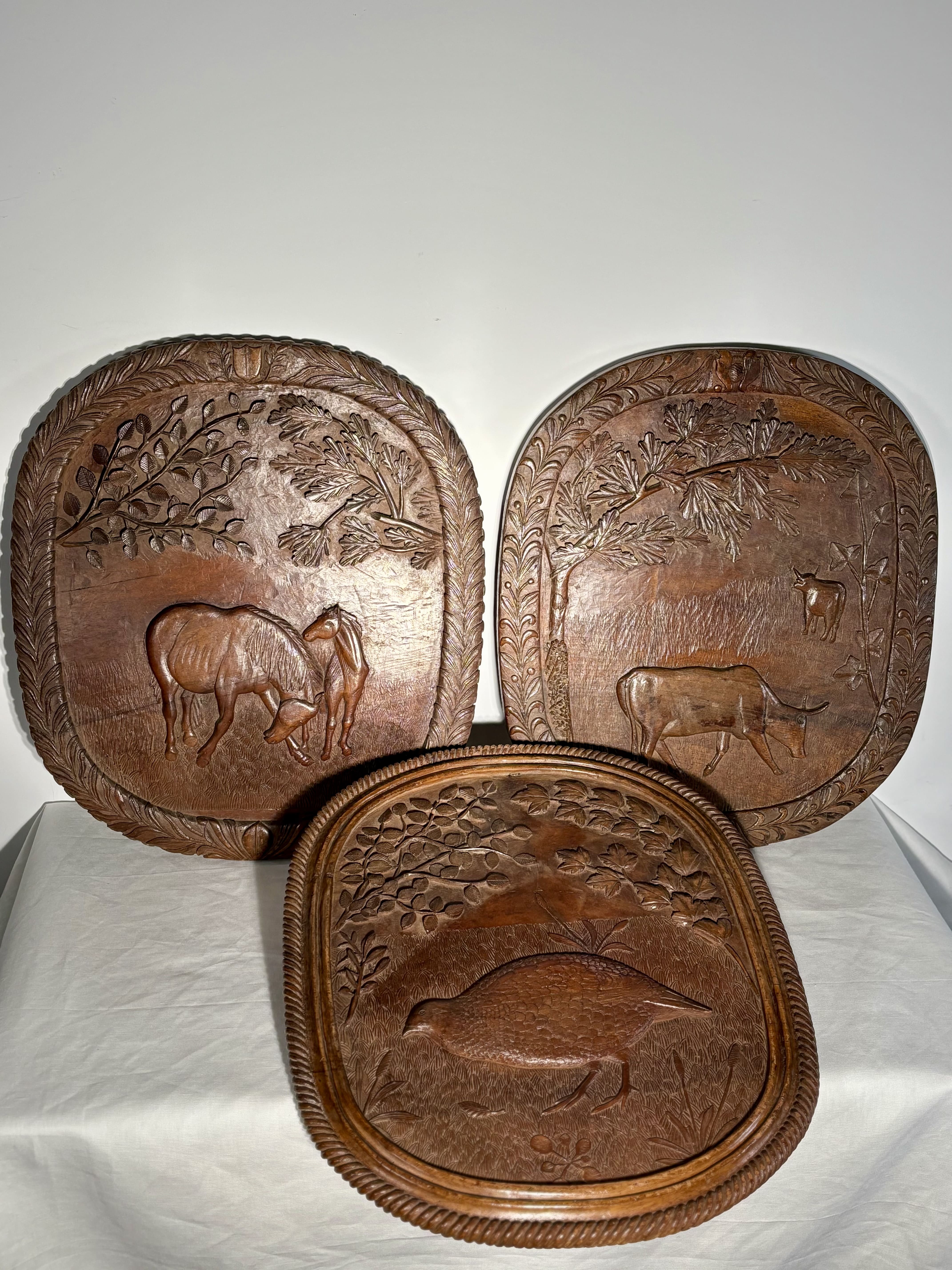
A set of three carved wood panels, executed in a single block, depicting animal scenes. Each panel is carved from a single piece of wood and presents a deep relief, a clean line, together with a handsome group of foliate motifs, leaves and framings entirely carved by hand. The scenes depict a mare and her foal, cattle at pasture and a partridge in a rural setting, typical of the pastoral repertoire of the late 19th and early 20th centuries. The reverse, left raw, shows tool marks and confirms a traditional and authentic artisanal work. A very fine early patina.
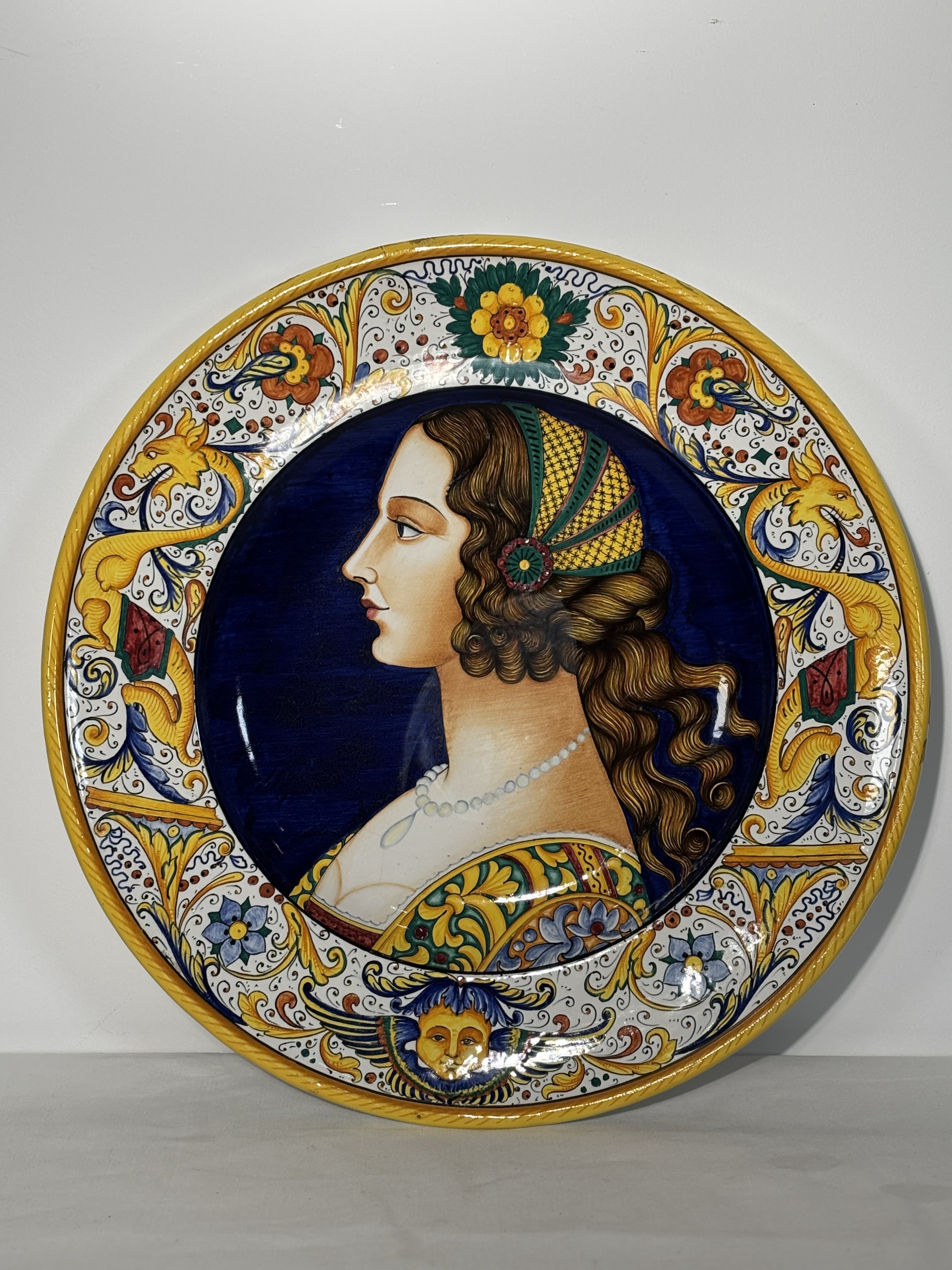
An elegant and large majolica plate from the workshops of Deruta, the celebrated Italian ceramic centre in Umbria. Signed "S. Volpi" "In Deruta".
Serafino Volpi, ceramicist active in Deruta between 1916 and 1918, became director of the "Maiolica Deruta" manufactory. In 1928, he founded, in partnership with Gino Veschini, the "Maiolica Derutese Volpi" manufactory. The following year, he became its sole proprietor. The firm remained active until the early 1950s. Serafino Volpi played a decisive role in the international renown of Deruta in the 20th century, making the town one of the principal centres of ceramic production in Italy.
The plate depicts a female profile in the manner of the Renaissance Italian "Bella donna". The portrait, of great refinement of features, stands out against a deep blue ground. The border, typical of the Deruta tradition, presents a decoration of stylised dragons, foliage, polychrome flowers and a mascaron. The palette is luminous. Some marks on the edges. Italy, mid-20th century. Signed S. Volpi, in Deruta.
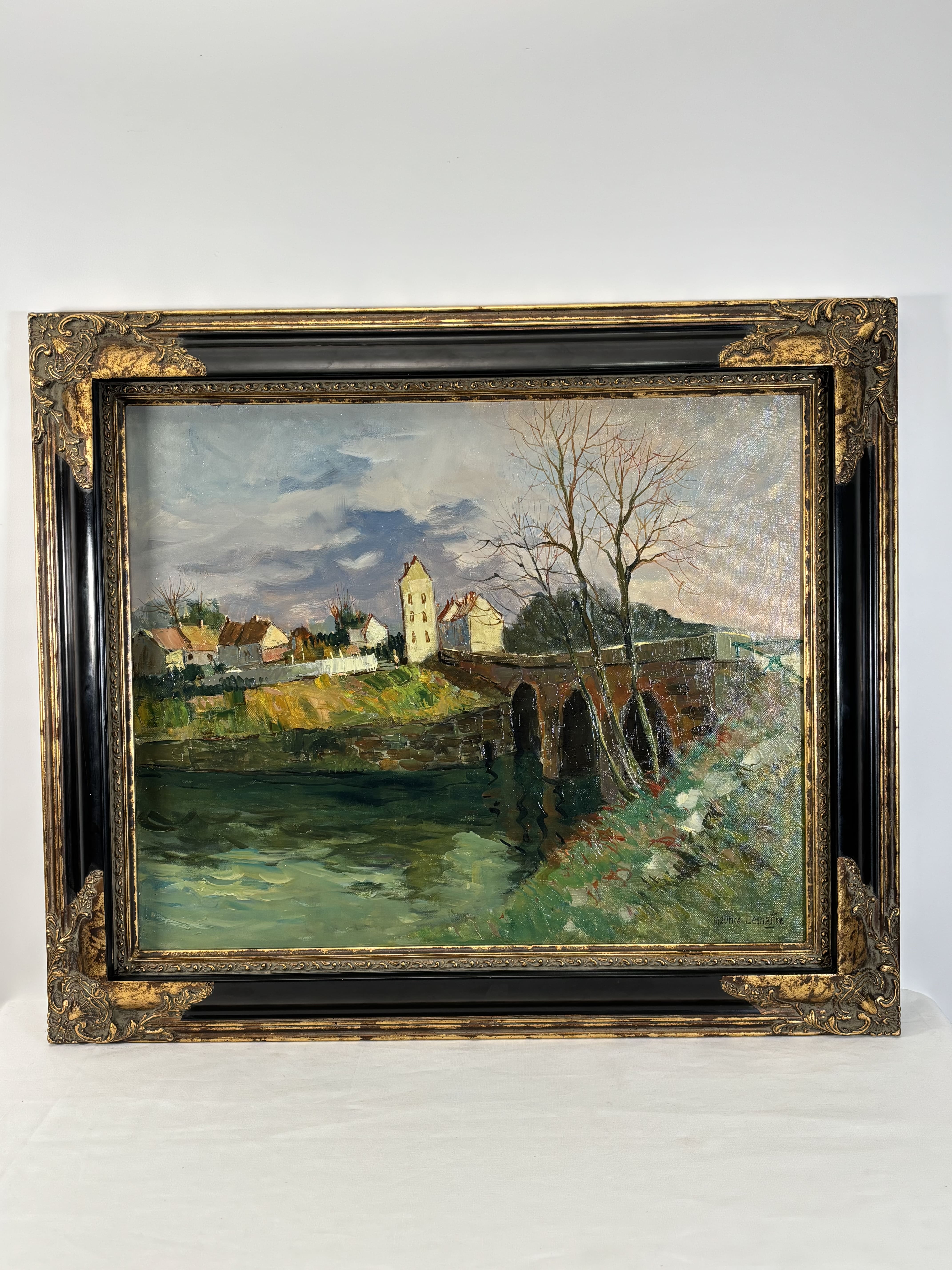
An oil on canvas depicting a landscape animated by a stone bridge spanning a river, attributable to the French Post-Impressionist vein of the 20th century. The brushwork is free, thick and highly expressive, worked with knife and brush, with a generous material particularly visible in the vegetation and masonry areas. The palette, dominated by deep greens, warm ochres and nuanced blues, conveys with accuracy a luminous and vibrant atmosphere. The work is signed lower right "Maurice Lemaire", a 20th-century French artist known for his sensitive and constructed landscapes, inscribed in the modernised tradition of plein air painting. The painting is presented in an important carved, painted and gilt wood frame.
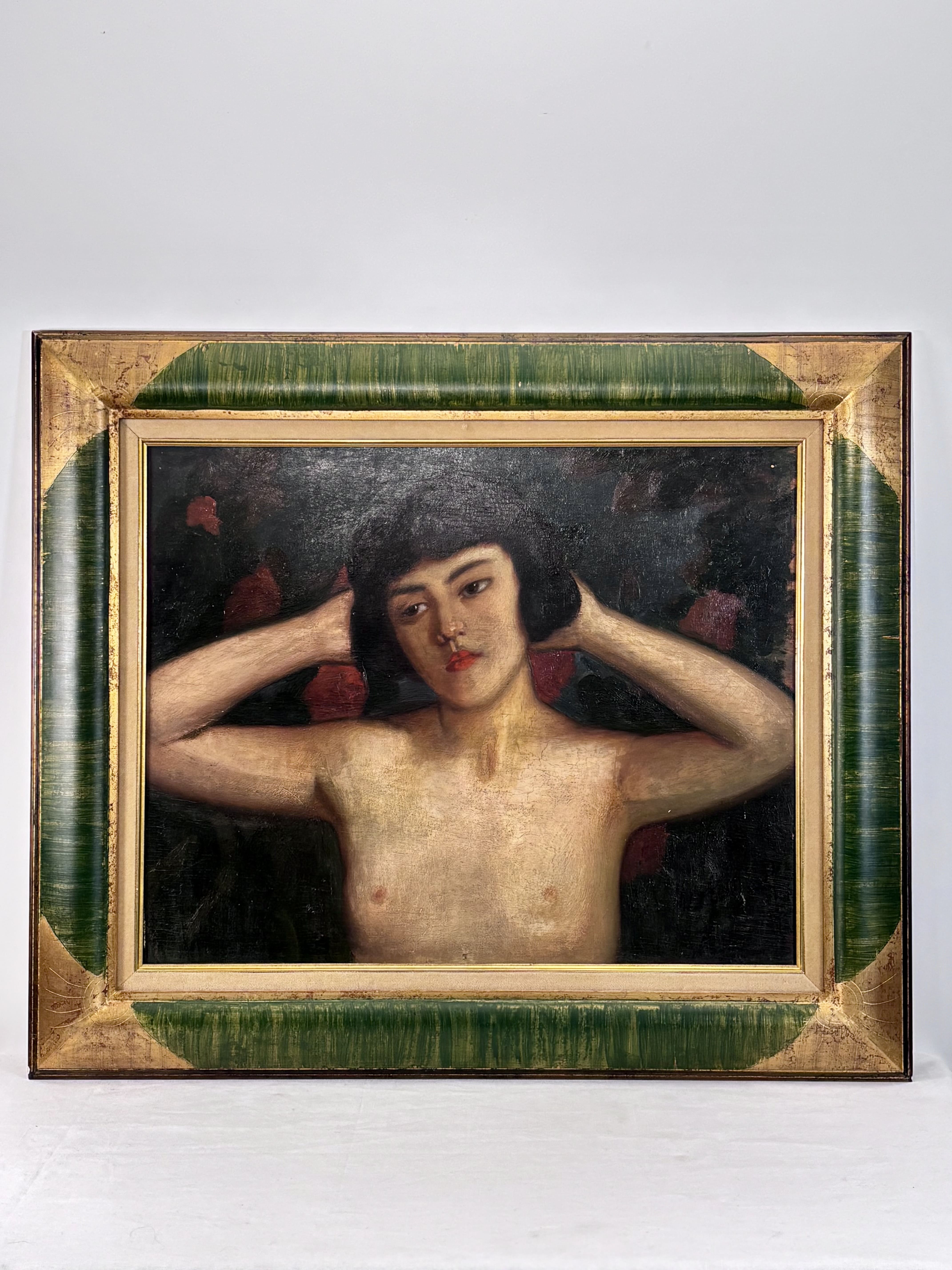
An oil on panel depicting the portrait of a young woman in bust, arms raised behind the head, in an attitude both free and introspective. The model, treated with gentleness and restraint, stands out against a dark ground animated with stylised coloured touches, bringing depth and vibration to the composition. The brushwork is fine and mastered, with delicately worked material. The composition is centred on the female figure, whose assertive pose contrasts with the melancholy expression of the face. Figurative work of the first half of the 20th century, at the crossroads of realism and a more modern sensibility. The whole exudes a strong and elegant presence. Signature lower right, partially legible, unidentified. Presented in its moulded wood frame with patinated green and gilt decoration.
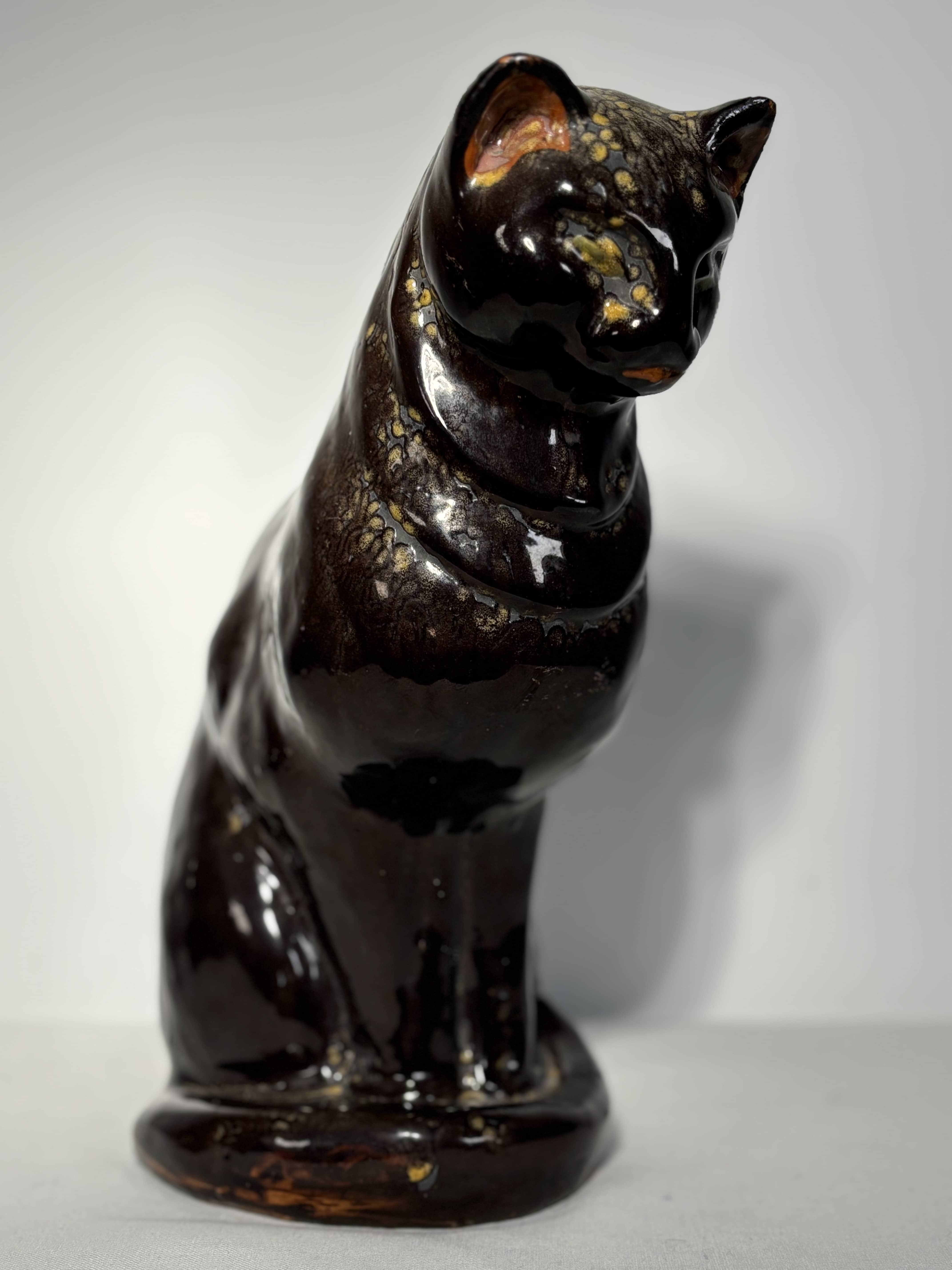
A ceramic sculpture figuring a seated cat, treated in a stylised manner. The piece is covered with a deep brown glaze, animated with amber and ochre nuances. The surface presents chromatic variations. The modelling is fluid, highlighting the full volumes of the body and the softness of the dorsal line. Origin: Normandy region, probably Bavent.
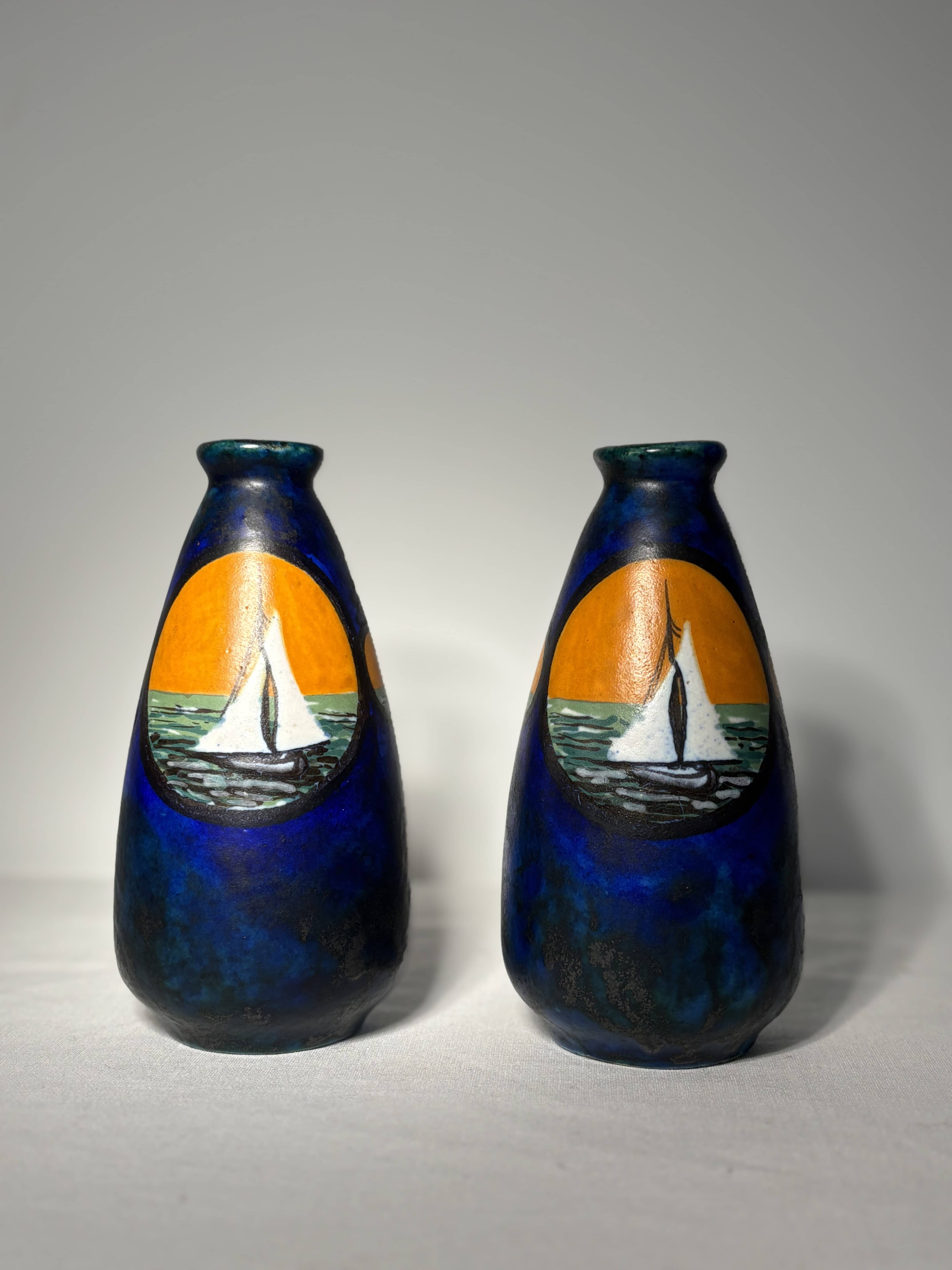
An elegant pair of ceramic vases, signed Louis Dage. The hand-painted decoration depicts a stylised marine scene: a sailboat on a green sea, an orange sunset, framed by large black circular cartouches on a deep cobalt blue ground with clouded effects. The composition, at once geometric and poetic, fits fully within the Art Deco aesthetic: simplification of forms, graphic lines, contrast of vivid colours and flat areas. The two vases form a pair of strong presence. Louis Dage is a major figure of French ceramics of the interwar period. Established in Antony from the early 1920s, he developed a production emblematic of the Art Deco style, combining pure forms and hand-painted decorations in intense colours. In perfect condition.
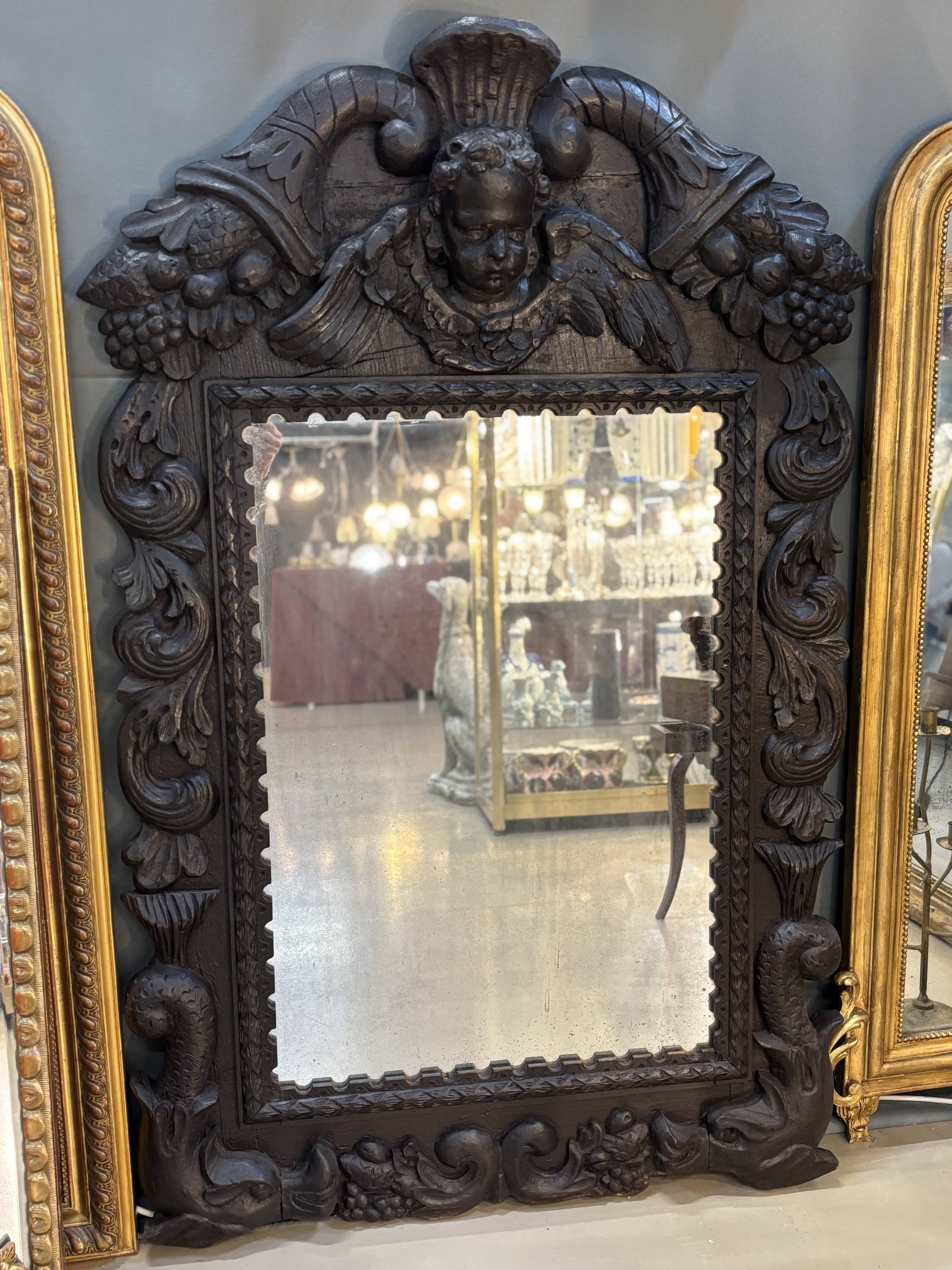
An important ceremonial mirror in richly carved and moulded oak. The pediment is centred with a high-relief mascaron depicting the face of a Putto (or cherub) with fleshy features, emerging from a stylised shell and outspread wings. The upper crosspiece is adorned with generous garlands of fruit (bunches of grapes, pomegranates, pinecones) symbolising abundance. The lateral uprights, with their sinuous lines, are carved with acanthus scrolls and interlaced motifs. The lower section is distinguished by an architectural base resting on two stylised confronted dolphins, a classical motif of Rhenish Baroque symbolism. The mirror is framed by a fine inner moulding decorated with a row of pearls and dentils, providing a delicate contrast to the powerful exterior carving. Structure: excellent state of stability. Superb deep, dark patina, characteristic of productions from Eastern France and the Rhine Valley. Joinery: period assembly with solid plank back, showing traces of ancient tools and natural shrinkage splits attesting to its age. Mirror: glass replaced at a later date (decorative scalloped border), in perfect condition.
17th century
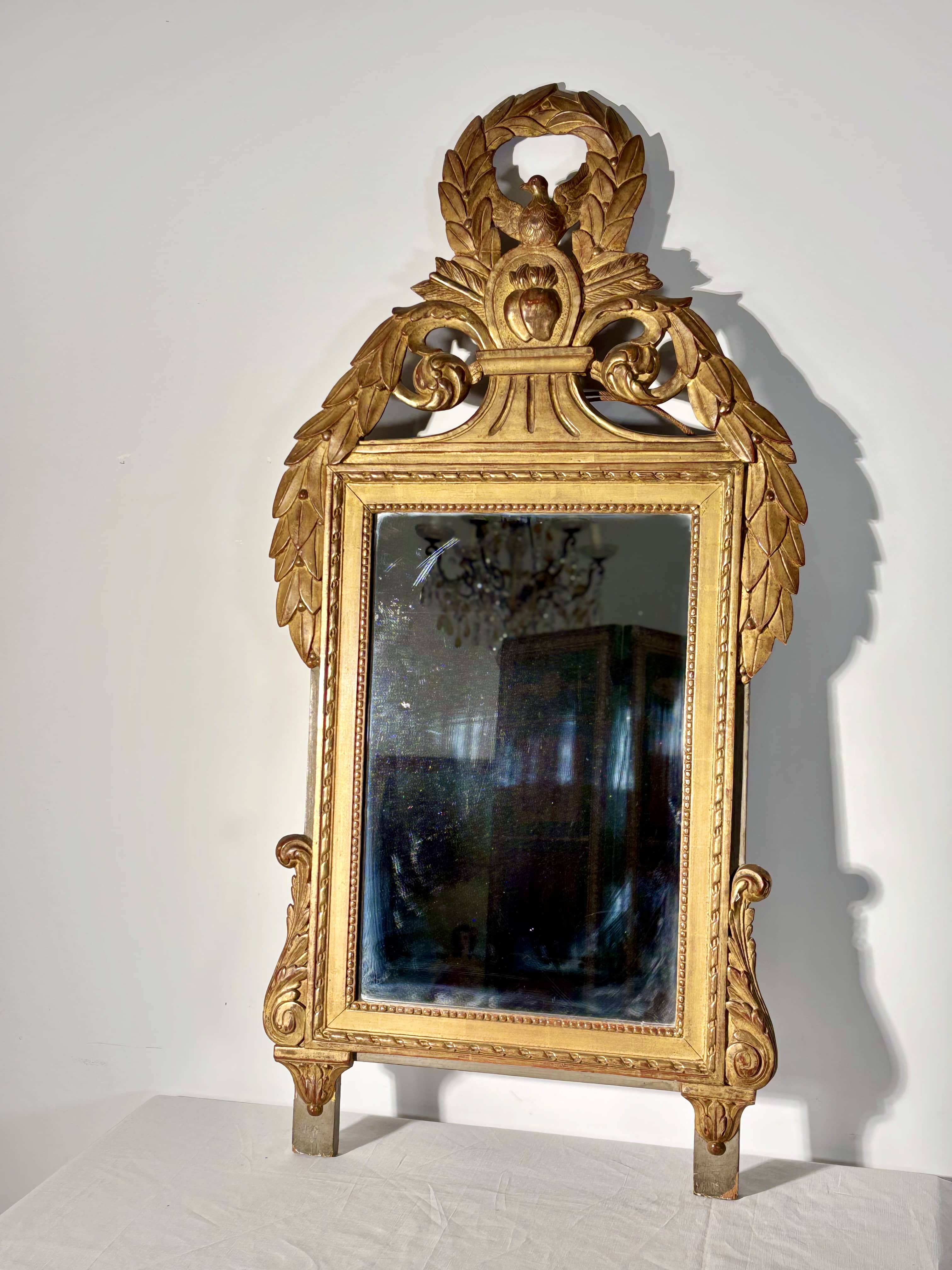
An important rectangular mirror in carved and giltwood. This model stands out by a striking and richly worked pediment. At the summit, a dove with deployed wings, symbol of peace or love, is inscribed within a laurel wreath. It surmounts a central medallion adorned with two flaming hearts pierced by arrows, resting on a fluted base. Frieze of twisted ribbons and pearl frieze. The frame is flanked by broad foliage and laurel drops descending along the uprights. The lower section is adorned with two stylised volute consoles, allowing the mirror to rest elegantly on a chimneypiece or console.
Galerie Bleu Magenta brings together a singular selection of antiques, vintage design and decorative arts, ranging from 18th-century furniture to 1970s Murano lighting, with signed 20th-century ceramics in between. Each piece is chosen with exacting care for its aesthetic value, its authenticity and its ability to converse with contemporary interiors. The gallery champions a vision of sustainable, responsible luxury, where beauty circulates, is passed on and grows richer over time. Exploring our catalogue, you will discover antique furniture, baroque mirrors, Italian glass, period seating, decorative objects and rare creations, all selected for their refinement and singularity.

I recently bought a handcrafted lamp from Bleu Magenta and I am completely won over! The unique design and exceptional quality really impressed me. The customer service was also flawless, with personalised advice and quick delivery.
I found the perfect gift for my best friend's birthday: a set of handmade ceramic vases. Not only were they beautiful, but the story behind each creation added a personal touch that made my gift even more special!